
 home
home
 Published: Aug 20, 2026 05:24 PM
 Page View: 139
With rapid urban growth and increasing passenger demand, metro rail systems have become essential components of modern city transportation networks. Maintaining the safety, reliability, and efficiency of metro infrastructure requires advanced monitoring technologies capable of collecting real-time data, identifying potential risks, and supporting intelligent decision-making.
Easy Semiconductor Technology (Hong Kong) Limited provides advanced industrial automation components and solutions that help transportation operators develop reliable smart monitoring systems for metro rail infrastructure. By integrating industrial controllers, communication networks, sensors, data acquisition platforms, and intelligent automation technologies, metro operators can improve asset management, reduce maintenance costs, and enhance passenger safety.
Metro rail infrastructure includes complex systems such as tracks, signaling equipment, power supply networks, ventilation systems, stations, tunnels, communication systems, and control centers. Traditional inspection methods based mainly on manual monitoring can be time-consuming and may not detect developing issues before failures occur.
Smart monitoring solutions enable continuous supervision of critical railway assets by collecting operational data in real time. These systems allow operators to quickly identify abnormal conditions, optimize maintenance schedules, and ensure stable transportation services.
Key monitoring areas include:
Track condition monitoring
Tunnel environment monitoring
Power system supervision
Station equipment management
Passenger facility monitoring
Train operation analysis
Safety and security management
Through automation and digital technologies, metro systems can achieve higher levels of reliability and operational efficiency.
Industrial controllers, including programmable logic controllers (PLCs) and remote terminal units (RTUs), serve as important components in metro monitoring architectures. They collect information from field devices, process operational data, and execute automated control functions.
High-performance industrial controllers provide reliable operation in demanding railway environments where continuous availability and rapid response are essential. They support integration with sensors, communication networks, and centralized management platforms.
For metro infrastructure, automation systems can monitor equipment status, control environmental systems, manage electrical facilities, and support emergency response operations.
Sensors form the foundation of smart monitoring systems by providing accurate information about infrastructure conditions. Modern metro facilities utilize various industrial sensors to monitor:
Temperature and humidity
Vibration levels
Electrical parameters
Air quality
Equipment performance
Structural conditions
Energy consumption
For example, vibration monitoring sensors can detect unusual patterns in mechanical equipment, helping maintenance teams identify potential failures before service interruptions occur.
Advanced sensor networks also support predictive maintenance strategies by continuously tracking infrastructure performance.
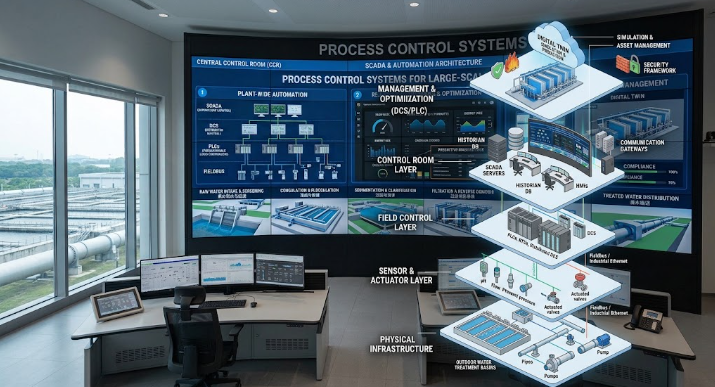
Supervisory Control and Data Acquisition (SCADA) systems provide centralized visibility across metro operations. Through intuitive graphical interfaces, operators can monitor multiple stations, tunnels, and equipment systems from a central control room.
SCADA platforms enable:
Real-time equipment visualization
Alarm management
Historical data analysis
Remote control operations
Performance reporting
By integrating various subsystems into a unified monitoring platform, transportation operators can improve operational coordination and respond faster to unexpected events.
Passenger safety is the highest priority for metro transportation systems. Smart monitoring solutions provide continuous surveillance and automated alerts to help prevent accidents and improve emergency response capabilities.
Examples include:
Fire detection and environmental monitoring in tunnels
Automatic equipment fault notifications
Real-time monitoring of station facilities
Security system integration
Emergency control procedures
When abnormal conditions are detected, intelligent monitoring platforms can immediately notify operators and support rapid decision-making.
This proactive approach reduces operational risks and improves the overall passenger experience.
Traditional maintenance strategies often rely on scheduled inspections, which may result in unnecessary maintenance activities or delayed identification of equipment problems. Smart monitoring technologies enable predictive maintenance based on real-time operational data.
By analyzing equipment performance trends, operators can determine when maintenance is actually required. This helps:
Reduce unexpected failures
Extend equipment service life
Lower maintenance costs
Improve resource allocation
Data-driven maintenance is becoming increasingly important as metro networks expand and infrastructure complexity continues to grow.
Energy management is another important application of smart monitoring systems. Metro networks consume significant amounts of electricity for train operation, lighting, ventilation, signaling, and station facilities.
Intelligent monitoring solutions help operators analyze energy usage and optimize system performance through:
Smart power monitoring
Automated lighting control
Efficient HVAC management
Equipment performance optimization
By improving energy efficiency, metro operators can reduce operating costs while supporting sustainable urban development goals.
Reliable communication networks are essential for metro monitoring applications. Large-scale railway systems require secure and stable data transmission between field devices, stations, and central control centers.
Industrial communication technologies such as Ethernet networks, fiber optic systems, and industrial protocols enable fast and reliable information exchange.
Redundant network designs further improve system availability by ensuring continuous operation during communication disruptions.
Easy Semiconductor Technology (Hong Kong) Limited specializes in providing industrial automation products and technology solutions for critical infrastructure applications. The company supports customers in transportation, manufacturing, energy, and other industries by supplying reliable automation components and system solutions.
For metro rail infrastructure projects, high-quality industrial hardware is essential to achieving long-term system stability. Automation controllers, communication modules, monitoring devices, and industrial electronic components provide the foundation for intelligent transportation management.
Through professional technical support and reliable product solutions, Easy Semiconductor Technology helps customers improve infrastructure performance and accelerate digital transformation.
The future of metro infrastructure monitoring will be shaped by artificial intelligence, edge computing, Internet of Things (IoT) technologies, and advanced analytics.
Future smart monitoring systems will provide:
AI-based fault prediction
Automated decision support
Intelligent asset management
Enhanced cybersecurity protection
Integrated digital twin applications
These innovations will enable metro systems to become more intelligent, resilient, and sustainable.
As cities continue to expand, smart monitoring technologies will play a crucial role in maintaining safe and efficient public transportation networks.
Smart Monitoring Solutions for Metro Rail Infrastructure represent a major advancement in modern transportation management. By combining automation systems, sensors, SCADA platforms, industrial communication networks, and intelligent data analysis, metro operators can achieve safer operations, improved efficiency, and better passenger services.
Easy Semiconductor Technology (Hong Kong) Limited remains committed to supporting global infrastructure development with advanced industrial automation solutions. Through reliable technologies and innovative approaches, smart monitoring systems will continue to transform metro rail operations and contribute to the future of intelligent urban mobility.