
 home
home
 Published: Aug 08, 2026 12:58 PM
 Page View: 165
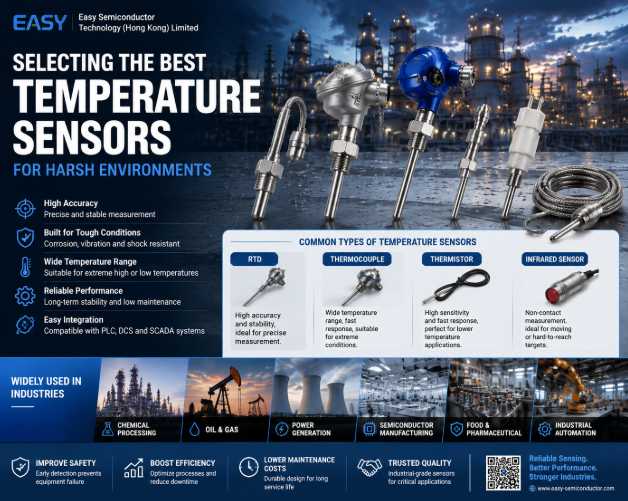
In modern industrial operations, accurate temperature measurement is essential for maintaining safety, improving efficiency, and ensuring reliable equipment performance. From chemical processing plants and oil refineries to power generation facilities and semiconductor manufacturing, temperature sensors play a critical role in monitoring and controlling complex systems. However, harsh industrial environments present unique challenges, including extreme temperatures, vibration, corrosion, pressure changes, and exposure to chemicals.
Selecting the right temperature sensor for these demanding conditions requires careful consideration of application requirements, sensor technology, material compatibility, and long-term reliability. Easy Semiconductor Technology (Hong Kong) Limited provides professional industrial automation components and temperature sensing solutions designed to meet the needs of global industries.
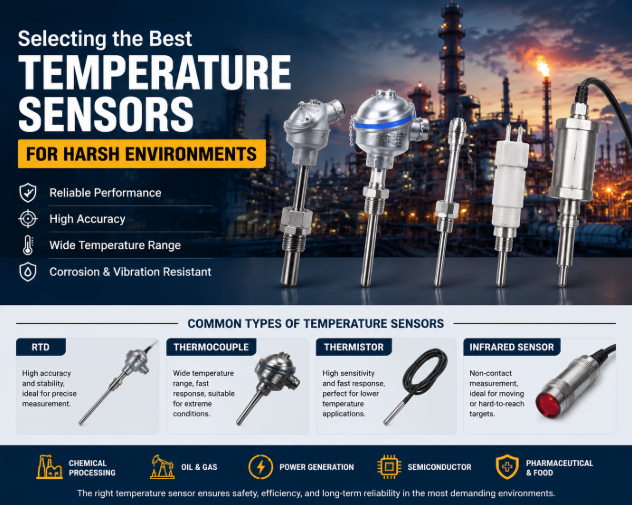
Temperature is one of the most important process variables in industrial automation. Incorrect temperature readings can lead to equipment failures, reduced production efficiency, safety risks, and costly downtime.
In critical applications, temperature sensors must deliver:
High measurement accuracy
Fast response time
Long-term stability
Resistance to environmental stress
Compatibility with industrial control systems
A reliable temperature sensor helps operators detect abnormal conditions early, optimize production processes, and protect valuable industrial assets.
Unlike standard commercial applications, industrial environments can expose sensors to extreme operating conditions.
Many industrial processes involve very high or very low temperatures. Furnace systems, boilers, chemical reactors, and cryogenic equipment require sensors capable of maintaining accuracy under thermal stress.
A temperature sensor selected for these applications must have an appropriate measurement range and protective design to prevent performance degradation.
Chemical plants, wastewater facilities, and offshore installations often expose sensors to corrosive gases, liquids, and humidity. Without proper protection, sensor materials may deteriorate, causing inaccurate readings or premature failure.
Stainless steel housings, corrosion-resistant coatings, and sealed designs are commonly used to improve durability.
Industrial machinery such as motors, compressors, turbines, and production equipment generates continuous vibration. Temperature sensors installed in these environments must have strong mechanical construction and secure connections to maintain reliable operation.
Modern factories contain numerous electrical devices, including variable frequency drives, motors, and high-power equipment. Electromagnetic interference can affect sensor signals, especially in long-distance transmission applications.
Using industrial-grade signal conditioning, shielded cables, and suitable communication interfaces helps maintain accurate temperature data.
Choosing the best sensor technology depends on the application environment and measurement requirements.
RTDs are widely used in industrial applications requiring high accuracy and stability.
Common RTD materials include platinum, with PT100 and PT1000 being among the most popular configurations.
Advantages of RTDs include:
Excellent accuracy
High repeatability
Long service life
Stable performance over time
RTDs are commonly used in pharmaceutical production, food processing, chemical plants, and precision manufacturing.
However, RTDs generally have slower response times compared with thermocouples and may require additional protection in extremely high-temperature environments.
Thermocouples are one of the most widely used temperature sensors for harsh industrial conditions.
They operate based on the voltage generated between two different metal materials when exposed to temperature differences.
Advantages include:
Very wide temperature measurement range
Fast response
Strong resistance to shock and vibration
Suitable for high-temperature applications
Common thermocouple types include:
Type K for general industrial applications
Type J for moderate temperature systems
Type T for low-temperature applications
Type N for high-temperature stability
Thermocouples are commonly used in furnaces, heat treatment systems, engines, and industrial heating equipment.
Thermistors provide high sensitivity and fast response, especially in lower temperature ranges.
They are often used in:
HVAC systems
Laboratory equipment
Electronic equipment cooling systems
Although thermistors offer excellent sensitivity, they typically have a narrower temperature range compared with RTDs and thermocouples.
Infrared sensors measure temperature without direct contact with the target object.
They are ideal for applications where contact measurement is difficult or unsafe.
Typical applications include:
Moving production lines
High-temperature surfaces
Electrical equipment inspection
Metal processing
The main advantages are fast measurement and the ability to monitor objects remotely.
The first step is determining the required operating temperature range. A sensor should not operate continuously near its maximum limit because this may reduce lifespan and accuracy.
Engineers should select sensors with sufficient temperature margin for unexpected process variations.
Different industries require different accuracy levels.
For example:
Power plants may require reliable monitoring for equipment protection.
Semiconductor manufacturing requires extremely precise temperature control.
Food processing requires compliance with strict temperature regulations.
Understanding process requirements helps determine the appropriate sensor accuracy.
Some processes require immediate temperature detection. Fast-response sensors are essential for applications involving rapid heating or cooling changes.
Thermocouples and infrared sensors typically provide faster response than traditional RTDs.
Industrial temperature sensors should have suitable protection against dust, water, and chemicals.
Important considerations include:
IP protection rating
Housing material
Cable insulation
Connection design
For outdoor or harsh environments, sensors with rugged stainless-steel construction are often preferred.
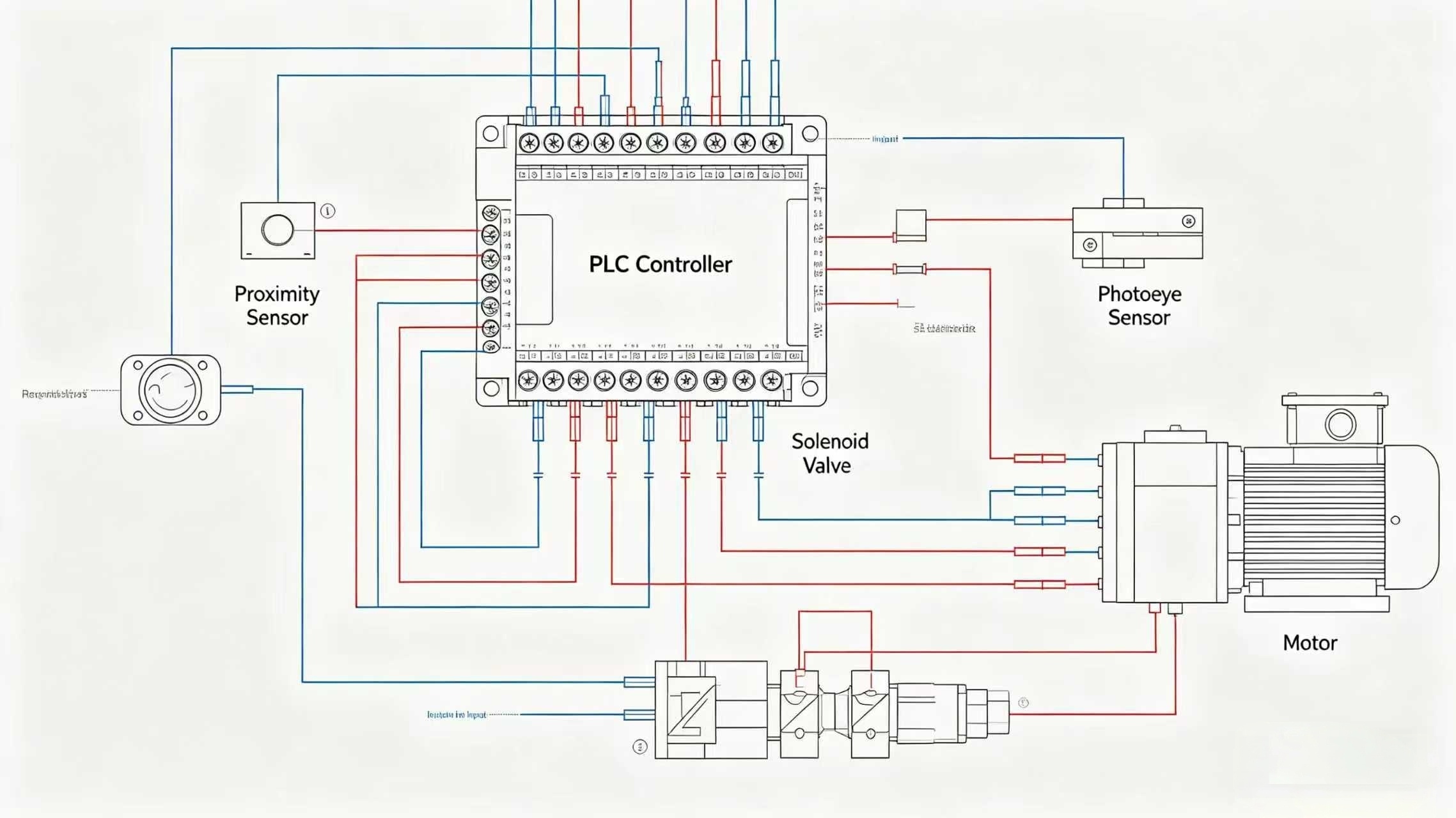
Modern factories rely on PLCs, distributed control systems, and industrial communication networks.
Temperature sensors should be compatible with existing automation platforms through:
Analog signals such as 4–20 mA
Digital communication protocols
Industrial transmitters
Smart sensor interfaces
Proper integration improves monitoring accuracy and operational efficiency.
Chemical plants require temperature monitoring to maintain reaction stability and prevent dangerous conditions. Sensors must resist aggressive chemicals and operate continuously.
Oil and gas facilities use temperature sensors in pipelines, compressors, and processing equipment. High-pressure and high-temperature resistance are essential requirements.
Power stations depend on temperature monitoring for turbines, boilers, generators, and cooling systems. Reliable sensors help prevent equipment damage and improve energy efficiency.
Semiconductor production requires extremely precise temperature control during processes such as wafer fabrication and testing. High-performance RTDs and advanced temperature monitoring systems are commonly used.
These industries require accurate temperature control to ensure product quality and regulatory compliance.
Choosing the right temperature sensor is not only about selecting a device with the correct temperature range. Engineers must consider the complete operating environment, including mechanical conditions, chemical exposure, maintenance requirements, and system integration.
A well-selected temperature sensor can provide:
Reduced equipment downtime
Improved process efficiency
Enhanced safety
Lower maintenance costs
Longer equipment service life
Regular calibration and preventive maintenance are also important to ensure long-term measurement accuracy.
Selecting the best temperature sensors for harsh environments requires a comprehensive understanding of industrial conditions and application requirements. Whether using RTDs for precision measurement, thermocouples for extreme temperatures, or infrared sensors for non-contact monitoring, the correct choice can significantly improve industrial performance.
As industries continue moving toward automation, smart manufacturing, and intelligent monitoring systems, reliable temperature measurement technology will remain a key foundation for operational success.
Easy Semiconductor Technology (Hong Kong) Limited is committed to providing high-quality industrial automation components and professional solutions for customers worldwide. By supporting reliable sensing technologies, the company helps industries achieve safer, smarter, and more efficient production environments.