
 home
home
 Published: Aug 01, 2026 01:49 PM
 Page View: 156
As global manufacturing continues to move toward smarter, more connected, and highly automated production environments, industrial control systems have become the foundation of modern factories. From automotive and semiconductor production to energy, food processing, and logistics, reliable control technology plays a critical role in maintaining productivity, safety, and operational efficiency.
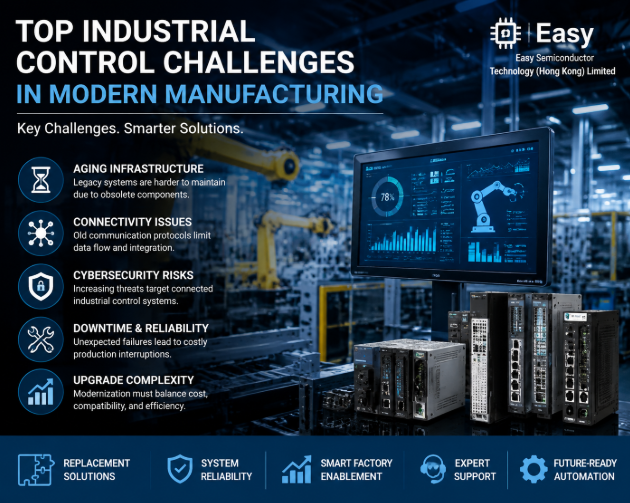
However, manufacturers worldwide are facing increasingly complex industrial control challenges. Aging automation infrastructure, discontinued components, cybersecurity risks, communication limitations, and the growing demand for intelligent manufacturing are creating new pressures for companies seeking long-term operational stability.
Easy Semiconductor Technology (Hong Kong) Limited, a trusted provider of industrial automation components and replacement solutions, highlights the major challenges affecting modern industrial control systems and the strategies manufacturers can adopt to build more reliable automation environments.
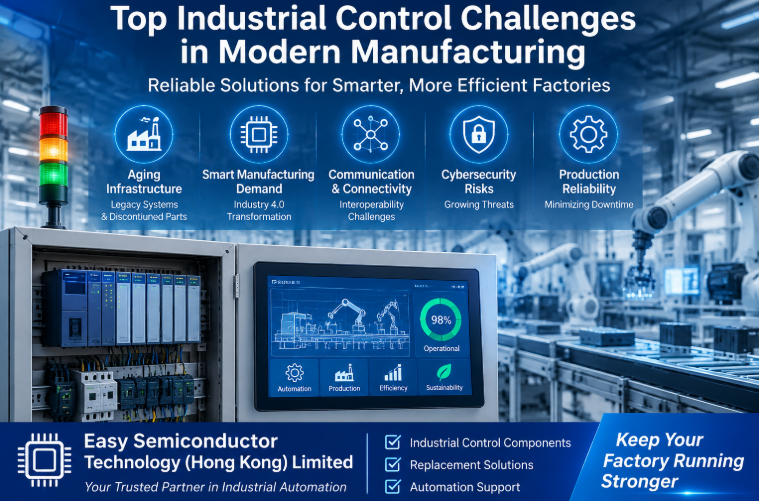
One of the biggest challenges facing manufacturers today is the continued operation of legacy automation systems. Many factories still rely on programmable logic controllers (PLCs), industrial computers, control modules, power supplies, and communication devices that were installed decades ago.
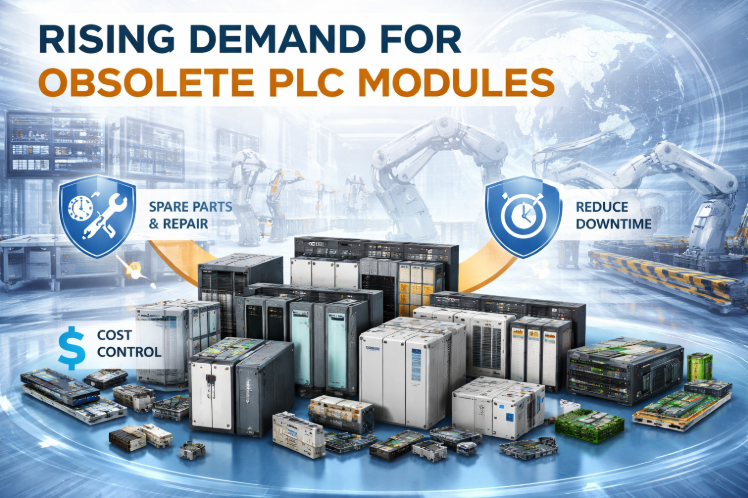
Although these systems may still perform essential production tasks, many older components are becoming difficult to maintain due to discontinued production, limited technical support, and reduced availability of spare parts.
Replacing an entire automation system can require significant investment, production downtime, and engineering resources. As a result, many manufacturers are searching for practical modernization strategies that allow them to extend the service life of existing equipment while gradually upgrading their infrastructure.
Easy Semiconductor Technology (Hong Kong) Limited provides industrial replacement components and automation support solutions designed to help companies overcome legacy equipment challenges while maintaining production continuity.
Industry 4.0 is transforming traditional factories into intelligent manufacturing environments. Modern production facilities require real-time monitoring, advanced data analysis, remote access, and seamless communication between machines and enterprise systems.
However, many existing industrial control systems were not designed for today’s smart factory requirements. Limited connectivity, outdated communication protocols, and insufficient data-processing capabilities can prevent manufacturers from fully implementing digital transformation strategies.
To achieve smart manufacturing goals, companies need solutions that integrate existing control platforms with modern industrial networks. Upgrading communication gateways, control modules, and monitoring systems can provide a cost-effective pathway toward intelligent automation without replacing every piece of existing equipment.
Reliable communication is essential for modern automated production. PLCs, distributed control systems, sensors, robots, drives, and monitoring platforms must exchange information quickly and accurately.
Many factories operate with a combination of old and new technologies, creating compatibility issues between different generations of equipment. Unsupported communication protocols, outdated network hardware, and inconsistent system architectures can lead to operational inefficiencies.
Manufacturers are increasingly investing in industrial communication solutions, including advanced gateways, interface modules, and network upgrade technologies. These solutions help bridge the gap between legacy systems and modern automation platforms while improving data accessibility and system reliability.
As factories become more connected, cybersecurity has become a major concern. Traditional industrial control systems were often designed for isolated environments, but modern facilities now connect automation networks with cloud platforms, enterprise software, and remote monitoring services.
This increased connectivity creates potential security vulnerabilities. Unauthorized access, malware threats, and network disruptions can affect production efficiency and operational safety.
Manufacturers must consider cybersecurity as a key part of automation modernization. Improving network architecture, updating control hardware, implementing secure communication methods, and maintaining reliable backup systems are essential steps toward protecting industrial operations.
In highly competitive manufacturing industries, unexpected equipment failure can result in significant financial losses. Every minute of production downtime may affect delivery schedules, customer satisfaction, and overall profitability.
Industrial control components such as PLC modules, relay systems, power supplies, motion controllers, and communication devices must operate reliably under demanding conditions.
A strong maintenance strategy requires access to dependable replacement components and technical expertise. By preparing suitable spare parts and adopting proactive replacement planning, manufacturers can reduce risks associated with sudden equipment failures.
Easy Semiconductor Technology (Hong Kong) Limited supports industrial customers with replacement solutions for automation systems, helping businesses improve equipment availability and extend the operational life of critical assets.
Modernizing industrial control systems requires careful planning. A complete system replacement is not always practical because factories often depend on continuous production schedules.
Manufacturers must balance modernization goals with budget limitations, operational requirements, and compatibility considerations. Successful upgrades often involve a phased approach, including:
Replacing obsolete control components
Upgrading communication interfaces
Improving monitoring capabilities
Enhancing system redundancy
Integrating smart factory technologies gradually
This approach allows companies to achieve modernization benefits while minimizing disruption to daily operations.
Another major challenge in industrial automation is the shortage of engineers with experience in both legacy and modern control technologies.
Many experienced automation specialists are retiring, while newer engineers may focus primarily on advanced digital systems rather than older industrial platforms.
Manufacturers require partners who understand traditional automation equipment as well as modern upgrade requirements. Technical knowledge, component availability, and practical replacement experience are becoming increasingly valuable in today’s industrial environment.
The future of manufacturing depends on reliable, flexible, and intelligent industrial control systems. Companies that successfully address current automation challenges will be better positioned to improve efficiency, reduce downtime, and compete in a rapidly changing global market.
Easy Semiconductor Technology (Hong Kong) Limited continues to support manufacturers worldwide by providing industrial automation components, replacement solutions, and technical assistance for legacy and modern control systems.
As industries accelerate digital transformation, the ability to maintain, upgrade, and optimize industrial control infrastructure will remain a key factor in achieving sustainable manufacturing success.
Through reliable solutions and industry-focused expertise, Easy Semiconductor Technology (Hong Kong) Limited helps businesses overcome industrial control challenges and move confidently toward the next generation of smart manufacturing.