
 home
home
 Published: Aug 06, 2026 11:02 AM
 Page View: 149
In modern industrial automation, power reliability has become one of the most critical factors affecting system performance. From smart factories and robotic production lines to process control facilities and industrial communication networks, every automation system depends on stable and efficient power delivery. A failure in the power supply chain can interrupt production, damage sensitive equipment, and create significant operational losses.
As industrial environments become more complex, selecting the right power modules is no longer just a technical decision—it is a strategic investment in system reliability. Easy Semiconductor Technology (Hong Kong) Limited highlights the importance of choosing high-quality power modules that meet the demanding requirements of modern automation applications.
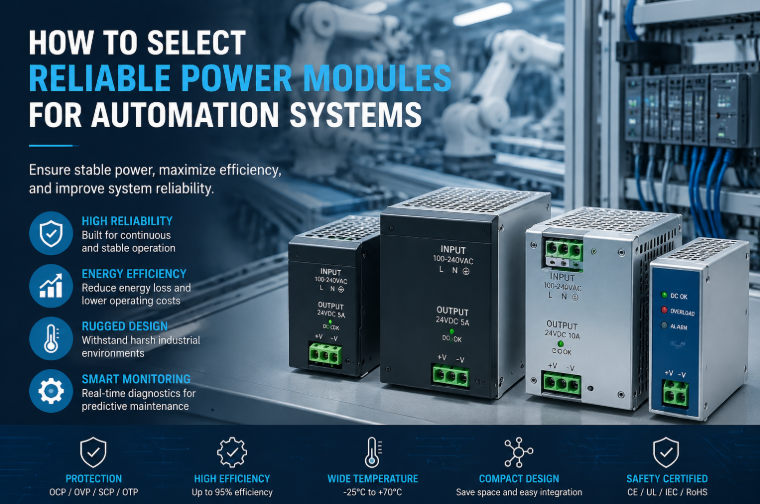
Power modules serve as the foundation of industrial electrical systems by converting and regulating electrical energy required by automation equipment. They provide stable power for programmable logic controllers (PLCs), human-machine interfaces (HMIs), industrial sensors, motor drives, communication systems, and embedded control devices.
Unlike standard consumer power components, industrial power modules must operate continuously under challenging conditions, including temperature fluctuations, electrical noise, vibration, and high-load environments. A reliable power module ensures consistent voltage output, protects connected devices, and improves the overall availability of automation systems.
For industries such as manufacturing, semiconductor production, energy, chemical processing, and transportation, power quality directly influences productivity and safety.
The first step in selecting a power module is understanding the electrical requirements of the automation system. Engineers should consider input voltage range, output voltage, current capacity, and total power consumption.
Industrial automation systems often include multiple devices operating simultaneously. Choosing a power module with insufficient capacity may cause voltage drops, unexpected shutdowns, or reduced equipment lifespan. A properly sized module should provide enough power margin to handle peak loads and future system expansion.
Compatibility with existing control platforms is also essential. The selected power module should integrate smoothly with PLC systems, industrial controllers, and field devices to ensure reliable operation.
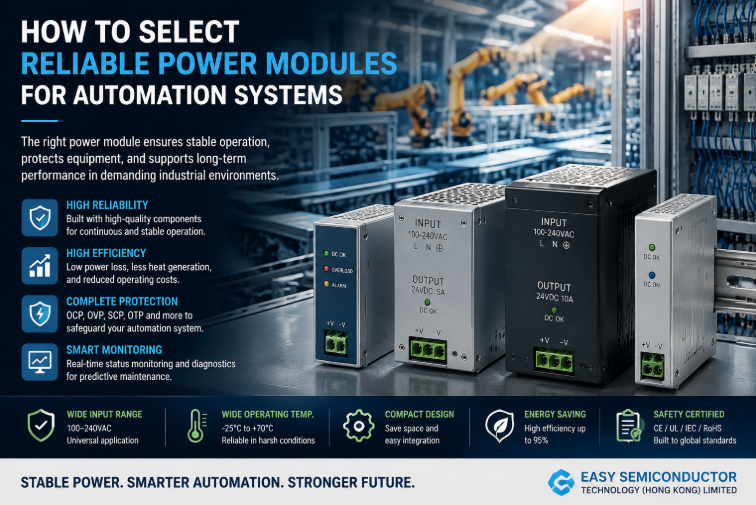
Energy efficiency is becoming increasingly important as factories focus on reducing operating costs and achieving sustainability goals. High-efficiency power modules reduce energy losses, generate less heat, and improve system reliability.
Modern industrial power modules often feature advanced switching technologies that optimize energy conversion while maintaining stable output performance. Lower heat generation also reduces stress on internal components, extending the service life of automation equipment.
For large-scale production facilities operating 24/7, even small improvements in power efficiency can lead to significant long-term savings.
Industrial environments can be extremely demanding. Power modules used in automation applications must be designed to withstand harsh conditions, including:
Wide temperature ranges
High humidity
Dust and contamination
Electrical interference
Mechanical vibration
Continuous operation
Before selecting a power module, engineers should review environmental specifications such as operating temperature range, protection ratings, and thermal management capabilities.
For outdoor systems, factory floors, and heavy industries, ruggedized power modules with enhanced protection features are often necessary to maintain stable performance.
Reliable power modules should include comprehensive protection mechanisms to prevent system failures. Important protection functions include:
Overvoltage protection
Overcurrent protection
Short-circuit protection
Overtemperature protection
Surge protection
These features help protect valuable automation equipment from unexpected electrical events. In critical applications, protection functions can prevent costly downtime and improve workplace safety.
Compliance with international industrial safety standards is another important consideration. Certified power modules provide greater confidence in quality, reliability, and performance.
Automation systems are expected to operate continuously for many years. Therefore, component reliability is a key selection factor.
High-quality power modules typically use durable components, advanced thermal designs, and strict manufacturing processes to achieve longer operational lifetimes. Engineers should review technical specifications such as mean time between failures (MTBF), load stability, and product testing standards.
Choosing reliable power modules reduces maintenance requirements and minimizes unexpected production interruptions.
The development of Industry 4.0 has increased demand for intelligent power management. Many advanced power modules now support digital communication functions, allowing users to monitor operating conditions in real time.
Smart power modules can provide valuable information, including:
Voltage and current status
Temperature monitoring
Energy consumption data
Fault alerts
Maintenance information
Integration with industrial networks enables predictive maintenance strategies, helping factories identify potential problems before failures occur.
When selecting power modules, purchase price should not be the only consideration. A low-cost module may lead to higher expenses due to frequent replacements, maintenance, energy losses, and production downtime.
A reliable power module with higher efficiency and longer service life often provides better value throughout the entire equipment lifecycle.
Industrial companies should evaluate:
Initial investment cost
Installation requirements
Energy efficiency
Maintenance expenses
Expected service life
Technical support availability
A comprehensive cost analysis helps companies make smarter long-term decisions.
Reliable power modules are widely used across various automation sectors, including:
Modern factories rely on automated production lines, robotic systems, and intelligent control platforms. Stable power ensures continuous operation and accurate process control.
Semiconductor equipment requires extremely stable power quality due to the sensitivity of manufacturing processes. Reliable power modules help maintain precision and reduce equipment failures.
Power management systems, monitoring equipment, and industrial communication networks require dependable power solutions to maintain safe and efficient operation.
Chemical, pharmaceutical, and food processing plants depend on uninterrupted automation systems. Reliable power modules support continuous operation and help prevent production disruptions.
The future of automation power solutions will focus on higher efficiency, smaller designs, intelligent monitoring, and improved sustainability.
As factories adopt artificial intelligence, edge computing, and Industrial IoT technologies, power modules will become increasingly connected and intelligent. Real-time diagnostics, remote monitoring, and automated energy management will help companies improve operational efficiency.
Additionally, advances in semiconductor technology will continue improving power density, reliability, and thermal performance, enabling more compact and powerful automation systems.
Selecting reliable power modules is essential for building stable, efficient, and future-ready automation systems. Companies must evaluate power requirements, environmental conditions, protection features, efficiency, reliability, and smart monitoring capabilities before making a decision.
For industrial organizations seeking dependable automation solutions, investing in high-quality power modules can significantly improve system uptime, reduce operational risks, and support long-term business growth.
Easy Semiconductor Technology (Hong Kong) Limited remains committed to providing professional semiconductor and industrial technology solutions that help customers build reliable automation systems for the future of smart manufacturing.