
 home
home
 Published: Aug 02, 2026 01:05 PM
 Page View: 102
As global manufacturing continues to move toward higher efficiency, automation, and intelligent production, smart sensor technology has become a key driver in improving factory accuracy and operational reliability. Modern factories are increasingly adopting advanced sensors to collect real-time data, monitor production conditions, and enable automated decision-making. These technologies help manufacturers reduce errors, improve product quality, and optimize production processes across multiple industries.
Easy Semiconductor Technology (Hong Kong) Limited recognizes that smart sensors are playing an essential role in the transformation from traditional manufacturing systems to intelligent factories. By integrating advanced sensing solutions with industrial control systems, manufacturers can achieve greater precision, faster response times, and improved productivity.
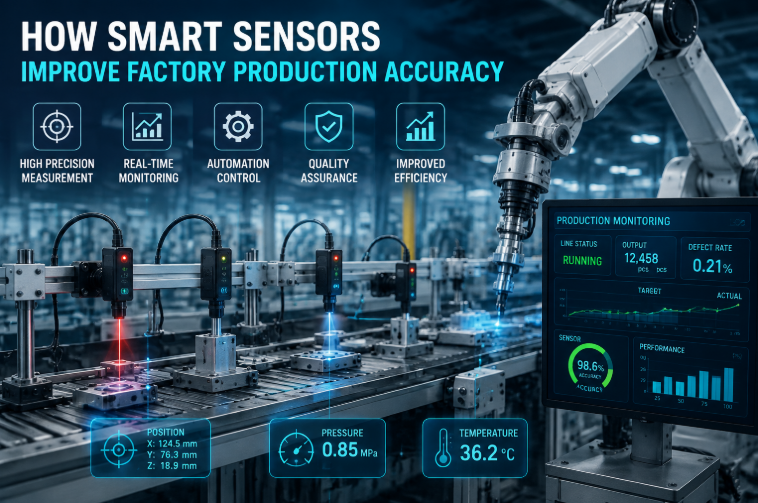
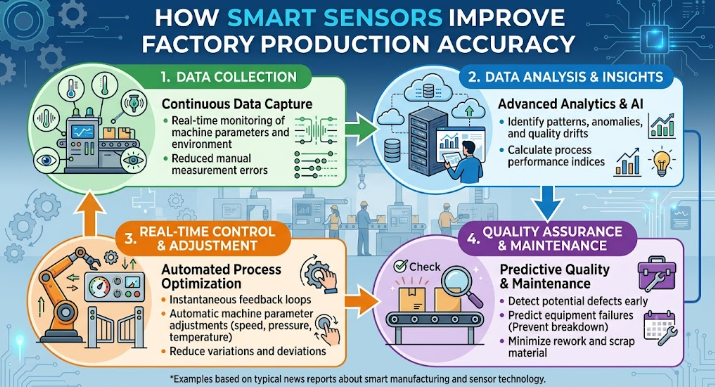
Traditional manufacturing environments often rely on manual inspections and periodic measurements, which can lead to delayed responses and inconsistent results. Smart sensors overcome these limitations by continuously monitoring critical production parameters such as temperature, pressure, vibration, position, flow, and material conditions.
With real-time data collection, factory automation systems can immediately identify changes in production conditions and automatically adjust equipment settings. For example, in precision machining applications, smart sensors can detect minor deviations in machine movement or tool performance, allowing control systems to make adjustments before defects occur.
This ability to monitor and respond instantly helps manufacturers maintain stable production quality while reducing waste caused by inaccurate processes.
Quality control is one of the most important challenges in modern manufacturing. Even small variations in production processes can affect final product performance. Smart sensors provide highly accurate measurements that help factories detect problems earlier and maintain consistent product standards.
In industries such as semiconductor manufacturing, automotive production, electronics assembly, and pharmaceutical processing, sensors are used to verify critical conditions throughout the production cycle. Vision sensors, pressure sensors, and environmental monitoring devices can identify irregularities that may not be visible through traditional inspection methods.
By detecting potential issues at an early stage, manufacturers can reduce defective products, lower operational costs, and improve customer satisfaction.
Unexpected equipment failures can cause significant production losses. Smart sensors help factories move from traditional reactive maintenance toward predictive maintenance by monitoring equipment health in real time.
Sensors installed on industrial machines can track vibration levels, temperature changes, electrical performance, and mechanical conditions. When abnormal patterns are detected, maintenance teams can receive alerts and schedule repairs before serious failures occur.
This approach reduces downtime, extends equipment lifespan, and improves overall factory reliability. Combined with industrial automation platforms, smart sensors provide valuable information that enables smarter maintenance decisions.
Smart sensors are a fundamental component of Industry 4.0 and smart manufacturing. They connect physical production environments with digital control systems, allowing factories to operate with greater intelligence and flexibility.
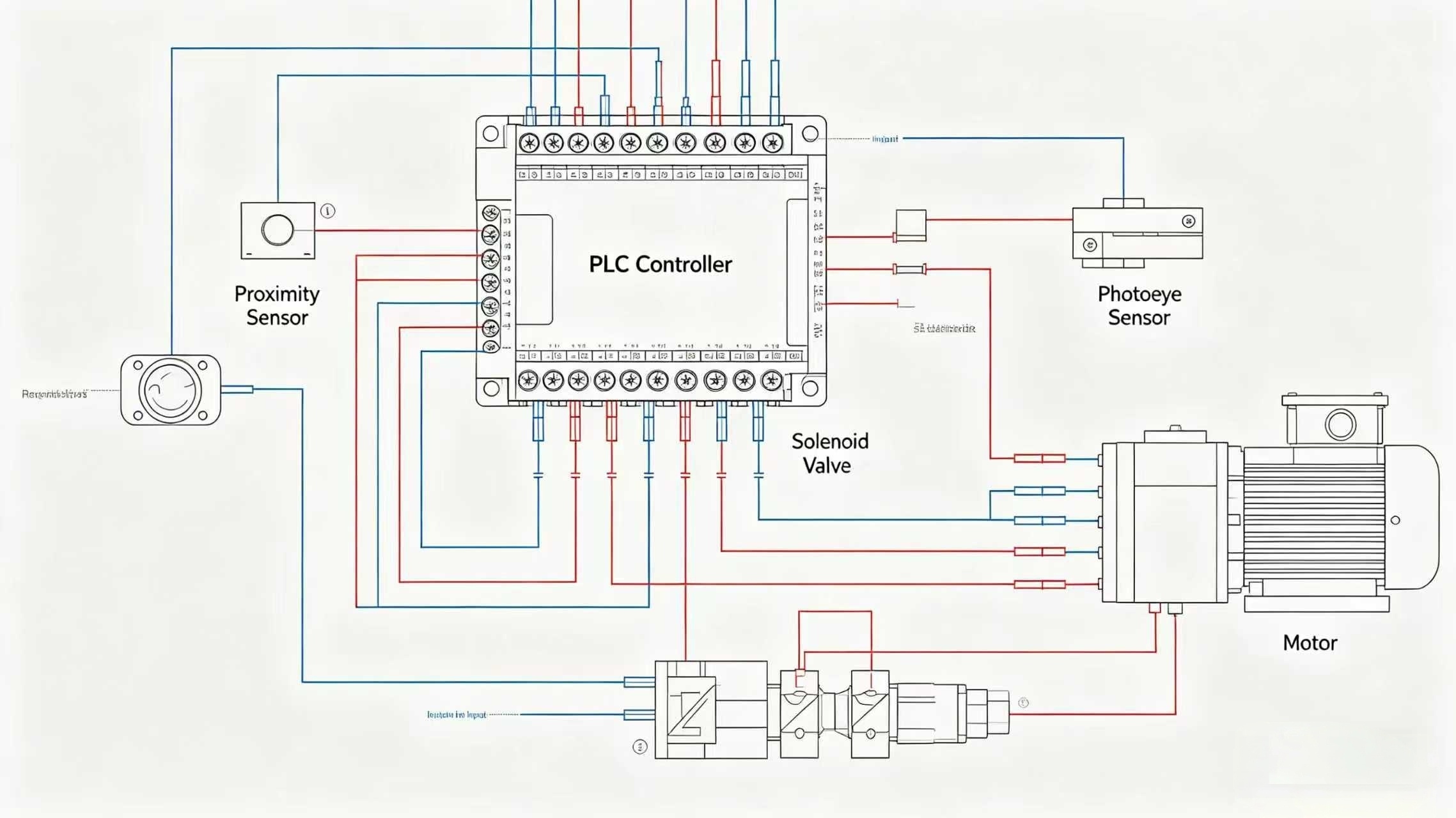
When integrated with Programmable Logic Controllers (PLCs), Supervisory Control and Data Acquisition (SCADA) systems, Industrial Internet of Things (IIoT) platforms, and edge computing solutions, smart sensors create a connected manufacturing ecosystem.
This connectivity allows production managers to analyze operational data, identify improvement opportunities, and optimize manufacturing performance. Factories can better understand energy consumption, production efficiency, and equipment utilization through continuous data analysis.
Automated production lines require precise control to achieve consistent output. Smart sensors improve accuracy by providing reliable feedback signals to automation systems.
For example, position sensors help robotic systems perform accurate movements during assembly operations. Temperature sensors maintain optimal conditions during manufacturing processes. Optical sensors ensure correct product placement and inspection. Pressure and flow sensors support stable operation in process industries.
Through accurate measurement and immediate feedback, smart sensors help machines operate more efficiently while reducing human error.
Beyond improving production accuracy, smart sensors also contribute to sustainable manufacturing goals. By monitoring energy usage, equipment performance, and environmental conditions, factories can identify areas where resources are being wasted.
Smart monitoring systems allow manufacturers to optimize machine operation, reduce unnecessary energy consumption, and improve resource management. This not only lowers operating costs but also supports global efforts toward greener industrial development.
Although smart sensors provide significant advantages, manufacturers must consider factors such as system integration, cybersecurity, data management, and long-term reliability. As factories become increasingly connected, protecting sensor data and industrial networks becomes essential.
Future smart sensor development will focus on higher accuracy, smaller designs, artificial intelligence integration, and improved communication capabilities. Sensors combined with AI algorithms will enable factories to analyze complex production data and make autonomous decisions with greater precision.
Wireless sensor networks, edge intelligence, and advanced semiconductor technologies will further expand the capabilities of smart manufacturing systems.
As a provider focused on industrial automation solutions and semiconductor-related technologies, Easy Semiconductor Technology (Hong Kong) Limited continues to support manufacturers seeking reliable components and advanced automation improvements.
The company understands that modern factories require dependable hardware solutions to maintain production accuracy and operational stability. By supporting automation upgrades, replacement components, and intelligent manufacturing technologies, Easy Semiconductor Technology helps businesses improve efficiency and adapt to the future of industrial development.
Smart sensors are transforming the manufacturing industry by providing accurate measurements, real-time monitoring, and intelligent control capabilities. From improving product quality to reducing equipment downtime, these technologies enable factories to achieve higher levels of precision and efficiency.
As global manufacturing continues its digital transformation, smart sensor adoption will remain a critical factor in building more reliable, flexible, and intelligent production environments. Companies that invest in advanced sensing technologies will be better positioned to meet the growing demands of modern industrial markets.