
 home
home
 Published: Aug 06, 2026 10:36 AM
 Page View: 150
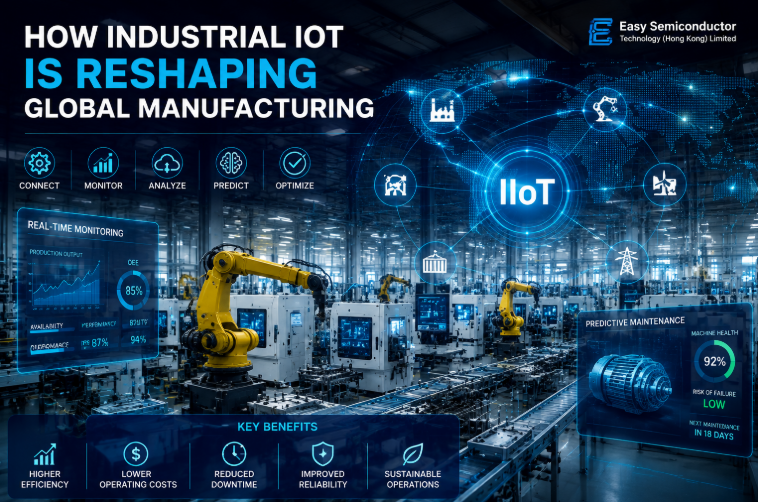
The global manufacturing industry is undergoing a major transformation as Industrial Internet of Things (IIoT) technologies become increasingly integrated into production environments. From smart factories and automated assembly lines to advanced monitoring systems and predictive maintenance platforms, IIoT is redefining how manufacturers operate, optimize resources, and compete in a rapidly changing global market.
Easy Semiconductor Technology (Hong Kong) Limited highlights that Industrial IoT is no longer only a future concept but a practical solution being adopted by manufacturers worldwide. By connecting machines, sensors, industrial controllers, and enterprise systems through intelligent networks, IIoT enables factories to achieve higher efficiency, improved reliability, and greater operational visibility.
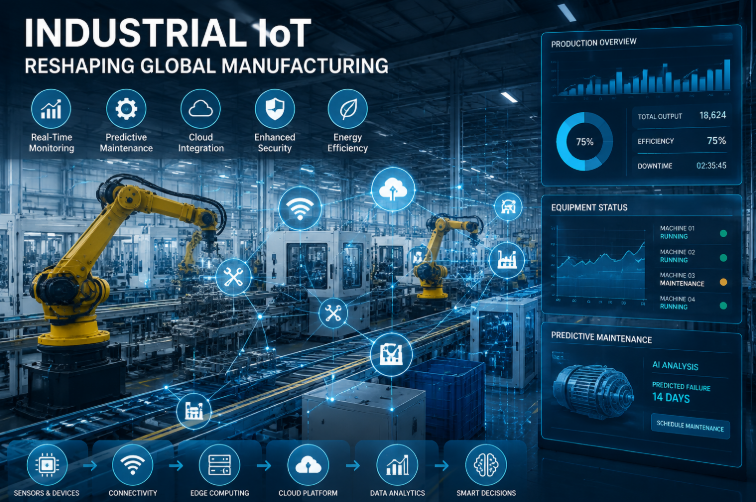
Traditional manufacturing systems often operate with limited communication between machines and management platforms. Industrial IoT changes this model by creating interconnected production ecosystems where equipment can collect, exchange, and analyze real-time data.
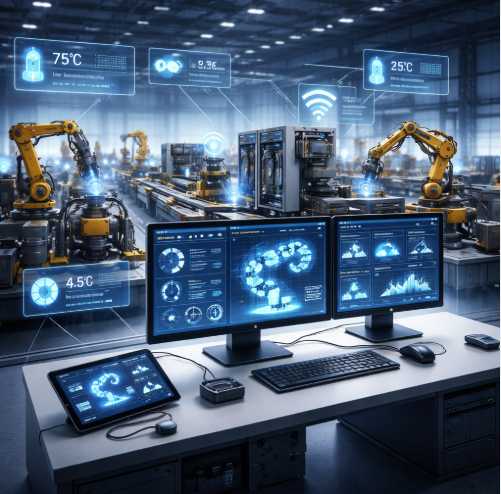
Smart sensors installed on industrial machines can continuously monitor parameters such as temperature, vibration, pressure, energy consumption, and production speed. This information allows operators and engineers to understand equipment performance instantly and identify potential problems before they impact production.
With real-time connectivity, manufacturers can move from reactive maintenance strategies toward proactive and predictive approaches. Instead of waiting for machines to fail, companies can schedule maintenance based on actual equipment conditions, reducing downtime and extending asset lifecycles.
Data has become one of the most valuable resources in modern manufacturing. Industrial IoT platforms transform raw machine data into meaningful insights that help companies improve decision-making.
Production managers can monitor factory performance through centralized dashboards, track key performance indicators, and identify inefficiencies across production lines. This visibility enables faster responses to operational challenges and supports continuous improvement initiatives.
For global manufacturers operating multiple facilities, IIoT provides the ability to collect standardized data from different locations. Companies can compare production efficiency, optimize processes, and implement best practices across international factories.
Equipment failure is one of the biggest challenges facing industrial operations. Unexpected downtime can result in significant financial losses, delayed deliveries, and reduced customer satisfaction.
Industrial IoT helps address this challenge by combining sensor technology, cloud platforms, artificial intelligence, and advanced analytics. Connected systems can detect unusual equipment behavior, analyze historical performance data, and predict possible failures before they occur.
For industries such as semiconductor manufacturing, automotive production, energy, and chemical processing, predictive maintenance is becoming a critical strategy for maintaining stable operations. By reducing unplanned shutdowns and optimizing maintenance schedules, companies can significantly lower operating costs.
The rise of IIoT is closely connected with the development of smart factories. A smart factory uses connected technologies to create highly automated, flexible, and efficient production environments.
Industrial IoT enables communication between programmable logic controllers (PLCs), industrial computers, robots, sensors, and enterprise software platforms. This integration allows factories to automate complex processes while maintaining precise control over production activities.
Smart factories can also adapt more quickly to market demands. Manufacturers can adjust production schedules, improve product customization, and respond to supply chain changes with greater flexibility.
Sustainability has become a key priority for manufacturers worldwide. Industrial IoT provides powerful tools for monitoring and reducing energy consumption.
Connected energy management systems can analyze electricity usage across production facilities and identify areas where energy efficiency can be improved. Manufacturers can optimize machine operation, reduce unnecessary consumption, and support environmental goals.
For companies pursuing sustainable production strategies, IIoT offers a practical approach to balancing productivity with responsible resource management.
As factories become more connected, reliable industrial communication networks are essential. Industrial Ethernet, edge computing, and secure communication protocols are playing increasingly important roles in supporting IIoT applications.
Modern manufacturing environments require high-speed data transmission, low latency communication, and strong cybersecurity protection. Industrial networking solutions help ensure that critical production data flows safely and efficiently between devices and systems.
Easy Semiconductor Technology (Hong Kong) Limited recognizes that stable automation infrastructure is a fundamental requirement for successful IIoT implementation. Reliable hardware components, industrial communication solutions, and advanced control technologies provide the foundation for next-generation manufacturing.
While Industrial IoT provides significant benefits, increased connectivity also introduces cybersecurity risks. Connected industrial systems may become targets for unauthorized access, data theft, or operational disruption.
Manufacturers are increasingly investing in industrial cybersecurity solutions, including network segmentation, secure authentication, data encryption, and continuous system monitoring.
Protecting IIoT environments requires a comprehensive approach that combines secure hardware, software protection, and employee awareness. As factories become more digital, cybersecurity will remain a critical part of industrial transformation strategies.
The future of manufacturing will be defined by greater intelligence, connectivity, and automation. Industrial IoT will continue to evolve alongside artificial intelligence, machine learning, robotics, and edge computing technologies.
Future factories will become more autonomous, capable of analyzing operational conditions, optimizing processes, and making intelligent decisions with minimal human intervention. Manufacturers that successfully adopt IIoT technologies will gain advantages in efficiency, flexibility, and competitiveness.
Easy Semiconductor Technology (Hong Kong) Limited believes that Industrial IoT will remain a major driving force behind global manufacturing innovation. By connecting industrial assets and transforming operational data into actionable insights, IIoT is creating a smarter, more efficient, and more sustainable manufacturing future.
As industries worldwide continue their digital transformation journeys, Industrial IoT will play a central role in shaping the factories of tomorrow. Companies that embrace connected technologies today will be better positioned to meet future challenges and opportunities in the global manufacturing landscape.