
 home
home
 Published: Aug 01, 2026 01:46 PM
 Page View: 157
As global manufacturing continues its transition toward smart factories and Industry 4.0, automation systems are becoming more intelligent, interconnected, and dependent on continuous operation. Programmable Logic Controllers (PLCs), as the core control units of industrial automation environments, are responsible for managing production lines, processing real-time data, controlling machinery, and ensuring stable manufacturing processes.
However, as factories become more automated, the impact of unexpected PLC failures has become increasingly significant. A single controller malfunction can interrupt production, reduce efficiency, create safety risks, and generate substantial financial losses. To address these challenges, manufacturers worldwide are accelerating the adoption of advanced PLC redundancy systems to improve system availability, reliability, and operational continuity.
Easy Semiconductor Technology (Hong Kong) Limited recognizes the growing importance of dependable automation infrastructure and provides professional industrial automation component solutions to support companies upgrading and maintaining their critical control systems.
Traditional manufacturing environments could often tolerate short periods of downtime. However, modern smart factories operate through highly integrated networks that connect PLCs, industrial communication systems, sensors, robotics, motion controllers, SCADA platforms, and manufacturing execution systems.
In these advanced environments, production lines are expected to operate continuously with minimal interruption. Industries such as semiconductor manufacturing, energy, automotive production, pharmaceuticals, food processing, and chemical manufacturing require automation systems that can maintain stable performance around the clock.
As automation complexity increases, PLC reliability becomes one of the most important factors affecting overall factory performance. Even high-quality PLC hardware may experience unexpected issues caused by aging components, communication failures, environmental conditions, software errors, or power-related problems.
PLC redundancy systems provide an effective solution by creating backup control capabilities that allow manufacturing operations to continue even when the primary controller encounters a failure.
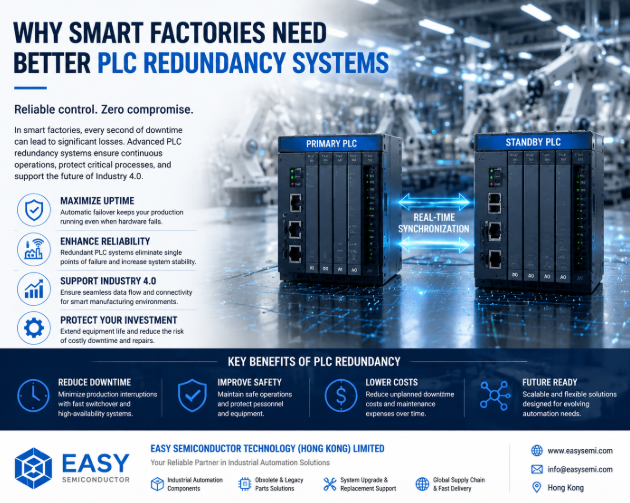
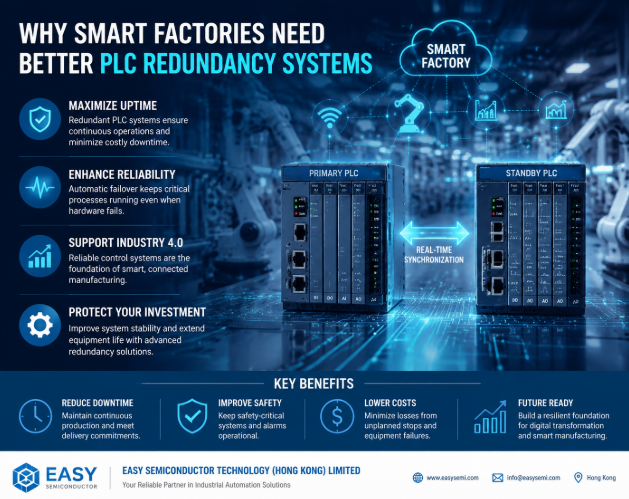
A PLC redundancy system typically uses two or more controllers working together to provide continuous control availability. Under normal operating conditions, the primary PLC manages industrial processes while the standby PLC remains synchronized and ready to take over.
When the main controller detects a fault, the redundant system automatically switches control functions to the backup PLC. This process helps minimize downtime and prevents major disruptions to production.
Common redundancy architectures include:
Hot standby redundancy – A backup PLC continuously synchronizes with the primary controller and immediately takes over when needed.
Cold standby redundancy – A backup controller is available but requires manual or delayed activation.
Network redundancy – Provides alternative communication paths to maintain connectivity between industrial devices.
Power redundancy – Ensures stable operation through backup power supply systems.
For smart factories requiring high availability, hot standby PLC redundancy is often preferred because it allows rapid failover without significantly affecting production processes.
Unplanned downtime remains one of the biggest challenges for industrial manufacturers. A failed PLC can stop entire production lines, interrupt supply chains, and delay customer deliveries.
Advanced PLC redundancy systems help companies maintain continuous operation by automatically transferring control responsibilities to backup hardware. This reduces recovery time and allows maintenance teams to repair or replace failed components without immediately stopping production.
For industries where every minute of downtime creates significant losses, redundancy has become a strategic investment rather than an optional upgrade.
Smart factories rely heavily on real-time data exchange and automated decision-making. PLCs are no longer isolated controllers; they are connected to industrial networks, cloud platforms, analytics systems, and intelligent manufacturing solutions.
A PLC failure can interrupt not only machine operation but also data collection, production monitoring, and digital workflows.
By implementing reliable redundancy solutions, manufacturers can create a stronger foundation for Industry 4.0 transformation. Stable control systems allow companies to confidently deploy advanced technologies such as industrial IoT, predictive maintenance, artificial intelligence monitoring, and automated production optimization.
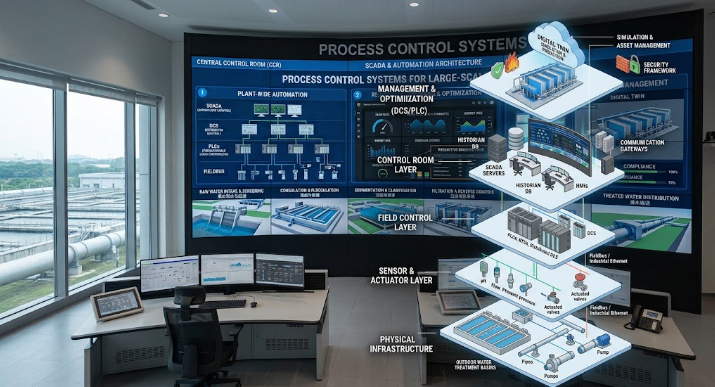
Certain industries cannot afford unexpected automation failures. Semiconductor fabrication plants, power generation facilities, water treatment systems, and large-scale production environments require extremely high levels of reliability.
PLC redundancy systems provide additional protection for these mission-critical applications by ensuring that essential control functions remain available.
Through redundant controllers, communication modules, and supporting industrial components, companies can achieve higher system resilience and improve long-term operational security.
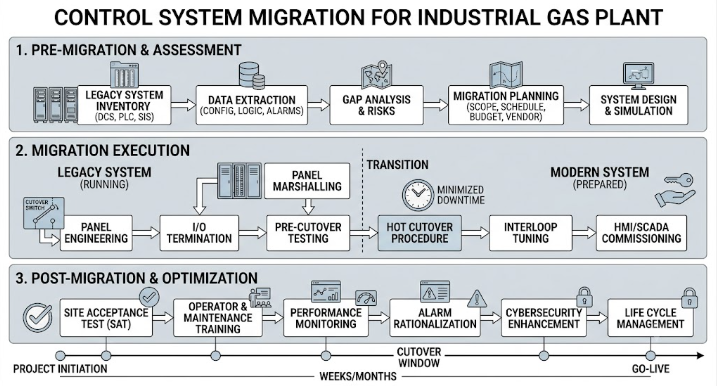
Many factories still operate with legacy automation systems installed years or even decades ago. While these systems may continue functioning, they often face challenges such as discontinued PLC models, limited spare parts availability, outdated communication protocols, and insufficient redundancy capabilities.
Replacing an entire automation system can require significant investment, production shutdowns, and complex engineering work. As a result, many manufacturers prefer gradual modernization strategies that enhance reliability while protecting existing infrastructure.
Easy Semiconductor Technology (Hong Kong) Limited helps customers address these challenges by providing industrial automation replacement components, legacy system support, and upgrade solutions designed to improve existing factory operations.
A successful PLC redundancy system depends not only on controllers but also on the reliability of related industrial components, including communication modules, power supplies, interface modules, network equipment, and automation accessories.
Using high-quality replacement parts helps ensure compatibility, stability, and long-term performance. For factories operating older automation platforms, access to reliable industrial components is essential for maintaining production continuity.
Easy Semiconductor Technology (Hong Kong) Limited focuses on supporting global industrial customers with dependable automation solutions, helping companies extend equipment lifecycles and reduce the risks associated with obsolete hardware.
The future of PLC redundancy will continue to evolve alongside smart manufacturing technologies. Several important trends are expected to shape the industry:
Higher-Speed Failover Performance
Next-generation redundancy systems will provide faster switching capabilities to further reduce production interruptions.
Integration with Industrial Networks
Redundancy solutions will increasingly support advanced industrial Ethernet technologies and distributed control architectures.
Cybersecurity Enhancement
As factories become more connected, redundant systems will require stronger cybersecurity protection to prevent operational disruptions.
AI-Based Predictive Maintenance
Artificial intelligence will help identify potential controller failures before they occur, allowing proactive maintenance and improving system reliability.
These developments will make PLC redundancy an essential element of future smart factory infrastructure.
The global manufacturing industry is entering a new era where reliability, flexibility, and intelligent automation are critical competitive advantages. As smart factories become more advanced, PLC redundancy systems will play an increasingly important role in maintaining continuous production and protecting industrial investments.
Easy Semiconductor Technology (Hong Kong) Limited is committed to providing professional industrial automation solutions, supporting customers with reliable components and replacement strategies for modernizing aging control systems.
By improving PLC redundancy capabilities, manufacturers can achieve greater operational stability, reduce downtime risks, and build stronger foundations for the future of smart manufacturing.
About Easy Semiconductor Technology (Hong Kong) Limited
Easy Semiconductor Technology (Hong Kong) Limited specializes in industrial automation components, electronic solutions, and replacement services for global customers. The company supports industries seeking reliable alternatives for obsolete automation hardware and helps businesses improve the performance, availability, and longevity of their industrial systems.