
 home
home
 Published: Aug 03, 2026 01:53 PM
 Page View: 189
As global industries continue to face rising energy costs, stricter environmental regulations, and increasing demands for sustainable production, smart energy management has become a critical strategy for modern industrial facilities. Easy Semiconductor Technology (Hong Kong) Limited highlights the importance of intelligent energy solutions that help factories optimize power consumption, improve operational efficiency, and achieve long-term sustainability goals.
Industrial facilities are among the largest energy consumers worldwide. Manufacturing plants, semiconductor facilities, chemical processing sites, and large-scale production environments require stable and continuous power supplies to maintain productivity. However, traditional energy management methods often lack real-time visibility, making it difficult for operators to identify waste, control consumption, and respond quickly to changing production requirements.
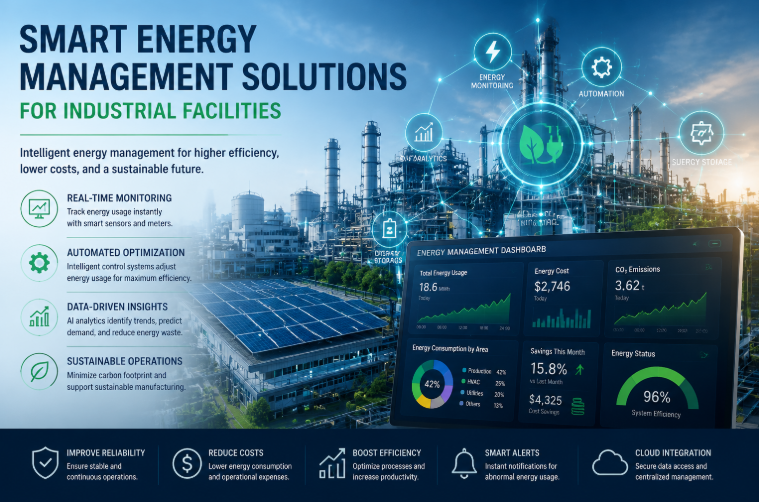
Smart energy management solutions combine advanced automation technologies, industrial sensors, data analytics, and intelligent control systems to provide a comprehensive approach to energy optimization. By collecting and analyzing real-time energy data, companies can gain deeper insights into electricity usage patterns and make informed decisions to reduce unnecessary consumption.
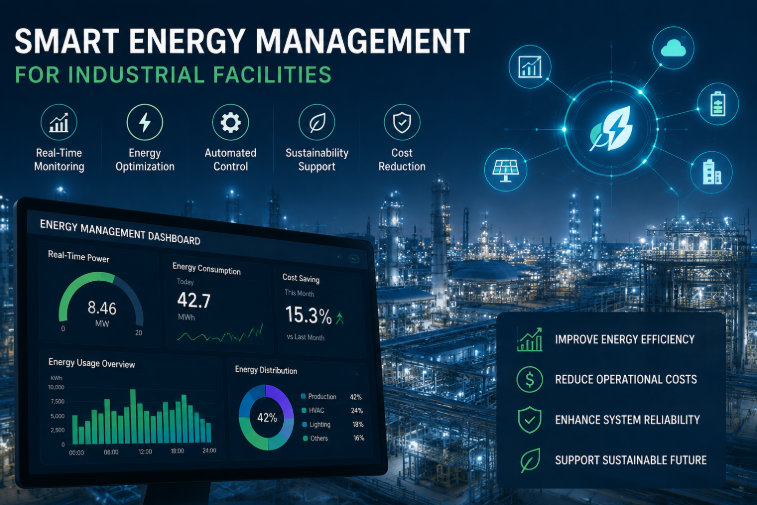
One of the key elements of smart energy management is real-time monitoring. Modern industrial facilities use intelligent meters, sensors, and industrial communication networks to continuously track energy usage across different production areas, machines, and systems.
Unlike traditional monitoring methods that rely on periodic manual inspections, smart monitoring platforms provide instant visibility into energy performance. Factory operators can identify abnormal consumption, detect equipment inefficiencies, and take corrective actions before energy losses become significant.
For example, excessive power consumption from aging machinery, inefficient motors, or poorly optimized production schedules can be quickly detected through real-time data analysis. This allows maintenance teams to address problems proactively and reduce operational costs.
Easy Semiconductor Technology (Hong Kong) Limited recognizes that accurate energy monitoring is the foundation of effective industrial energy management. Reliable monitoring systems enable factories to transform raw energy data into actionable insights and improve overall facility performance.
Smart energy management is closely connected with industrial automation. By integrating energy systems with PLCs, SCADA platforms, industrial networks, and edge computing devices, factories can achieve automated energy control and improved resource utilization.
Advanced automation systems can automatically adjust energy usage based on production demand. For instance, lighting systems, HVAC equipment, pumps, compressors, and production machines can be optimized according to operational conditions. During periods of lower production activity, systems can reduce unnecessary energy consumption without affecting manufacturing performance.
Industrial Ethernet technologies and intelligent controllers also enable seamless communication between different energy management components. This creates a connected industrial environment where equipment performance, energy consumption, and production efficiency can be analyzed together.
Through automation-driven energy optimization, manufacturers can reduce waste, improve equipment reliability, and create more flexible production environments.
Artificial intelligence and data analytics are transforming the way industries manage energy resources. Instead of simply recording energy consumption, modern systems can analyze historical and real-time data to predict future energy requirements.
AI-powered energy management platforms can identify consumption trends, detect unusual patterns, and recommend optimization strategies. These capabilities allow factories to move from reactive energy control to predictive energy management.
For example, AI algorithms can analyze machine operating conditions and production schedules to determine the most energy-efficient operating modes. They can also predict potential equipment problems that may lead to increased power consumption.
By combining artificial intelligence with industrial automation, companies can achieve greater energy efficiency while maintaining stable production output.
Sustainability has become a major priority for industrial organizations worldwide. Companies are under increasing pressure to reduce carbon emissions, improve energy efficiency, and meet environmental standards.
Smart energy management solutions support these objectives by helping factories minimize energy waste and improve resource utilization. Through better monitoring and automated control, industrial facilities can reduce their carbon footprint while maintaining competitive production capabilities.
Renewable energy integration is another important area where smart energy management provides value. Industrial facilities equipped with solar power systems, energy storage solutions, and intelligent power controllers require advanced management platforms to balance energy generation and consumption.
Smart systems can coordinate renewable energy sources with traditional power supplies, ensuring reliable operation while maximizing clean energy usage.
Energy efficiency is not only an environmental responsibility but also a business advantage. Rising electricity prices and operational expenses make energy optimization essential for industrial competitiveness.
Smart energy management solutions help companies reduce costs by identifying inefficient processes, improving equipment utilization, and preventing unnecessary energy losses. Automated monitoring also reduces the workload of facility management teams by providing centralized control and real-time alerts.
In addition, improved energy visibility enhances system reliability. Unexpected energy fluctuations, equipment failures, or power quality issues can be detected earlier, allowing companies to respond quickly and prevent production interruptions.
For industries where continuous operation is critical, such as semiconductor manufacturing, pharmaceutical production, and process industries, reliable energy management is essential for maintaining product quality and operational stability.
The future of industrial energy management will be shaped by greater connectivity, artificial intelligence, and digital transformation. As factories become smarter, energy systems will increasingly operate as integrated parts of automated industrial ecosystems.
Technologies such as edge computing, Industrial Internet of Things (IIoT), cloud platforms, and advanced analytics will continue to improve energy visibility and decision-making capabilities. These innovations will allow manufacturers to achieve higher efficiency, stronger sustainability performance, and improved operational resilience.
Easy Semiconductor Technology (Hong Kong) Limited continues to focus on providing advanced industrial technology solutions that support the development of smarter and more sustainable manufacturing environments. By adopting intelligent energy management strategies, industrial organizations can reduce costs, improve productivity, and build a more sustainable future.
Smart energy management is no longer only an option for modern factories—it is becoming a fundamental requirement for achieving efficient, reliable, and environmentally responsible industrial operations. Through digital technologies and intelligent automation, industries can unlock new opportunities for energy optimization and sustainable growth.