
 home
home
 Published: Jul 31, 2026 09:45 AM
 Page View: 107
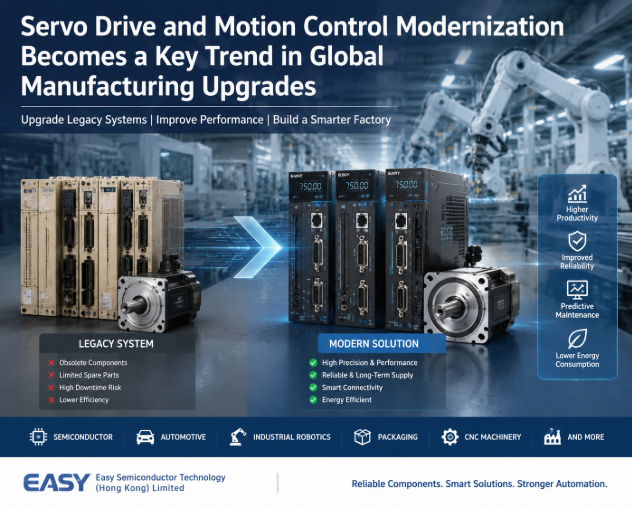
In today’s competitive manufacturing environment, precision, speed, and flexibility have become critical factors for success. Servo drives and motion control systems serve as the core technologies behind automated production lines, robotics, semiconductor equipment, packaging machinery, CNC systems, and many other industrial applications. However, many factories are still operating legacy servo systems installed decades ago, creating challenges related to spare parts availability, maintenance costs, energy efficiency, and system compatibility.
As global industries continue upgrading their automation infrastructure, servo drive and motion control modernization has emerged as one of the most important trends in industrial transformation. Companies are seeking reliable replacement solutions that allow them to upgrade outdated systems without completely rebuilding their production facilities.
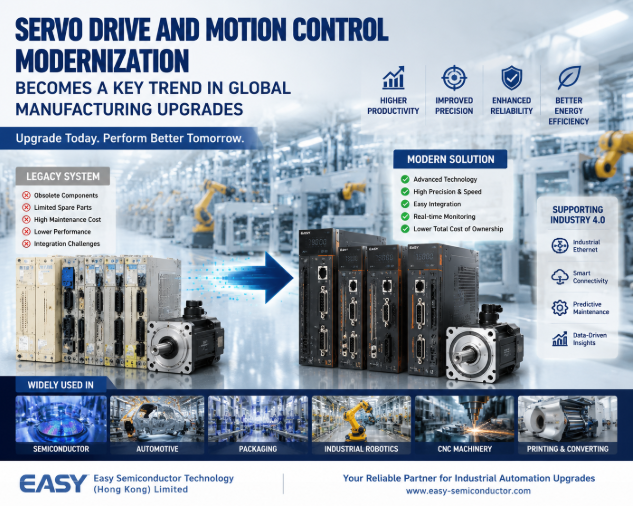
Many industrial plants rely on automation equipment that has been running for 10, 20, or even 30 years. Although these systems may still perform essential production tasks, aging servo drives and motion controllers are increasingly difficult to maintain.
Common problems associated with obsolete motion control systems include:
Discontinued servo drive models and limited spare parts availability
Increasing downtime caused by component failures
Lack of communication compatibility with modern industrial networks
Reduced positioning accuracy and machine performance
Higher energy consumption compared with modern technologies
Difficulty integrating with smart factory platforms
When a critical servo module fails, manufacturers may face long production interruptions because original replacement parts are no longer available or require long lead times. For industries such as semiconductor manufacturing, automotive production, pharmaceuticals, and precision machinery, even a short shutdown can result in significant financial losses.
The latest generation of servo drives and motion controllers provides advanced capabilities designed for modern industrial requirements. Compared with traditional systems, new solutions offer improved control accuracy, faster response times, enhanced communication functions, and better energy efficiency.
Modern servo systems typically support:
High-speed industrial Ethernet communication
Advanced motion synchronization
Real-time machine monitoring
Predictive maintenance functions
Improved diagnostic capabilities
Integration with PLC, DCS, SCADA, and MES platforms
These improvements enable manufacturers to build more intelligent and connected production environments. By upgrading motion control systems, factories can achieve higher productivity while reducing operational risks.
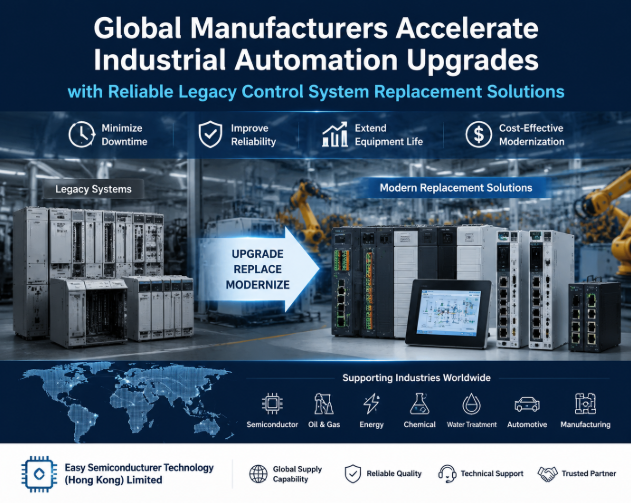
Complete machine replacement is not always practical due to high investment costs, production disruption, and complex engineering requirements. As a result, many manufacturers are adopting targeted modernization strategies that focus on replacing only critical obsolete components.
A professional servo drive modernization approach usually includes:
System assessment
Engineers analyze existing servo motors, drives, controllers, communication protocols, and machine requirements.
Compatible replacement selection
Suitable modern alternatives are identified based on performance specifications, electrical requirements, and application conditions.
Hardware and software migration
Control parameters, motion profiles, and communication settings are carefully transferred to the upgraded system.
Testing and commissioning
The upgraded equipment is tested to ensure stable operation and maintain production quality.
This approach allows manufacturers to improve reliability while controlling upgrade budgets.
The increasing adoption of Industry 4.0 technologies is accelerating demand for servo drive modernization worldwide. Manufacturing companies in Asia, Europe, North America, and emerging industrial markets are investing in automation upgrades to remain competitive.
Industries benefiting from servo modernization include:
Semiconductor and electronics manufacturing
Automotive assembly and battery production
Food and packaging machinery
Industrial robotics
Printing and converting equipment
Textile machinery
Energy and infrastructure systems
As production requirements become more demanding, manufacturers need motion systems capable of delivering higher precision and continuous operation.
Easy Semiconductor Technology (Hong Kong) Limited provides professional industrial automation component solutions to help global customers maintain and upgrade their automation systems.
The company focuses on supplying reliable industrial electronic components, including automation modules, control system parts, motion-related equipment, and replacement solutions for legacy industrial platforms.
By supporting customers with sourcing expertise and industrial application knowledge, Easy Semiconductor Technology helps manufacturers reduce downtime, extend equipment service life, and achieve smoother automation upgrades.
For companies facing obsolete servo drives, discontinued motion controllers, or aging automation platforms, finding a dependable replacement solution is essential for maintaining long-term production stability.
The future of industrial automation will continue moving toward intelligent, connected, and highly efficient motion control technologies. Servo systems will play an increasingly important role in robotics, smart factories, and advanced manufacturing applications.
Manufacturers that proactively modernize their servo drives and motion control infrastructure can gain several advantages, including:
Improved equipment reliability
Reduced maintenance costs
Increased production efficiency
Better data visibility
Stronger competitiveness in global markets
Servo drive and motion control modernization is no longer simply an equipment replacement project. It has become a strategic investment that supports digital transformation and sustainable manufacturing growth.
As industries worldwide continue upgrading aging automation infrastructure, companies like Easy Semiconductor Technology (Hong Kong) Limited are helping manufacturers overcome legacy system challenges and move toward a more reliable and intelligent industrial future.