
 home
home
 Published: Aug 06, 2026 10:45 AM
 Page View: 143
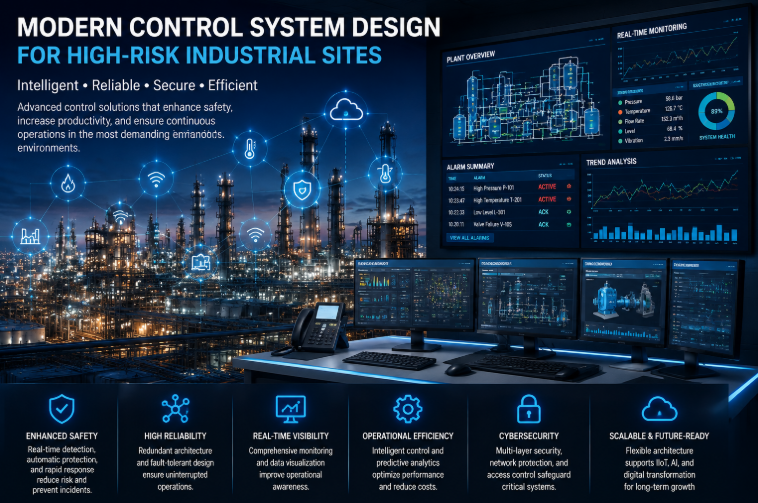
As industries continue to expand automation, digitalization, and intelligent manufacturing capabilities, the demand for advanced control system design in high-risk industrial sites is growing rapidly. Facilities such as chemical plants, oil and gas installations, power generation stations, mining operations, semiconductor factories, and heavy manufacturing facilities require highly reliable automation solutions to maintain operational safety, improve productivity, and minimize unexpected downtime.
Easy Semiconductor Technology (Hong Kong) Limited recognizes that modern industrial control systems must go beyond traditional automation. Today’s high-risk environments require integrated solutions that combine real-time monitoring, advanced sensors, industrial communication networks, cybersecurity protection, and intelligent decision-making technologies.
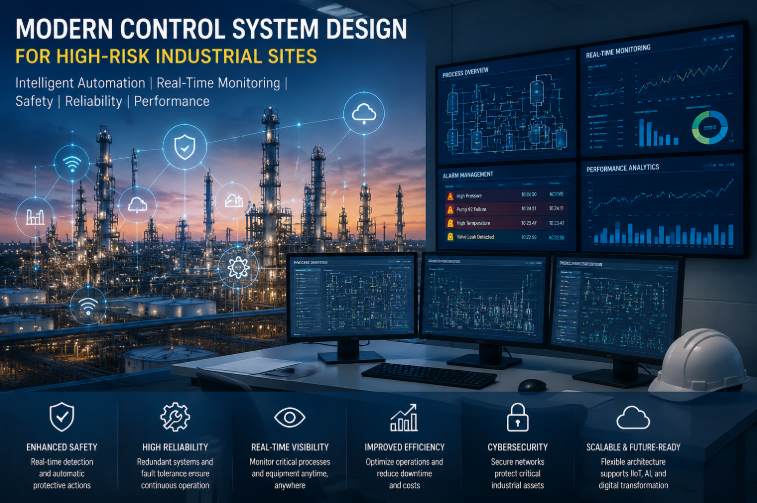
High-risk industrial sites operate under complex conditions where equipment failures, process instability, or human errors can lead to significant financial losses and safety concerns. Traditional control systems may not provide sufficient flexibility or predictive capabilities to address modern operational challenges.
Modern control system design focuses on creating intelligent, resilient, and scalable automation platforms. These systems continuously collect operational data from machines, sensors, and field devices, allowing operators to monitor critical parameters and respond quickly to abnormal conditions.
Key objectives of advanced control systems include:
Improving operational safety
Reducing equipment failure risks
Increasing production efficiency
Supporting remote monitoring and control
Enhancing energy management
Ensuring compliance with industrial safety standards
By implementing reliable control architectures, companies can achieve safer operations while maintaining competitive production performance.
A modern industrial control system typically consists of multiple layers working together. The field layer includes sensors, actuators, transmitters, and intelligent devices that collect real-time information from industrial processes.
The control layer uses technologies such as programmable logic controllers (PLCs), distributed control systems (DCS), and industrial computers to process data and execute automated operations. Above this, supervisory systems such as SCADA platforms provide visualization, data analysis, and centralized management.
A well-designed control architecture allows different components to communicate efficiently through industrial networks, including Industrial Ethernet, fieldbus technologies, and wireless industrial communication solutions.
For high-risk facilities, redundancy and fault tolerance are essential. Backup controllers, redundant power supplies, and reliable communication paths ensure that critical operations continue even when individual components experience failures.
One of the most important features of modern control systems is real-time monitoring capability. Industrial operators need immediate visibility into equipment conditions, environmental changes, and production processes.
Advanced monitoring systems can track:
Temperature variations
Pressure levels
Equipment vibration
Energy consumption
Chemical process conditions
Machine performance indicators
When abnormal situations occur, intelligent control systems can generate alarms and automatically initiate protective actions. This reduces response time and helps prevent serious incidents.
For example, in a chemical processing facility, automated control systems can detect unusual pressure increases and activate safety procedures before equipment damage occurs. In power plants, monitoring systems can identify early signs of equipment degradation and support preventive maintenance strategies.
The integration of artificial intelligence (AI), machine learning, and industrial Internet of Things (IIoT) technologies is transforming modern control system design.
AI-powered systems can analyze large volumes of operational data to identify patterns, predict equipment failures, and optimize production processes. This enables companies to move from reactive maintenance approaches toward predictive and preventive maintenance models.
Industrial IoT devices provide additional connectivity by linking machines, sensors, and cloud-based platforms. This creates a complete digital ecosystem where companies can access valuable insights into their operations.
For high-risk industrial environments, intelligent automation offers several advantages:
Early detection of potential failures
Reduced maintenance costs
Improved process accuracy
Better resource utilization
Enhanced operational decision-making
As industrial facilities become more connected, cybersecurity has become a critical element of control system design. Modern factories and infrastructure sites face increasing cyber threats that can affect production reliability and safety.
Effective industrial cybersecurity strategies include network segmentation, access control, secure communication protocols, system monitoring, and regular software updates.
Control systems designed for high-risk environments must balance connectivity with security. Protecting critical automation infrastructure ensures that companies can benefit from digital transformation while reducing cybersecurity risks.
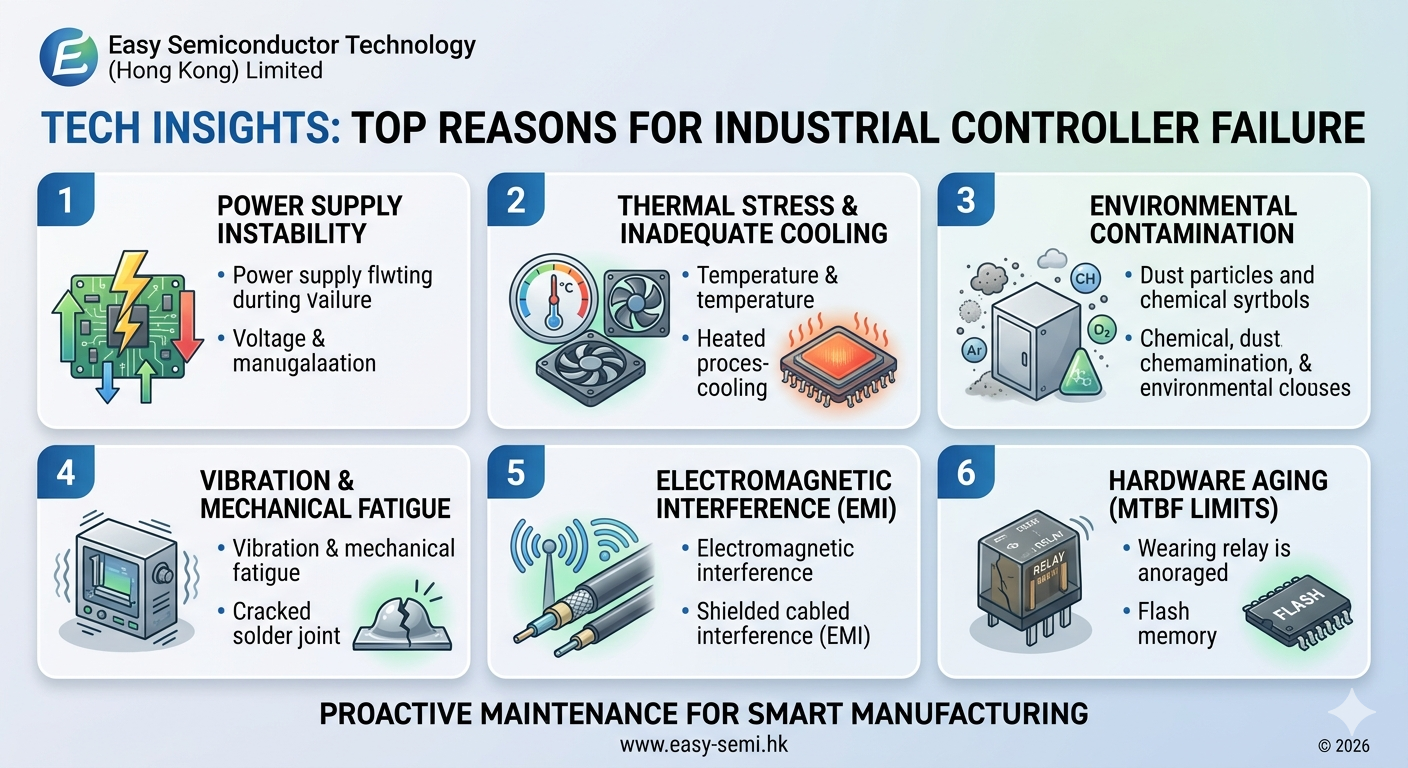
High-risk industrial sites often operate in challenging environments involving extreme temperatures, dust, vibration, humidity, and electromagnetic interference. Control system components must be carefully selected to withstand these conditions.
Industrial-grade hardware, rugged communication equipment, and reliable power management solutions are essential for long-term system performance.
Engineers must consider factors such as:
Environmental protection ratings
Equipment lifecycle requirements
Maintenance accessibility
System scalability
Future technology upgrades
A properly designed control system provides stable operation throughout the entire lifecycle of industrial equipment.
Manufacturers and industrial operators worldwide are investing in modern control system upgrades to improve safety, efficiency, and sustainability. Aging automation infrastructure is being replaced with intelligent platforms capable of supporting future industrial requirements.
Easy Semiconductor Technology (Hong Kong) Limited provides professional solutions and technical support for industrial automation applications, helping international customers optimize control system performance and improve operational reliability.
As industries continue moving toward smart factories and digital production environments, advanced control system design will remain a key factor in achieving safer and more efficient industrial operations.
The future of industrial control systems will be driven by greater intelligence, connectivity, and automation. Technologies such as edge computing, AI analytics, digital twins, and advanced industrial communication networks will continue improving the capabilities of high-risk industrial facilities.
Companies that adopt modern control system strategies will be better positioned to manage operational challenges, reduce risks, and achieve sustainable growth.
For industries where safety and reliability are critical, modern control system design is not only a technological upgrade but also a long-term investment in operational excellence.
About Easy Semiconductor Technology (Hong Kong) Limited
Easy Semiconductor Technology (Hong Kong) Limited focuses on providing industrial automation solutions, electronic components, and technical services for global customers. Through reliable technologies and professional expertise, the company supports industries in improving system performance, automation efficiency, and digital transformation capabilities.