
 home
home
 Published: Aug 24, 2026 12:03 PM
 Page View: 140
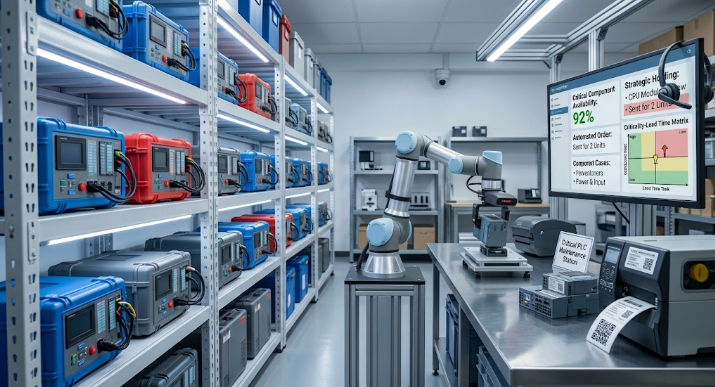
In modern industrial automation environments, Programmable Logic Controllers (PLCs) serve as the central intelligence behind manufacturing lines, process control systems, energy management platforms, and critical infrastructure operations. As industries continue to adopt smart factories and digital transformation strategies, maintaining reliable access to critical PLC components has become a key factor in ensuring operational continuity.
Easy Semiconductor Technology (Hong Kong) Limited highlights that effective inventory management for PLC components is no longer simply a purchasing activity. It is a strategic approach that combines risk assessment, supply chain planning, lifecycle management, and technical expertise to minimize downtime and improve automation system reliability.
Industrial facilities increasingly depend on PLC processors, communication modules, I/O cards, power supplies, memory units, and expansion modules to maintain continuous production. When these components fail unexpectedly, the resulting downtime can lead to significant financial losses, delayed deliveries, and reduced customer satisfaction. A structured spare parts strategy helps companies avoid emergency procurement situations and ensures that essential automation assets remain operational.
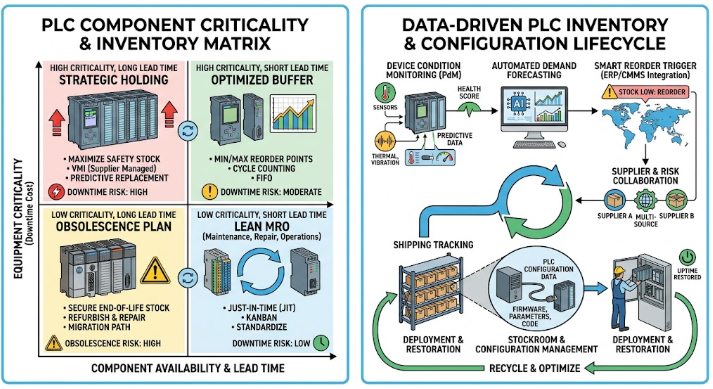
Unlike standard industrial supplies, PLC components often have unique technical specifications and compatibility requirements. A replacement module must match the correct hardware platform, firmware version, communication protocol, and system configuration. Incorrect inventory planning may result in having spare parts available but unusable during an emergency.
Critical PLC inventory management focuses on identifying components that have the highest impact on production operations. These typically include:
PLC CPU modules responsible for executing control programs
Digital and analog I/O modules connected to field devices
Communication processors for industrial networks
Power supply modules supporting automation racks
Memory cards containing application programs
Safety controllers used in critical applications
Remote I/O communication interfaces
Facilities should evaluate each component according to operational importance, replacement availability, failure history, and supplier lead time. Components that could stop an entire production line or critical process should receive the highest inventory priority.
A successful inventory program begins with classification. Not every PLC spare part requires the same stocking level. Companies should divide components into different categories based on their operational impact.
Tier 1 components are parts that can immediately stop production or create major operational risks. These items should usually be stored as ready-to-use spare units.
Examples include:
Main PLC CPUs
Network communication modules
Safety PLC controllers
Critical power supplies
Specialized discontinued modules
Maintaining these components on-site can significantly reduce recovery time when failures occur.
These components may not stop the entire facility immediately but can affect production efficiency. Examples include secondary I/O modules, operator interface communication cards, and backup expansion units.
Organizations may maintain limited quantities depending on failure rates and replacement availability.
Common components with short delivery times can often be managed through regular procurement channels rather than large stock quantities.
This classification approach helps companies avoid excessive inventory costs while protecting critical operations.
Traditional inventory management often relies on historical purchasing patterns. However, industrial automation systems require a more proactive approach.
Predictive inventory planning combines maintenance records, equipment age, operating conditions, and supplier information to forecast future requirements.
Important data points include:
Previous PLC module failures
Equipment operating hours
Environmental conditions such as heat and vibration
Manufacturer lifecycle announcements
Current market availability
Expected production expansion plans
By analyzing this information, companies can determine which components require immediate stocking and which items can be purchased when needed.
Predictive planning is especially valuable for legacy automation systems. Many industrial facilities continue operating equipment installed years or even decades ago, creating challenges when manufacturers discontinue older PLC platforms. A proactive spare strategy helps organizations prepare before replacement availability becomes limited.
Automation technology evolves rapidly, and PLC product families eventually reach end-of-life status. Without proper planning, companies may face unexpected challenges when older components fail.
Effective lifecycle management includes:
Monitoring manufacturer product lifecycle updates
Identifying discontinued PLC models
Maintaining strategic quantities of legacy components
Planning gradual migration to newer platforms
Documenting hardware and software configurations
For long-running industrial applications, keeping verified spare PLC components can be more economical than replacing an entire automation system immediately.
A balanced approach allows companies to extend equipment service life while preparing future modernization plans.
Overstocking PLC components increases storage costs and ties up capital. Understocking creates operational risks. The goal is to achieve the right balance between availability and investment.
Companies can optimize inventory levels by considering:
Components with frequent failure records require higher stock levels.
Long-lead components should receive greater inventory priority, especially when they are essential for production.
A low-cost PLC module controlling a major production line may be more important than an expensive component used in a non-critical application.
Facilities with multiple identical machines can reduce inventory costs by maintaining shared backup components instead of individual stock for every system.
This data-driven approach ensures that inventory decisions are based on operational risk rather than purchase price alone.
A strong supplier network is essential for maintaining PLC component availability. Industrial automation users should work with experienced suppliers that understand different PLC platforms, including Siemens, Allen-Bradley, Mitsubishi, Schneider Electric, ABB, Omron, and other major automation brands.
Reliable suppliers can provide:
New original components
Certified surplus inventory
Tested refurbished modules
Technical compatibility verification
Fast sourcing support for discontinued parts
Diversifying suppliers also reduces dependence on a single source and improves resilience against supply chain disruptions.
Modern industrial organizations are increasingly adopting digital inventory platforms to improve visibility and control.
A digital spare parts management system can provide:
Real-time inventory tracking
Automated reorder notifications
Component history records
Barcode or RFID tracking
Maintenance integration
Supplier performance monitoring
Integration between maintenance management systems and inventory databases allows engineering teams to quickly identify available replacements during emergencies.
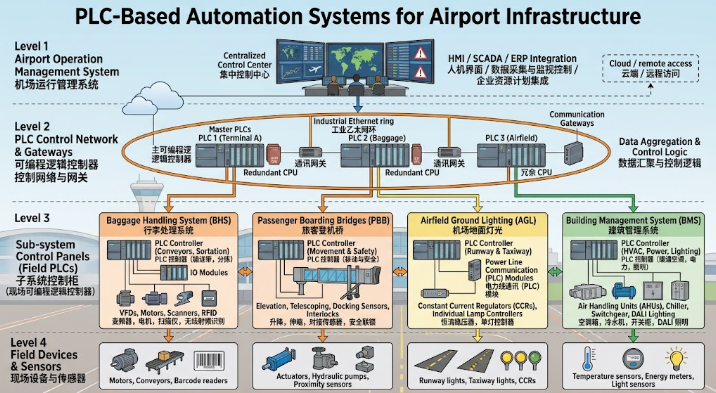
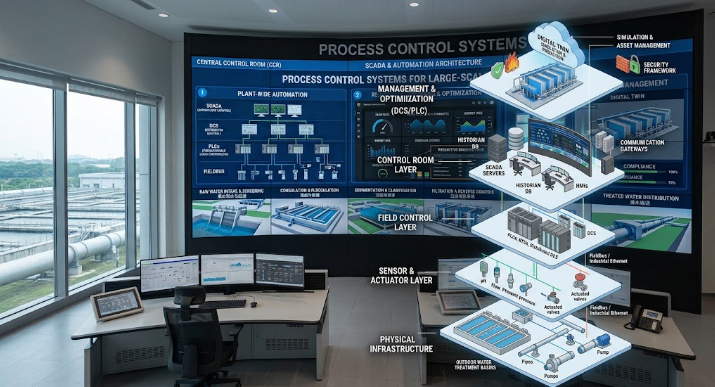
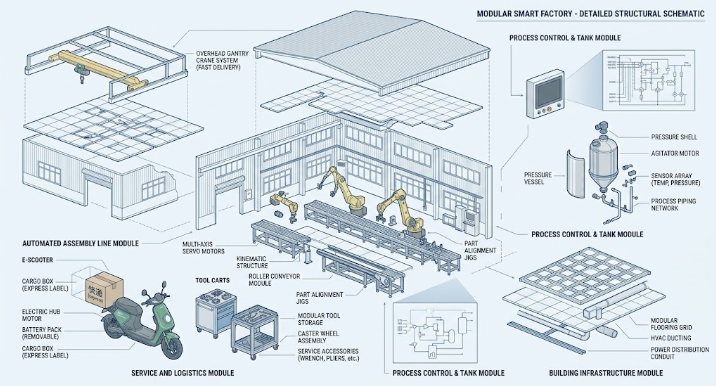
For industries such as manufacturing, energy, transportation, water treatment, logistics, and infrastructure, PLC availability directly affects operational performance. A carefully designed inventory strategy reduces downtime risks, improves maintenance efficiency, and supports long-term automation reliability.
Easy Semiconductor Technology (Hong Kong) Limited is committed to supporting industrial customers with professional automation component solutions, helping organizations manage critical PLC inventories and maintain stable control system performance.
As industrial automation continues to advance, companies that invest in intelligent spare parts management will be better positioned to achieve higher uptime, stronger supply chain resilience, and sustainable operational growth.
About Easy Semiconductor Technology (Hong Kong) Limited
Easy Semiconductor Technology (Hong Kong) Limited provides industrial automation components and technology solutions for global customers. The company focuses on supplying reliable semiconductor and automation products, supporting industries with efficient sourcing, technical expertise, and lifecycle management services.