
 home
home
 Published: Aug 02, 2026 01:12 PM
 Page View: 103
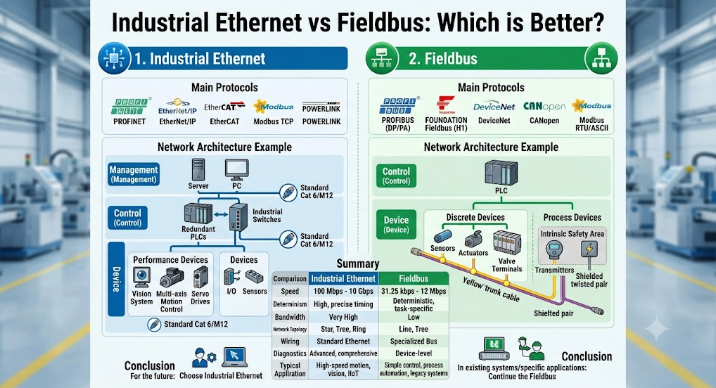
As global manufacturing continues its transformation toward smart factories, industrial communication networks have become a critical foundation for automation efficiency, reliability, and data-driven production. Among the most widely discussed technologies are Industrial Ethernet and Fieldbus systems. Both communication solutions have played important roles in industrial automation, but their different architectures, performance characteristics, and application advantages have created ongoing discussions among engineers and manufacturers: Which one is better for modern industrial environments?
Easy Semiconductor Technology (Hong Kong) Limited highlights that the answer depends on specific industrial requirements, including system scale, data volume, real-time control needs, infrastructure conditions, and future expansion plans. While Fieldbus remains widely used in many established factories, Industrial Ethernet is rapidly becoming the preferred choice for next-generation automation systems.
Fieldbus is a traditional industrial communication technology designed to connect field devices such as sensors, actuators, controllers, and industrial instruments. Unlike conventional point-to-point wiring systems, Fieldbus allows multiple devices to communicate through a shared network, reducing wiring complexity and improving system organization.
Popular Fieldbus protocols include PROFIBUS, DeviceNet, CANopen, Foundation Fieldbus, and Modbus RTU. These technologies have been successfully deployed in manufacturing, process automation, energy facilities, and transportation systems for decades.
One of the biggest advantages of Fieldbus is its proven reliability. Many industrial plants continue to operate Fieldbus-based automation networks because they provide stable communication performance and have strong compatibility with existing equipment. For applications that require simple device communication, low data transmission rates, and long operational lifecycles, Fieldbus remains a practical solution.
Fieldbus systems also benefit from lower hardware costs in certain applications. Many legacy machines and production lines were designed around Fieldbus networks, making maintenance and replacement easier without requiring complete infrastructure upgrades.
However, traditional Fieldbus technologies have limitations. Their communication speed is generally lower compared with modern Ethernet-based solutions. In addition, network bandwidth limitations can make it difficult to handle large amounts of real-time production data, machine learning applications, remote monitoring, and advanced industrial analytics.
Industrial Ethernet applies Ethernet communication technology to industrial environments, providing higher speed, greater bandwidth, and improved connectivity for modern automation systems. Unlike office Ethernet networks, Industrial Ethernet solutions are specifically designed to withstand harsh industrial conditions, including vibration, temperature changes, electromagnetic interference, and continuous operation.
Common Industrial Ethernet protocols include PROFINET, EtherNet/IP, EtherCAT, Modbus TCP, and POWERLINK. These technologies enable communication between PLCs, industrial PCs, robots, sensors, drives, and cloud-based platforms.
The major advantage of Industrial Ethernet is its ability to support large-scale data exchange. Smart factories require continuous information flow between machines, production systems, enterprise software, and cloud platforms. Industrial Ethernet provides the bandwidth necessary for advanced manufacturing technologies such as artificial intelligence, predictive maintenance, digital twins, and industrial Internet of Things (IIoT) applications.
Another key benefit is scalability. Industrial Ethernet networks can easily expand as factories add new machines, production lines, or monitoring systems. Engineers can integrate automation equipment from different areas while maintaining centralized control and visibility.
Industrial Ethernet also improves remote management capabilities. With modern network architectures, manufacturers can monitor equipment performance, analyze production data, and perform diagnostics from remote locations. This capability is becoming increasingly important as companies seek higher operational efficiency and reduced downtime.
When comparing Industrial Ethernet and Fieldbus, several important factors should be considered.
Industrial Ethernet generally provides significantly higher communication speeds than traditional Fieldbus systems. Ethernet networks can support data transmission from hundreds of megabits per second to gigabit speeds, while many Fieldbus systems operate at much lower rates.
For applications involving robotics, motion control, machine vision, and high-volume data processing, Industrial Ethernet offers clear advantages.
Fieldbus systems were designed for predictable industrial communication and provide reliable performance for many control applications. However, advanced Industrial Ethernet protocols have introduced deterministic communication features that support precise real-time control.
Technologies such as EtherCAT and PROFINET IRT allow manufacturers to achieve extremely fast synchronization between controllers and devices, making Industrial Ethernet suitable for demanding automation applications.
Industrial Ethernet provides greater flexibility because it uses widely adopted networking concepts and can integrate with modern IT infrastructure. Companies can connect factory systems with enterprise networks, cloud platforms, and data analysis tools more easily.
Fieldbus networks, while reliable, often require specialized knowledge and dedicated equipment, which can limit integration with modern digital platforms.
Fieldbus systems can be easier to maintain in existing factories where the infrastructure is already installed. Technicians familiar with traditional automation systems can continue supporting these networks.
Industrial Ethernet may require investment in new switches, cables, and training, but it offers long-term benefits through improved diagnostics, easier expansion, and stronger connectivity.
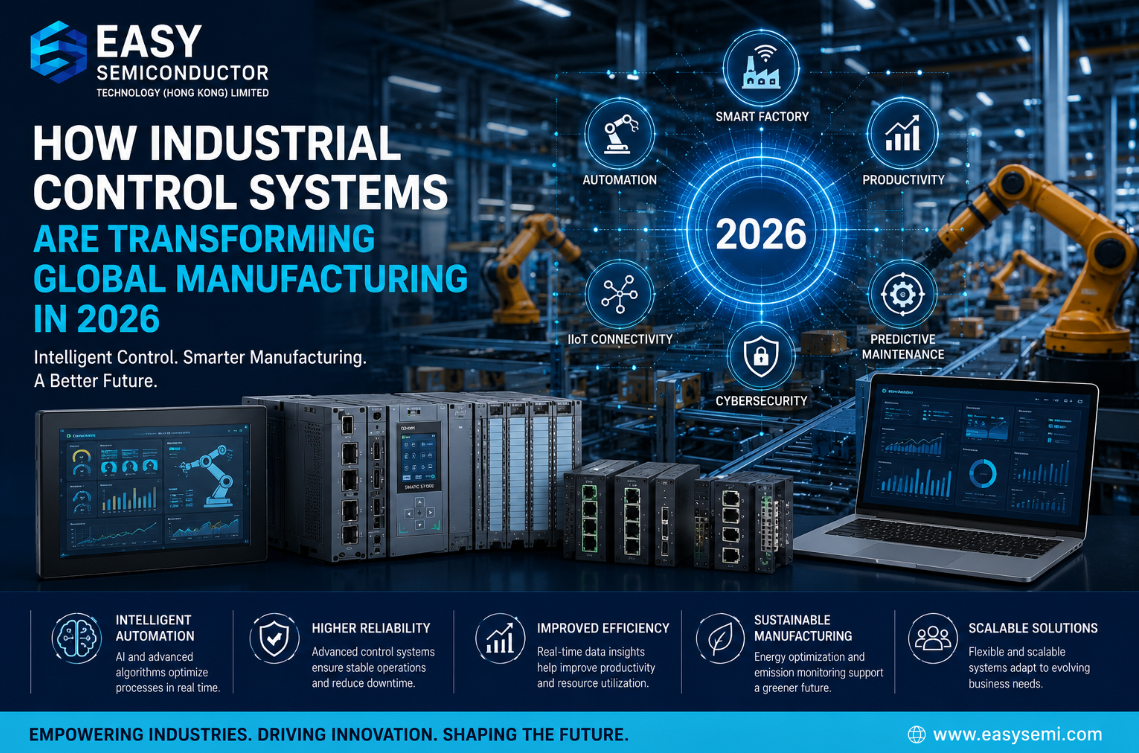
The transition from Fieldbus to Industrial Ethernet is driven by the increasing demand for digital transformation. Modern manufacturers are no longer focused only on machine control; they also need real-time information, operational intelligence, and seamless connectivity.
Industrial Ethernet supports these goals by enabling:
Faster machine-to-machine communication
Real-time production monitoring
Improved predictive maintenance
Integration with industrial cloud platforms
Enhanced cybersecurity management
Greater production flexibility
As factories become more intelligent, the ability to collect and analyze data has become just as important as traditional automation control.
Although Industrial Ethernet is growing rapidly, Fieldbus technology is not disappearing. Many industrial facilities still depend on Fieldbus systems because of their reliability, long service history, and compatibility with existing equipment.
For simple automation applications, process instruments, and legacy systems, upgrading to Industrial Ethernet may not always provide sufficient benefits to justify the cost. In these situations, maintaining Fieldbus networks can remain an effective strategy.
Many modern factories are also adopting hybrid architectures, where Fieldbus networks continue supporting existing devices while Industrial Ethernet provides communication between higher-level control systems.
The choice between Industrial Ethernet and Fieldbus should be based on practical operational needs.
Manufacturers should consider:
Required communication speed
Number of connected devices
Real-time control requirements
Future expansion plans
Existing infrastructure
Maintenance capabilities
Cybersecurity requirements
For new smart factory projects, Industrial Ethernet is often the preferred option because it provides greater flexibility and long-term scalability. For existing facilities with stable Fieldbus systems, gradual migration strategies may provide the best balance between modernization and cost control.
The future of industrial automation will likely involve continued growth of Industrial Ethernet alongside advanced wireless technologies and edge computing solutions. As factories become more connected, communication networks will play an increasingly important role in improving productivity, quality control, and operational intelligence.
Easy Semiconductor Technology (Hong Kong) Limited believes that successful industrial modernization requires selecting communication solutions that match both current requirements and future development goals. While Fieldbus remains an important technology for many industrial applications, Industrial Ethernet is becoming a key foundation for the next generation of smart manufacturing.
By understanding the strengths and limitations of both technologies, manufacturers can make informed decisions that improve automation performance, reduce downtime, and support sustainable industrial growth.