
 home
home
 Published: Aug 02, 2026 12:41 PM
 Page View: 184
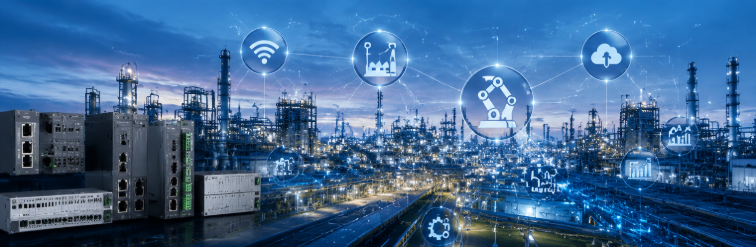
As global manufacturing continues to evolve, industrial digital transformation has become a strategic priority for companies seeking higher efficiency, stronger reliability, and improved competitiveness. From automotive and semiconductor production to energy, logistics, and process industries, factories worldwide are investing in advanced automation technologies, intelligent control systems, and data-driven solutions to modernize their operations.
Easy Semiconductor Technology (Hong Kong) Limited recognizes that digital transformation is no longer limited to adopting new software platforms or replacing individual machines. Instead, successful transformation requires a comprehensive approach that integrates industrial hardware, automation infrastructure, communication networks, data analytics, and long-term system support.
With increasing pressure from global competition, supply chain challenges, rising operational costs, and the demand for flexible production, manufacturers are accelerating their transition from traditional factory environments toward connected and intelligent industrial ecosystems.
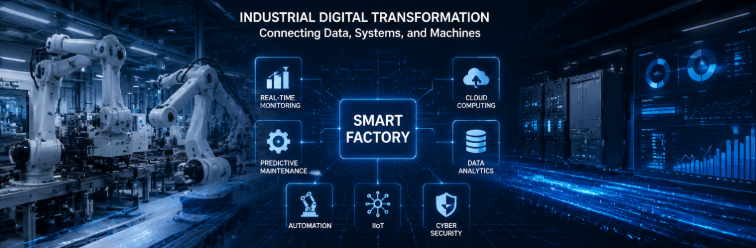
Many factories today still operate with legacy automation systems that were installed decades ago. While these systems may continue performing essential production tasks, they often face limitations such as outdated components, limited communication capabilities, insufficient data visibility, and difficulties integrating with modern Industry 4.0 platforms.
Industrial digital transformation provides a pathway to overcome these challenges by connecting existing assets with modern technologies. Instead of completely replacing entire production environments, manufacturers can adopt gradual modernization strategies that improve performance while controlling investment costs.
Key drivers behind industrial digital transformation include:
Increasing demand for real-time production monitoring
The need for predictive maintenance and reduced downtime
Growing adoption of Industrial Internet of Things (IIoT) technologies
The expansion of smart factory initiatives
Rising requirements for energy efficiency and sustainability
The need for flexible and scalable manufacturing operations
By implementing digital strategies, factories can transform operational data into valuable insights and make faster, more informed decisions.
One of the biggest challenges in industrial digital transformation is upgrading aging automation infrastructure. Many industrial facilities rely on legacy PLCs, control modules, communication systems, and monitoring platforms that are no longer actively supported by original manufacturers.
Replacing these systems requires careful planning to avoid production interruptions and unnecessary costs. A practical modernization approach often involves maintaining reliable existing equipment while introducing new digital capabilities through compatible replacement components, communication upgrades, and intelligent monitoring solutions.
Easy Semiconductor Technology (Hong Kong) Limited provides support for companies seeking reliable alternatives for obsolete industrial automation components. By helping customers identify suitable replacement solutions and modernization strategies, manufacturers can extend equipment lifecycle while improving system reliability.
A successful digital transformation strategy does not always require a complete factory rebuild. In many cases, targeted upgrades can significantly improve automation performance and prepare existing facilities for future digital integration.
Connectivity is the foundation of smart manufacturing. Modern factories require seamless communication between machines, controllers, sensors, enterprise systems, and cloud-based platforms.
Industrial communication technologies enable manufacturers to collect operational data from different production areas and create a unified view of factory performance. Advanced networking solutions help organizations monitor equipment status, analyze production efficiency, and identify potential problems before failures occur.
Important elements of connected industrial networks include:
Industrial Ethernet infrastructure
Communication gateways
Remote monitoring systems
Secure data exchange platforms
Integrated control architectures
Reliable connectivity allows factories to move from reactive maintenance models toward proactive and predictive operational management.
Artificial intelligence (AI) and data analytics are becoming essential components of industrial transformation. Manufacturing equipment generates enormous amounts of operational information, but traditional systems often lack the ability to analyze this data effectively.
AI-powered industrial solutions can identify patterns, predict equipment failures, optimize production processes, and improve resource utilization.
Applications include:
Predictive maintenance for critical machinery
Automated quality inspection
Production optimization
Energy consumption analysis
Process improvement recommendations
When combined with reliable automation hardware and industrial communication systems, AI technologies enable factories to achieve higher levels of intelligence and efficiency.
Equipment reliability is a critical factor in industrial competitiveness. Unexpected downtime can result in significant financial losses, production delays, and supply chain disruptions.
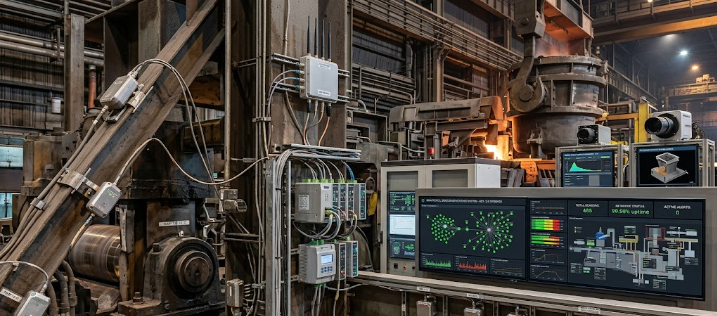
Digital transformation enables manufacturers to adopt smarter maintenance strategies by continuously monitoring equipment conditions. Sensors, control systems, and analytical platforms can provide early warnings about potential issues, allowing maintenance teams to take preventive action.
Compared with traditional scheduled maintenance, predictive maintenance helps companies reduce unnecessary service activities while preventing unexpected equipment failures.
For industries such as semiconductor manufacturing, energy production, and heavy machinery, improved maintenance strategies are essential for maintaining continuous and stable operations.
As factories become more connected, cybersecurity has become an important part of industrial digital transformation. Connected industrial environments create new opportunities for efficiency but also introduce potential security risks.
Manufacturers must consider cybersecurity throughout the entire transformation process, including:
Secure industrial communication protocols
Access control management
Network monitoring
System updates and protection strategies
Data security policies
A successful smart factory strategy requires both advanced technology and strong protection measures to ensure safe and reliable operations.
Every factory has different operational requirements, equipment conditions, and business objectives. Therefore, industrial digital transformation should be customized rather than based on a single standard approach.
A practical transformation roadmap typically includes:
Manufacturers should evaluate current automation equipment, communication infrastructure, and operational challenges before implementing upgrades.
Companies can begin with areas that provide immediate benefits, such as monitoring systems, critical equipment upgrades, and communication improvements.
A phased implementation approach reduces risks and allows organizations to measure improvements before expanding transformation projects.
Reliable component sourcing, technical expertise, and lifecycle management are essential for sustaining digital factory operations.
As global industries continue moving toward intelligent manufacturing, Easy Semiconductor Technology (Hong Kong) Limited remains committed to supporting customers with industrial automation solutions, replacement components, and modernization strategies.
The company understands that many manufacturers face challenges caused by discontinued products, aging systems, and increasing demands for operational efficiency. Through reliable industrial component solutions and technical support, Easy Semiconductor Technology helps organizations maintain stable production while preparing for future digital transformation.
By combining automation expertise with modern industrial technologies, manufacturers can achieve improved reliability, enhanced productivity, and greater flexibility in an increasingly competitive global market.
Industrial digital transformation will continue shaping the future of manufacturing. Smart factories, connected production systems, AI-driven analytics, and advanced automation will become essential elements of global industrial development.
For companies operating complex production environments, the goal is not only adopting new technologies but creating sustainable, reliable, and adaptable manufacturing systems.
Through strategic modernization, intelligent integration, and continuous innovation, global factories can successfully transition toward a smarter industrial future.
About Easy Semiconductor Technology (Hong Kong) Limited
Easy Semiconductor Technology (Hong Kong) Limited specializes in providing industrial automation components, replacement solutions, and technical support services for global customers. The company focuses on helping manufacturers overcome challenges related to obsolete equipment, automation upgrades, and industrial system modernization.