
 home
home
 Published: Aug 02, 2026 12:53 PM
 Page View: 103
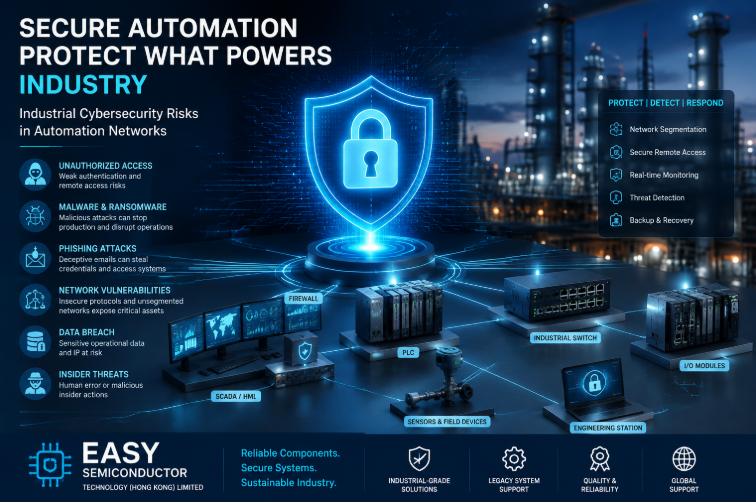
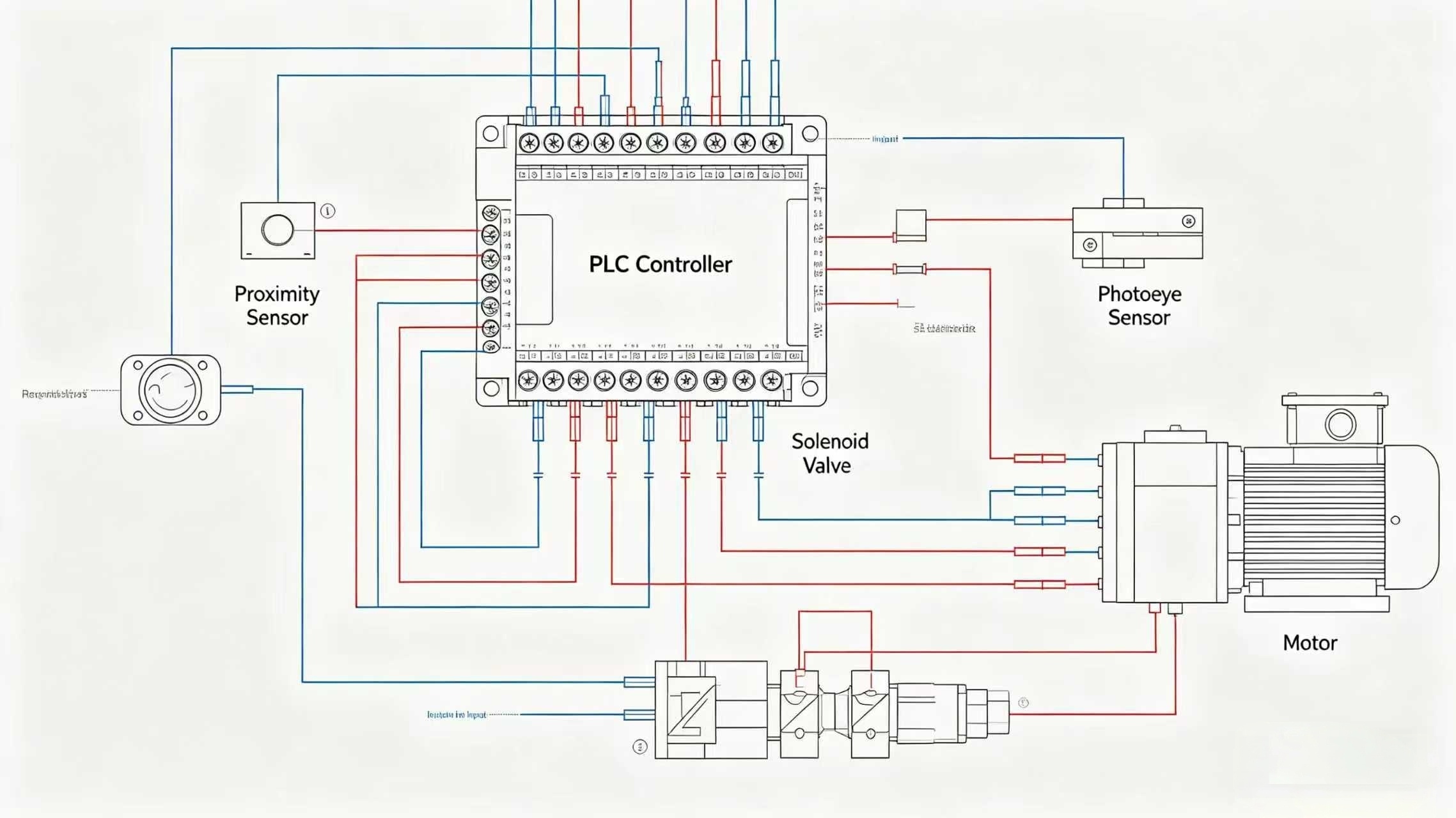
Hong Kong — August 2026 — As global industries accelerate digital transformation and adopt smart manufacturing technologies, industrial automation networks have become more connected than ever before. From programmable logic controllers (PLCs) and supervisory control and data acquisition (SCADA) systems to industrial communication gateways and remote monitoring platforms, modern factories increasingly depend on interconnected systems to improve efficiency, productivity, and operational visibility.
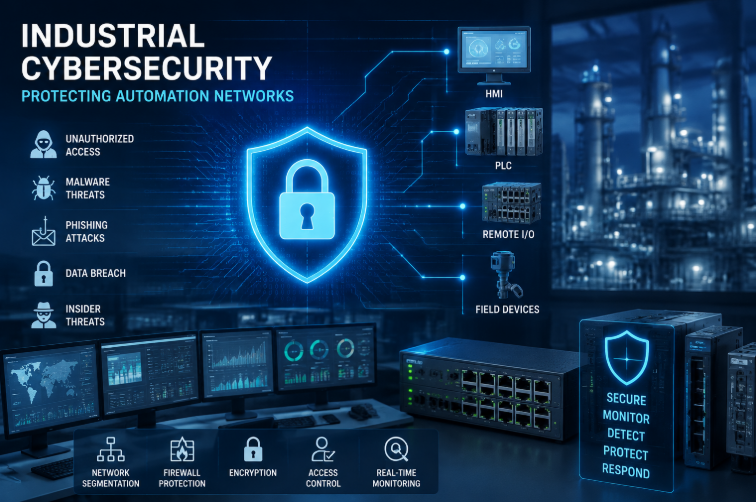
However, this rapid evolution has also introduced new cybersecurity challenges. Industrial automation networks that were once isolated are now exposed to a wider range of cyber threats, creating significant risks for manufacturing plants, energy facilities, transportation systems, and other critical industrial environments.
Easy Semiconductor Technology (Hong Kong) Limited highlights that strengthening industrial cybersecurity is becoming a strategic priority for companies seeking long-term operational reliability. Protecting automation infrastructure requires a combination of advanced security technologies, proactive risk management, and reliable industrial hardware solutions.
Traditional industrial control systems were originally designed for stability and continuous operation rather than cybersecurity. Many legacy PLCs, remote terminal units (RTUs), industrial controllers, and communication devices were deployed decades ago when factory networks operated independently from corporate IT environments.
Today, industrial facilities are increasingly integrating:
Industrial Internet of Things (IIoT) devices
Cloud-based monitoring platforms
Remote access systems
Advanced data analytics
Artificial intelligence-based optimization tools
Ethernet-based industrial communication networks
While these technologies deliver significant benefits, they also expand the potential attack surface. A single vulnerable device connected to an automation network can become an entry point for cybercriminals seeking to disrupt production, steal sensitive information, or damage critical infrastructure.
Many factories continue to operate aging automation equipment due to the high cost and complexity of full system replacement. Legacy PLCs, industrial computers, and communication modules may lack modern encryption, authentication, and security features.
Unsupported hardware and discontinued software platforms can create additional vulnerabilities because security updates and technical support may no longer be available.
Instead of replacing entire automation systems, many companies are adopting modernization strategies that combine existing infrastructure with new security technologies. Upgrading communication interfaces, adding secure industrial gateways, and implementing network segmentation can significantly improve protection while reducing investment costs.
Remote monitoring and maintenance have become essential for global manufacturing operations. Engineers and service providers can now diagnose equipment problems and optimize production systems from remote locations.
However, poorly configured remote access solutions can expose industrial networks to unauthorized users. Weak passwords, unsecured connections, and improper access permissions may allow attackers to gain control of critical systems.
Industrial organizations are increasingly implementing stronger authentication methods, encrypted communication channels, and strict access management policies to reduce remote access risks.
Ransomware has become one of the most serious cybersecurity threats affecting industrial environments. Unlike traditional IT attacks, industrial ransomware incidents can interrupt physical processes, stop production lines, and create significant financial losses.
Manufacturing facilities are particularly vulnerable because downtime can directly affect supply chains and customer deliveries.
Effective protection requires multiple layers of defense, including:
Network monitoring
Endpoint protection
Backup and recovery planning
Employee cybersecurity training
Continuous vulnerability assessment
A comprehensive security strategy helps organizations respond quickly and maintain business continuity.
Industrial automation systems rely on communication protocols to exchange data between controllers, sensors, drives, and monitoring systems. Vulnerabilities in industrial communication networks can allow attackers to manipulate data or interfere with operations.
Modern automation environments require secure network architectures that include:
Industrial firewalls
Secure communication protocols
Network segmentation
Intrusion detection systems
Real-time monitoring solutions
By separating critical control networks from general business networks, companies can reduce the risk of unauthorized access spreading across their infrastructure.
Smart manufacturing depends on reliable data exchange between machines, operators, and enterprise systems. As factories become more automated, cybersecurity is no longer an optional feature—it is a fundamental requirement.
A secure automation environment enables manufacturers to:
Maintain stable production operations
Protect intellectual property
Prevent unexpected downtime
Improve equipment reliability
Support digital transformation initiatives
Cybersecurity must be considered throughout the entire lifecycle of industrial equipment, from initial system design and installation to maintenance and future upgrades.
Many industrial companies are choosing gradual modernization approaches rather than complete replacement of existing automation systems. This allows them to improve cybersecurity while maintaining operational continuity.
Key modernization strategies include:
Replacing obsolete industrial components with updated alternatives can improve system stability and security. Modern PLC modules, communication interfaces, industrial power supplies, and control components often provide enhanced reliability and compatibility with current security standards.
Factories can strengthen cybersecurity by redesigning network structures. Separating production networks, management systems, and external connections helps limit potential attack paths.
Cybersecurity requires ongoing management. Regular inspections, firmware updates, vulnerability assessments, and system monitoring are essential for identifying and addressing emerging threats.
Working with experienced industrial technology providers allows companies to identify suitable replacement components, optimize automation infrastructure, and develop effective cybersecurity improvement plans.
As industrial automation continues evolving, Easy Semiconductor Technology (Hong Kong) Limited remains committed to supporting global customers with reliable industrial components, replacement solutions, and technical expertise.
The company provides solutions for industries facing challenges related to obsolete automation equipment, discontinued components, and modernization requirements. By helping customers maintain stable automation operations, Easy Semiconductor Technology contributes to safer, more efficient, and more resilient industrial environments.
The future of manufacturing will depend not only on automation intelligence but also on cybersecurity strength. Companies that proactively address network vulnerabilities today will be better positioned to achieve sustainable growth in the increasingly connected industrial landscape.
Industrial cybersecurity risks are becoming a major concern as automation networks become more connected and intelligent. Legacy systems, remote access requirements, communication vulnerabilities, and evolving cyber threats all create challenges for modern factories.
By combining secure technologies, strategic upgrades, and professional industrial support, manufacturers can protect critical automation infrastructure while continuing their digital transformation journey.
Easy Semiconductor Technology (Hong Kong) Limited believes that secure automation is the foundation of future industrial innovation. Through effective cybersecurity practices and reliable modernization solutions, industries worldwide can build stronger, safer, and more intelligent manufacturing systems.