
 home
home
 Published: Aug 06, 2026 10:49 AM
 Page View: 159
Chemical plants operate in some of the most demanding industrial environments, where safety, reliability, and process accuracy are critical. From chemical reactions and temperature control to pressure regulation and material handling, every stage of production requires precise automation systems. At the heart of many modern chemical plants is the Programmable Logic Controller (PLC), a key technology responsible for monitoring equipment, controlling processes, and ensuring stable operations.
Selecting the right PLC for a chemical plant project is not simply a matter of choosing a controller with enough input and output points. Engineers must consider environmental conditions, safety requirements, communication capabilities, scalability, cybersecurity, and long-term maintenance needs. A properly selected PLC can improve production efficiency, reduce downtime, and support future digital transformation.
Easy Semiconductor Technology (Hong Kong) Limited provides industrial automation solutions and components to support global industries in building reliable and efficient control systems. Understanding the key factors behind PLC selection helps project teams make better decisions for complex chemical manufacturing applications.
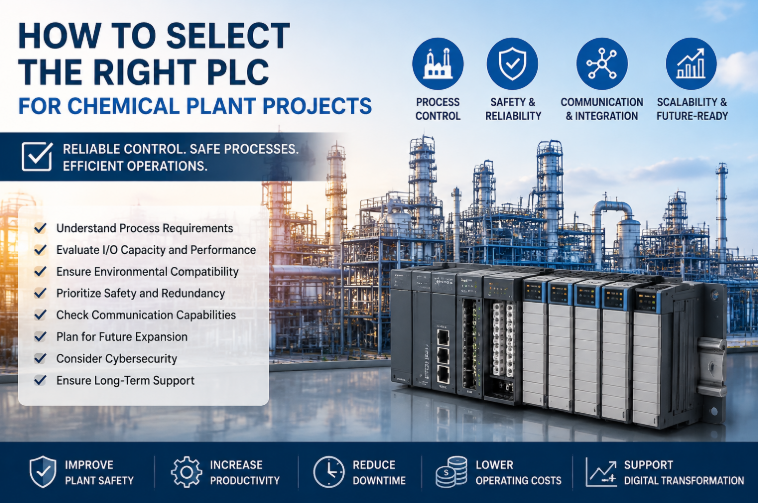
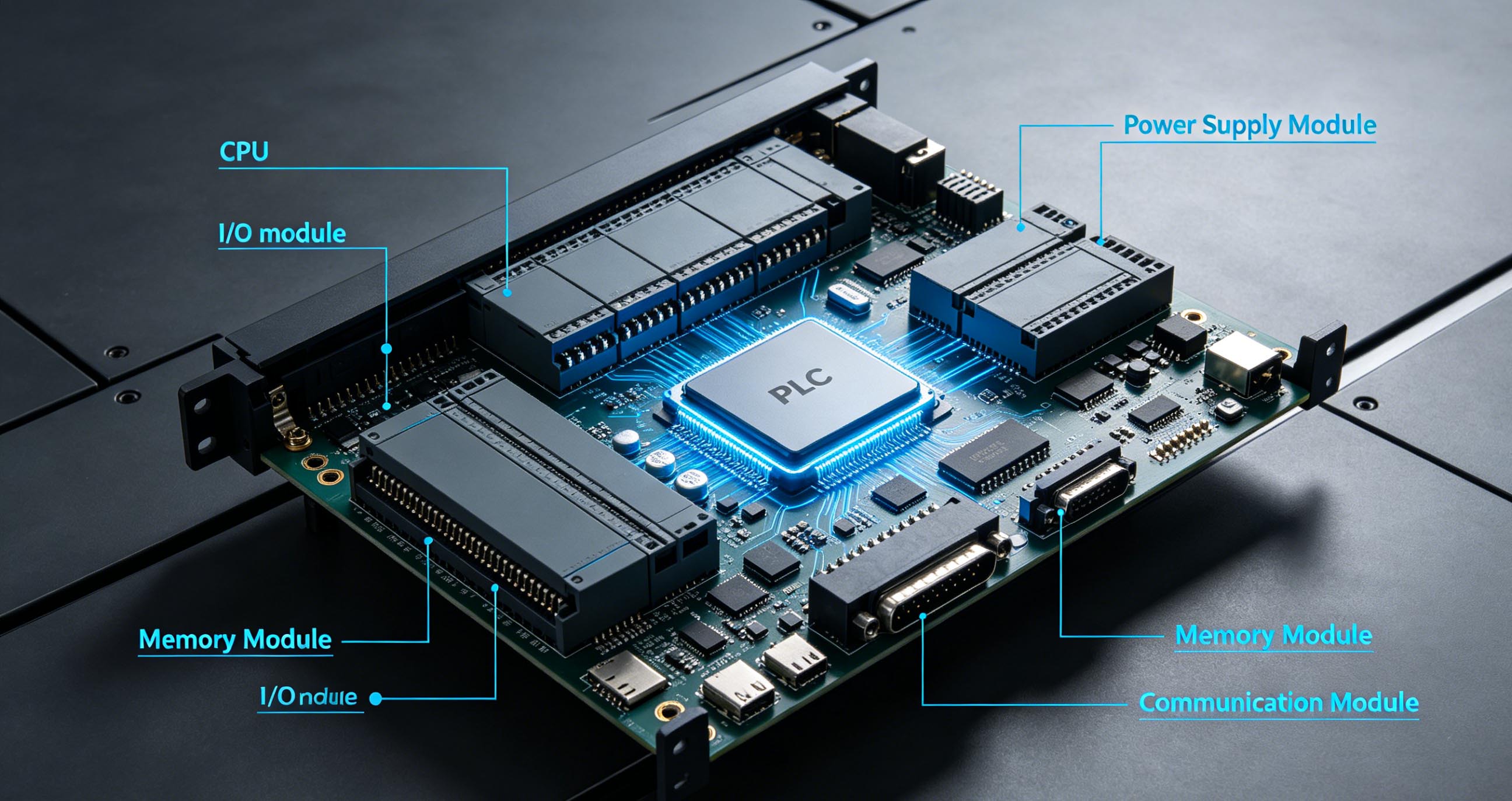
A PLC is an industrial computer designed to control automated processes in real time. Unlike traditional control systems, PLCs are built to operate continuously under harsh industrial conditions, including extreme temperatures, vibration, electrical noise, and demanding production environments.
In chemical plants, PLC systems are commonly used for:
Reactor monitoring and control
Pump and motor management
Valve operation
Temperature and pressure regulation
Flow measurement and control
Batch processing automation
Safety-related monitoring systems
Data collection and production analysis
Because chemical processes often involve hazardous materials and strict operating conditions, PLC reliability directly affects plant safety and productivity.
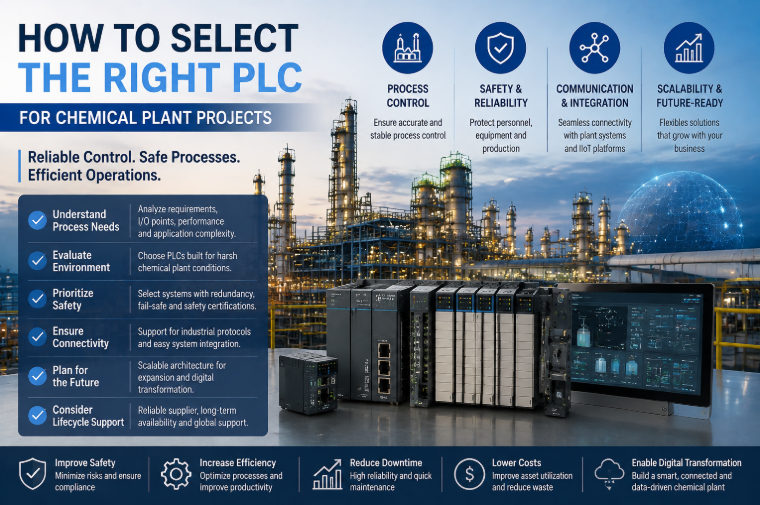
The first step in PLC selection is understanding the specific requirements of the chemical process. Different applications require different levels of performance, capacity, and functionality.
Project engineers should evaluate:
Chemical plants typically include thousands of field devices, including sensors, transmitters, actuators, and control valves. The selected PLC must support sufficient digital and analog inputs and outputs.
Analog signals are especially important in chemical applications because many critical parameters, such as temperature, pressure, pH levels, and flow rates, require accurate continuous measurement.
A PLC system should also provide expansion capabilities to accommodate future equipment additions or process improvements.
Chemical processes often require rapid response times. A PLC with insufficient processing capability may cause delays in control actions, affecting product quality and operational safety.
High-performance PLCs are recommended for applications involving:
Complex control algorithms
Multiple communication networks
Large-scale production lines
Advanced monitoring functions
Choosing a PLC with additional processing capacity can also extend system life as production requirements increase.
Chemical plants are challenging environments. PLC hardware must be able to withstand conditions such as:
High humidity
Corrosive gases
Dust exposure
Temperature fluctuations
Electrical interference
Industrial-grade PLCs designed for harsh environments provide better reliability compared with standard commercial controllers.
For hazardous areas, engineers must also consider certified equipment and appropriate installation methods. Depending on the plant design, additional protection measures may be required to ensure compliance with industrial safety standards.
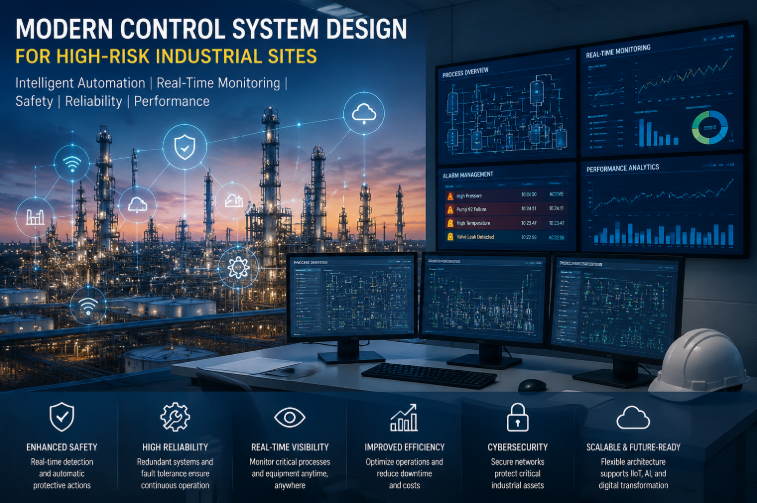
Safety is one of the most important considerations in chemical plant automation. Failures in process control systems can lead to production losses, equipment damage, or serious safety risks.
Modern chemical plants often require PLC systems with:
Redundant processors
Redundant power supplies
Fail-safe modules
Safety-rated controllers
Hot-swappable components
Safety PLCs are designed to monitor critical operations and automatically place systems into safe conditions when abnormal situations occur.
For high-risk applications, redundancy is particularly valuable because it minimizes downtime and ensures continuous operation even when individual components fail.
Modern chemical plants rely on interconnected automation networks. A PLC should support reliable communication with other industrial systems, including:
Distributed Control Systems (DCS)
Supervisory Control and Data Acquisition (SCADA) platforms
Human Machine Interfaces (HMIs)
Industrial Ethernet networks
Manufacturing execution systems (MES)
Common industrial communication protocols include Ethernet/IP, PROFINET, Modbus TCP, and other field-level communication technologies.
Strong communication capabilities allow plants to collect real-time operational data, improve monitoring, and support advanced analytics.
Chemical industries are increasingly adopting smart manufacturing technologies. When selecting a PLC, companies should consider future requirements beyond current production needs.
A modern PLC should support:
Industrial Internet of Things (IIoT) integration
Cloud connectivity
Remote monitoring
Predictive maintenance systems
Data analytics platforms
Selecting a scalable PLC platform allows chemical plants to gradually upgrade their automation systems without replacing the entire control infrastructure.
As industrial networks become more connected, cybersecurity has become a major concern. PLC systems are increasingly targeted by cyber threats because they control important industrial processes.
A suitable PLC solution should include:
Secure communication features
User authentication
Access control management
Network segmentation support
Firmware protection
Chemical plants should work with experienced automation partners to design secure control architectures that protect critical operations.
A PLC is a long-term investment. Many chemical plants operate continuously for decades, making lifecycle support an important selection factor.
Before choosing a PLC platform, companies should evaluate:
Availability of spare parts
Manufacturer support
Technical documentation
Engineering tools
Global service capability
Long-term product availability
A widely supported PLC platform can reduce maintenance difficulties and simplify future upgrades.
Selecting the right supplier is as important as selecting the PLC itself. Experienced automation partners can help companies evaluate technical requirements, design reliable architectures, and provide suitable industrial components.
Easy Semiconductor Technology (Hong Kong) Limited supports customers with industrial automation solutions designed for demanding applications. By understanding project requirements and providing reliable technology options, companies can build safer, more efficient, and more flexible chemical production systems.
Choosing the right PLC for chemical plant projects requires careful consideration of performance, reliability, safety, communication, scalability, and long-term support. A well-designed PLC system becomes the foundation of efficient process control and stable plant operations.
As chemical manufacturers continue moving toward automation, smart factories, and digital transformation, selecting advanced and reliable PLC technology will remain essential. With the right automation strategy and trusted technology partners, chemical plants can improve productivity, enhance safety, and achieve sustainable industrial growth.
Easy Semiconductor Technology (Hong Kong) Limited continues to support global industrial customers by delivering automation-focused solutions that help modern facilities achieve reliable and intelligent operations.