
 home
home
 Published: Aug 18, 2026 11:33 AM
 Page View: 140
The food processing industry is undergoing rapid transformation as manufacturers adopt advanced automation technologies to improve productivity, maintain consistent quality, and meet increasingly strict safety standards. Among the most important components in automated food production systems, sensors play a critical role in monitoring processes, controlling equipment, and ensuring reliable operations.
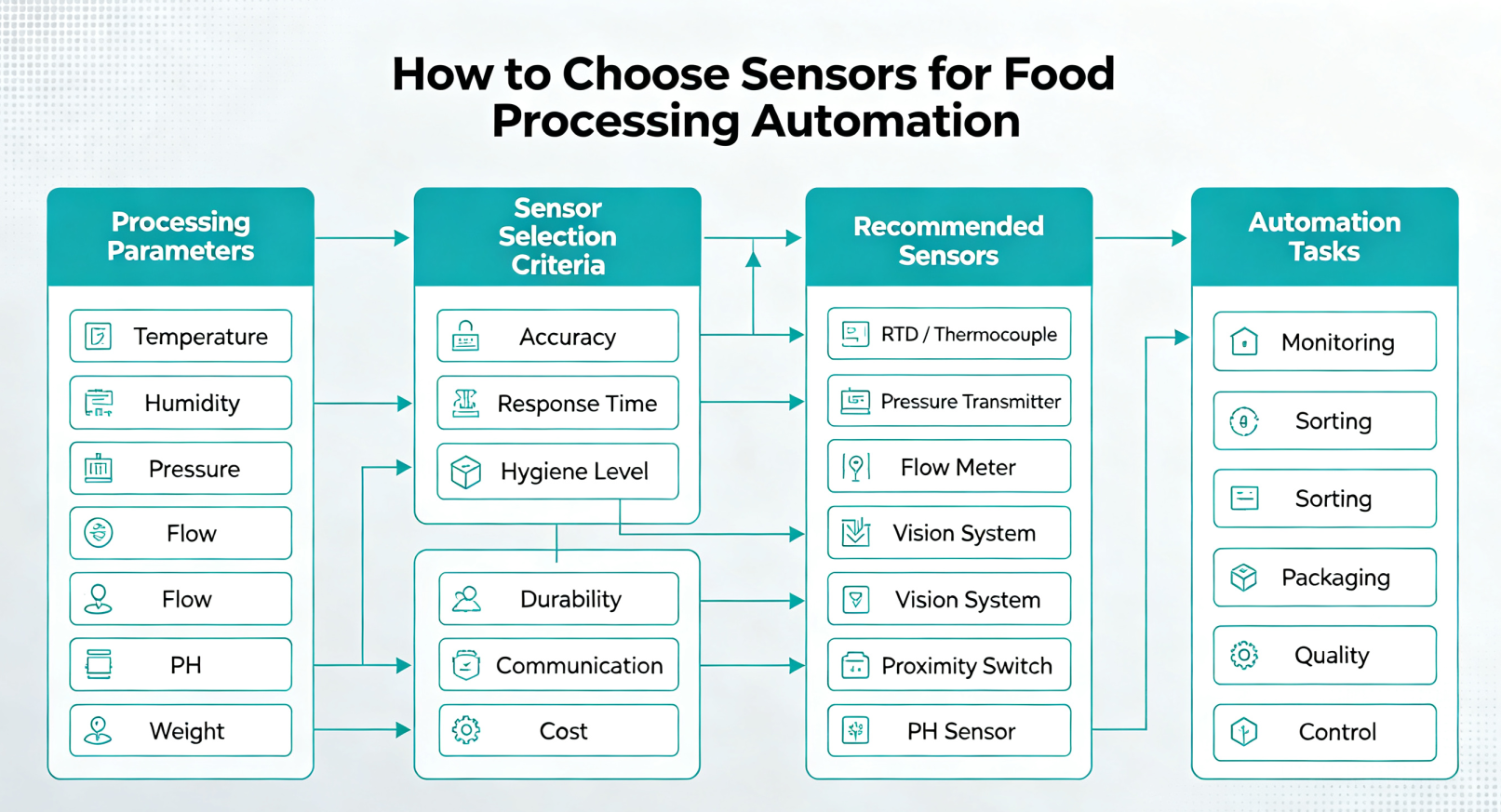
From temperature monitoring and liquid level detection to product inspection and packaging control, industrial sensors provide essential data that enables automated decision-making. Choosing the right sensors for food processing automation is a key factor in achieving higher efficiency, reducing waste, and maintaining product quality.
Easy Semiconductor Technology (Hong Kong) Limited provides professional electronic component solutions and supports industrial customers in selecting reliable automation components for modern manufacturing applications.
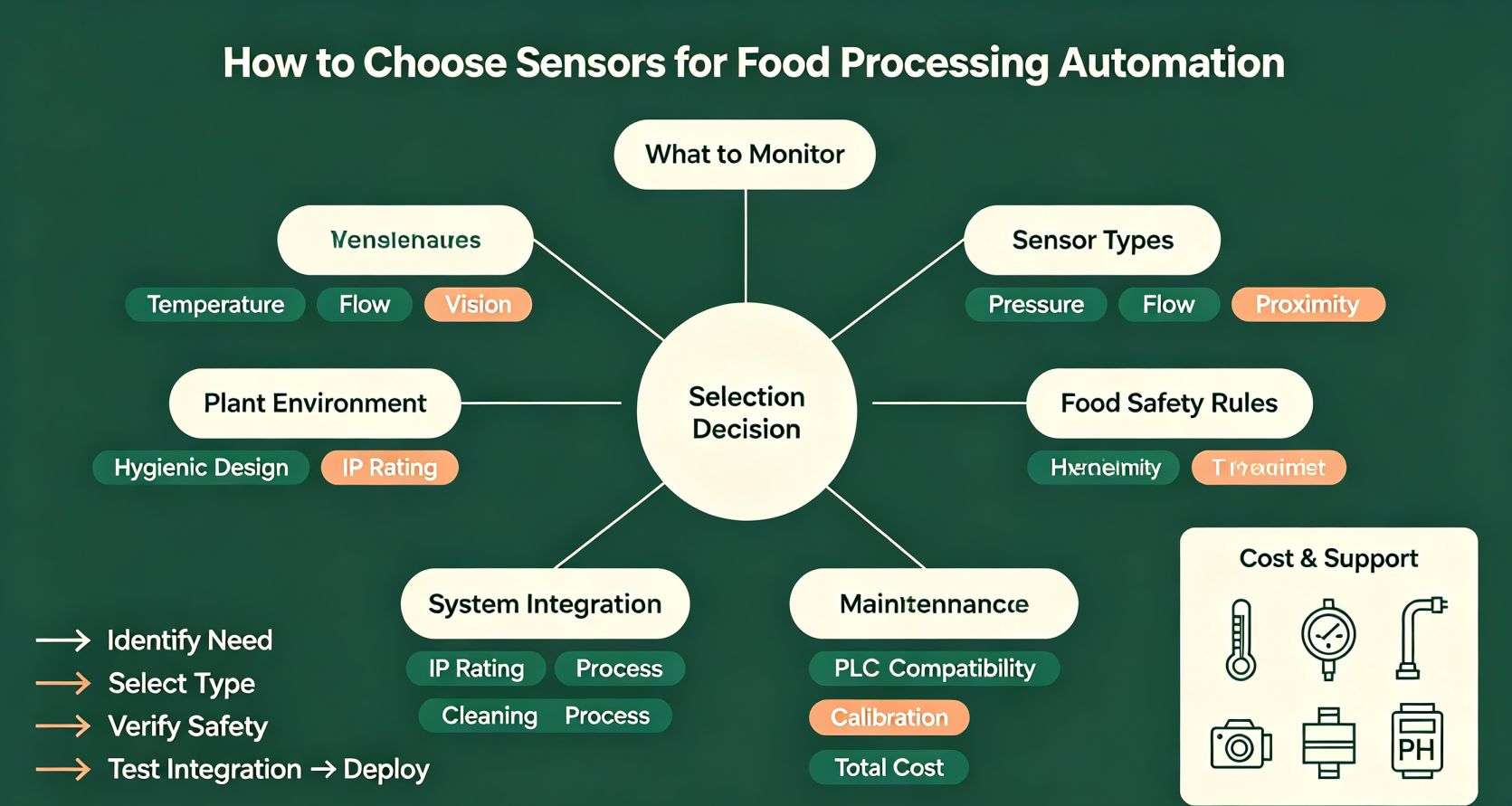
Food processing environments require precise control of multiple production parameters. Automated systems depend on sensors to collect real-time information and communicate with PLCs, control systems, and industrial networks.
Sensors are commonly used for:
Temperature monitoring in cooking and refrigeration processes
Level detection in tanks and storage systems
Flow measurement for liquids and ingredients
Position detection on production lines
Quality inspection during packaging
Equipment safety monitoring
Reliable sensors help manufacturers improve process accuracy, reduce manual intervention, and maintain stable production performance.
Before selecting a sensor, engineers must evaluate the specific operating environment. Food processing facilities often present unique challenges compared with general industrial applications.
Important environmental factors include:
Food production areas require strict sanitation standards. Sensors installed in these environments should be designed with materials and structures that support regular cleaning.
Important considerations include:
Stainless steel construction
Smooth and easy-to-clean surfaces
Resistance to cleaning chemicals
Compliance with food industry standards
Many food processing facilities use high-pressure cleaning systems. Sensors must withstand water exposure, humidity, and frequent sanitation procedures.
Selecting sensors with appropriate protection ratings, such as IP67 or higher, helps ensure reliable operation.
Food production processes may involve extreme temperature conditions, including freezing, heating, and sterilization. Sensors must maintain accuracy across the expected operating temperature range.
Different food processing applications require different sensing technologies. Understanding the advantages of each sensor type helps engineers choose the most suitable solution.
Temperature control is essential in food processing, affecting safety, quality, and production efficiency.
Common temperature sensors include:
Resistance Temperature Detectors (RTDs)
Thermocouples
Digital temperature sensors
Applications include:
Cooking systems
Refrigeration equipment
Pasteurization processes
Cold storage monitoring
High-accuracy temperature sensors help maintain consistent product quality and support food safety requirements.
Level sensors monitor the amount of liquid, powder, or solid materials inside tanks and containers.
Common technologies include:
Ultrasonic sensors
Capacitive sensors
Radar level sensors
Float sensors
They are widely used in:
Beverage production
Dairy processing
Ingredient storage
Mixing systems
The selected sensor should match the material characteristics, such as viscosity, density, and conductivity.
Flow sensors are important for accurately controlling the movement of liquids and gases during production.
Applications include:
Water systems
Beverage filling
Ingredient dosing
Cleaning systems
Accurate flow measurement helps reduce material waste and improves production consistency.
Modern food processing lines often require automated inspection and product tracking. Photoelectric sensors and machine vision systems help detect product position, shape, color, and defects.
Applications include:
Packaging inspection
Bottle detection
Label verification
Product counting
These sensors improve quality control and reduce human inspection errors.
Sensor performance directly affects automation system efficiency. Engineers should evaluate key technical specifications, including:
Higher accuracy is important for processes requiring strict control, such as temperature regulation and ingredient measurement.
Fast response sensors are necessary for high-speed production lines where quick detection and adjustment are required.
A reliable sensor should provide consistent measurements over long periods of operation.
Food processing automation systems typically use PLCs, industrial controllers, and communication networks. Sensors must be compatible with existing control architectures.
Common sensor outputs include:
Analog signals such as 4–20mA and 0–10V
Digital switching signals
IO-Link communication
Industrial network interfaces
Selecting sensors with suitable communication options simplifies installation and improves system integration.
Food processing equipment often operates continuously, making reliability essential. Sensors should be selected based on expected operating conditions and maintenance requirements.
Key factors include:
Long operational life
Resistance to vibration
Chemical resistance
Easy replacement and maintenance
Stable performance after cleaning cycles
Reliable sensors reduce unexpected downtime and improve overall production efficiency.
Food manufacturers must comply with strict safety regulations. Sensor selection should consider industry standards and certification requirements.
Important considerations include:
Food-grade materials
Hygienic design
Safe installation practices
Compliance with applicable industrial standards
Using appropriate sensors supports safer production processes and helps manufacturers maintain product quality.
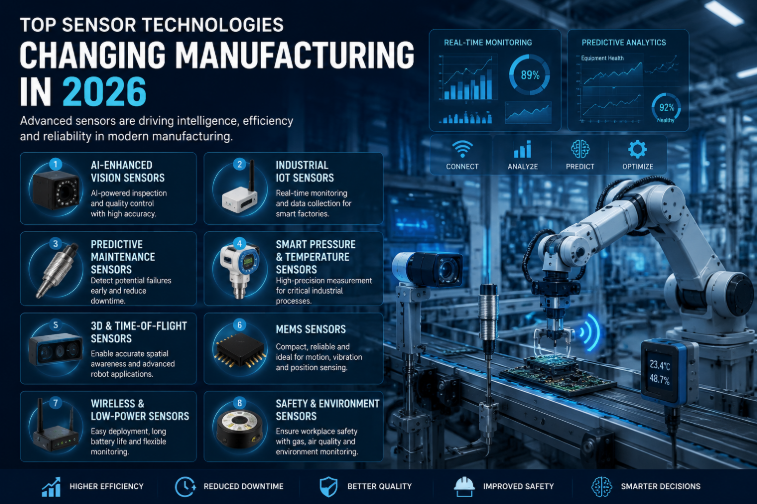
With the development of smart factories, sensors are becoming increasingly connected and intelligent. Advanced sensors provide more than basic measurements by offering diagnostic information and communication capabilities.
Modern sensor technologies support:
Real-time monitoring
Predictive maintenance
Remote diagnostics
Production data analysis
Industrial IoT integration
These capabilities help food manufacturers improve operational efficiency and make data-driven decisions.
Choosing the right sensors for food processing automation requires careful consideration of application conditions, sensor technology, accuracy, compatibility, durability, and food safety requirements. Proper sensor selection enables manufacturers to achieve reliable automation, improve product quality, and optimize production processes.
Easy Semiconductor Technology (Hong Kong) Limited is committed to providing high-quality electronic components and automation solutions for industrial customers worldwide. By selecting reliable sensor technologies, food processing companies can build safer, smarter, and more efficient production systems to meet the demands of modern manufacturing.