
 home
home
 Published: Aug 01, 2026 01:54 PM
 Page View: 101
Hong Kong, 2026 — As global heavy industries continue to accelerate digital transformation, artificial intelligence (AI) is becoming a key technology for improving equipment reliability, reducing downtime, and optimizing maintenance operations. From manufacturing plants and power facilities to mining operations and large-scale processing industries, AI-driven predictive maintenance is helping companies move beyond traditional repair methods and build more efficient, intelligent industrial environments.
Easy Semiconductor Technology (Hong Kong) Limited highlights that the integration of AI with industrial automation systems, sensors, control platforms, and data analytics is creating new opportunities for companies seeking to modernize aging infrastructure while maintaining high levels of productivity and safety.
For decades, heavy industries have relied on preventive maintenance schedules or reactive repairs to manage equipment performance. While scheduled maintenance can reduce unexpected failures, it often results in unnecessary inspections, replacement of parts that still have useful life, and increased operational costs. Reactive maintenance, meanwhile, can lead to expensive production interruptions and safety risks.
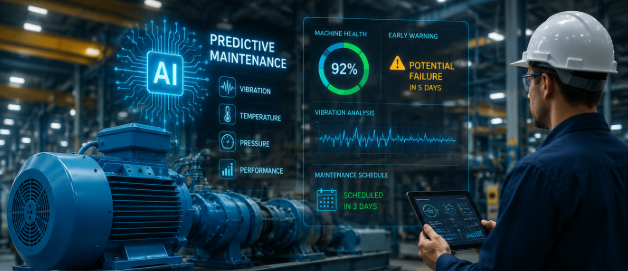
AI-powered predictive maintenance introduces a more advanced approach by continuously analyzing equipment conditions and identifying potential problems before failures occur. Using machine learning algorithms, industrial AI systems can process large volumes of operational data collected from machines, sensors, PLC systems, SCADA platforms, and industrial networks.
By recognizing abnormal patterns and early warning signals, AI enables maintenance teams to take targeted action at the right time, improving equipment availability and reducing unnecessary downtime.
One of the biggest advantages of AI-based predictive maintenance is real-time monitoring. Modern industrial facilities generate massive amounts of data from motors, pumps, compressors, robotic systems, production lines, and control devices.
AI solutions can analyze parameters such as:
Vibration levels
Temperature changes
Pressure fluctuations
Energy consumption patterns
Motor performance data
Operating cycle variations
Communication errors within automation networks
Through advanced analytics, AI systems can detect small deviations that may indicate future equipment problems. For example, a slight increase in motor vibration may suggest bearing wear, while unusual temperature changes could indicate overheating or electrical issues.
Early detection allows engineers to schedule repairs before equipment failure affects production, helping companies maintain continuous operations.
Unexpected equipment failures remain one of the most expensive challenges in heavy industries. A single breakdown in a manufacturing line, power system, or processing facility can result in significant financial losses.
AI predictive maintenance helps organizations minimize these risks by providing accurate failure predictions and maintenance recommendations. Instead of shutting down equipment based on fixed schedules, companies can perform maintenance only when necessary.
This approach improves:
Equipment utilization rates
Production continuity
Maintenance planning accuracy
Spare parts management
Workforce efficiency
For industries operating 24/7, such as semiconductor manufacturing, energy production, and heavy machinery manufacturing, improved reliability can create significant competitive advantages.
Many industrial facilities continue to operate legacy automation equipment that remains critical to production. Replacing entire systems can be costly and disruptive, especially when existing equipment still provides reliable performance.
AI-based monitoring solutions provide a practical way to extend the service life of industrial assets. By adding intelligent data collection and analysis capabilities, companies can better understand equipment health and optimize operating conditions.
This is particularly valuable for older PLC systems, industrial controllers, communication modules, and automation components that require careful management. AI analytics can help identify performance degradation, predict component aging, and support smarter replacement strategies.
Easy Semiconductor Technology (Hong Kong) Limited provides industrial automation component solutions that support companies in maintaining and upgrading their existing control environments while preparing for future digital transformation.
The success of predictive maintenance depends on seamless integration between AI platforms and industrial control systems. Modern factories increasingly combine:
Industrial Internet of Things (IIoT) devices
Smart sensors
Edge computing platforms
Cloud-based analytics
PLC and SCADA systems
Industrial communication networks
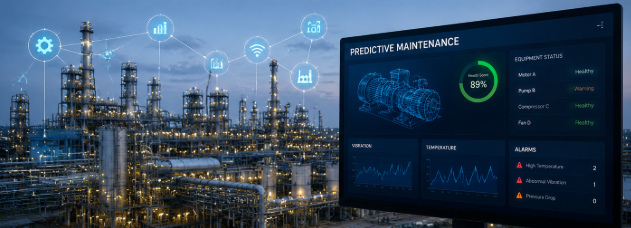
AI can analyze information from multiple sources and provide maintenance teams with actionable insights through intelligent dashboards and automated alerts.
Edge AI technology is also becoming increasingly important because it allows data processing closer to machines. This reduces communication delays and enables faster responses in critical industrial environments where real-time decisions are required.
Safety is a major priority in industries involving large-scale machinery, high temperatures, electrical systems, and complex production processes. Equipment failures can create dangerous working conditions and increase operational risks.
AI predictive maintenance contributes to safer workplaces by identifying potential hazards before they become serious problems. Early warnings allow operators to inspect equipment, replace damaged components, and prevent dangerous failures.
In addition, AI systems reduce the need for workers to perform unnecessary manual inspections in hazardous environments, improving both safety and operational efficiency.
Although AI predictive maintenance offers significant benefits, successful implementation requires careful planning. Companies must address challenges including data quality, system compatibility, cybersecurity, and employee training.
Industrial organizations need reliable data collection systems and properly maintained automation infrastructure to achieve accurate AI predictions. Legacy equipment may require upgrades such as communication modules, sensors, or gateway solutions to connect with modern analytics platforms.
As AI technology continues to develop, predictive maintenance systems are expected to become more autonomous. Future solutions may provide automated fault diagnosis, self-optimizing maintenance schedules, and AI-assisted decision-making across entire industrial networks.
The adoption of AI-powered predictive maintenance represents a major step toward smarter and more resilient industrial operations. By combining artificial intelligence, automation technology, and advanced data analytics, heavy industries can improve reliability, reduce costs, and achieve higher levels of operational efficiency.
Easy Semiconductor Technology (Hong Kong) Limited continues to support global industrial customers with reliable automation components and modernization solutions designed to help companies overcome challenges associated with aging systems and evolving Industry 4.0 requirements.
As manufacturing and industrial sectors continue their digital transformation journey, AI-driven predictive maintenance will play an increasingly important role in creating safer, more efficient, and more sustainable industrial environments worldwide.