
 home
home
 Published: Aug 06, 2026 10:41 AM
 Page View: 153
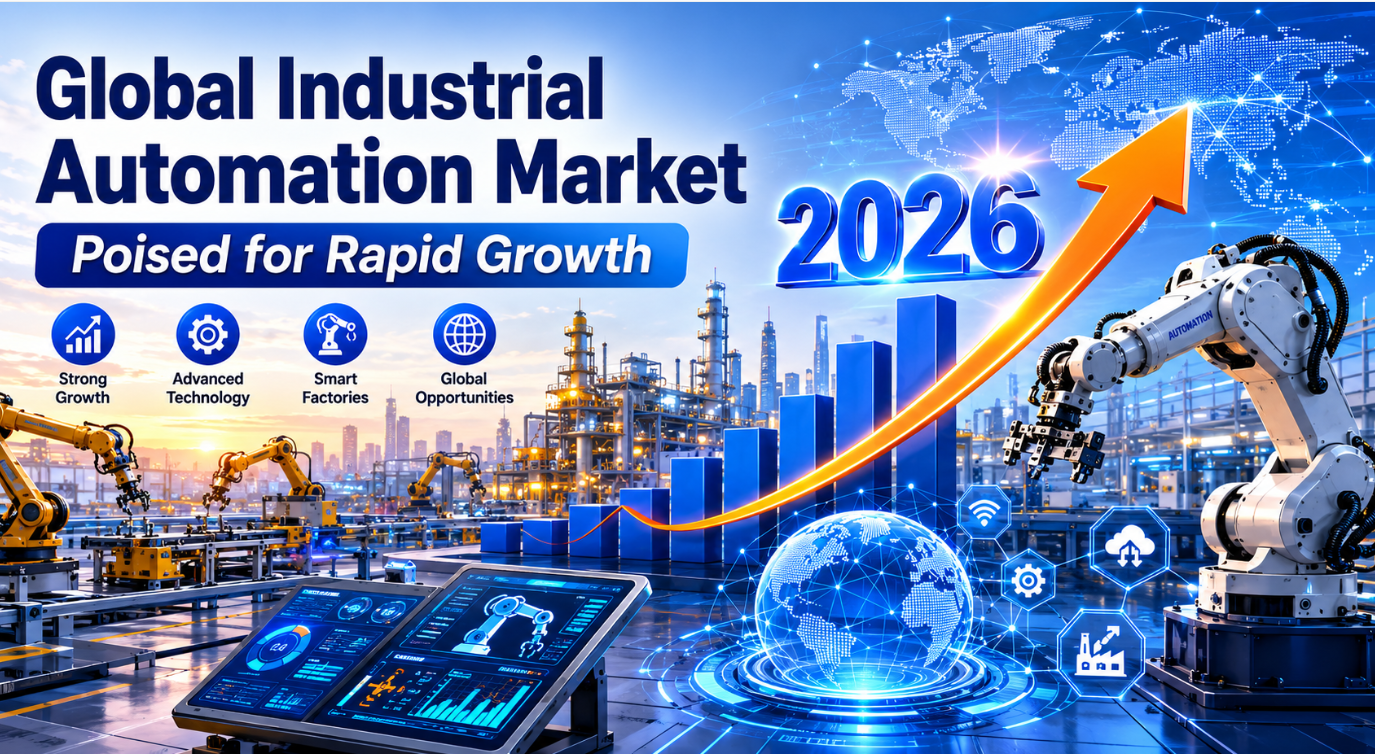
As global manufacturing continues to face rising labor costs, supply chain uncertainties, and increasing demands for production efficiency, factory automation has become one of the most important investment priorities for international industrial buyers. Companies across automotive, electronics, semiconductor, energy, food processing, pharmaceuticals, and heavy industries are accelerating automation upgrades to build smarter, more flexible, and more resilient production systems.
In 2026, international buyers are showing stronger interest in advanced automation technologies, including industrial controllers, smart sensors, industrial networking equipment, edge computing platforms, robotics, and intelligent monitoring solutions. These investments are not only improving operational efficiency but also helping manufacturers achieve long-term competitiveness in an increasingly digital industrial environment.
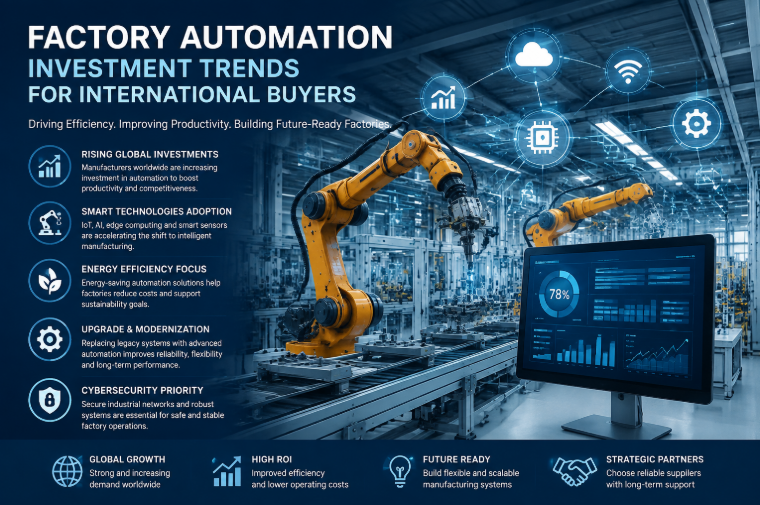
The global manufacturing sector is undergoing a significant transformation from traditional production models toward intelligent and connected factories. International companies are investing heavily in automation infrastructure to reduce operational risks, improve product quality, and optimize production processes.
Factory automation allows manufacturers to replace repetitive manual operations with highly accurate and reliable automated systems. Through programmable logic controllers (PLCs), industrial communication networks, and real-time monitoring platforms, production facilities can achieve better control over machines, processes, and resources.
For international buyers, automation investment is no longer viewed as only a cost-saving strategy. Instead, it has become a strategic approach to improving productivity, increasing manufacturing flexibility, and supporting future business growth.
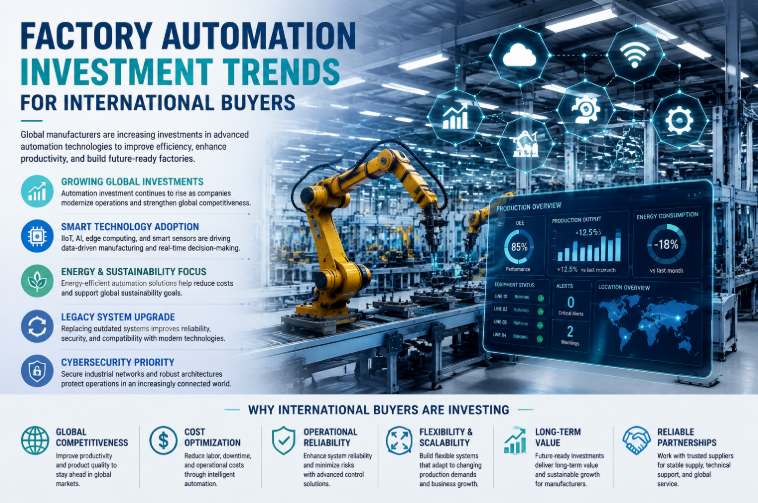
One of the major trends among international buyers is the growing adoption of smart factory technologies. Modern factories are integrating automation hardware with digital technologies such as artificial intelligence, industrial Internet of Things (IIoT), cloud platforms, and data analytics.
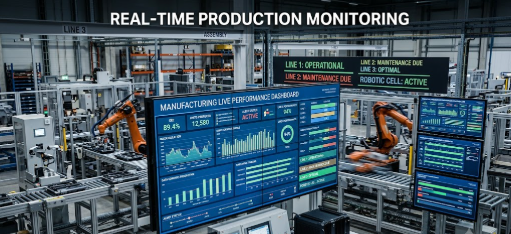
Smart sensors and connected devices enable manufacturers to collect real-time information from production lines. This data helps companies monitor equipment conditions, identify potential problems, and improve decision-making.
Edge computing is also gaining attention because it allows factories to process industrial data closer to machines instead of relying entirely on centralized systems. This reduces response times and improves reliability for applications that require fast control and monitoring.
International buyers are increasingly selecting automation solutions that support connectivity, scalability, and future expansion. Equipment with strong communication capabilities and compatibility with modern industrial networks has become a preferred choice for global manufacturing projects.
Energy management has become another important factor influencing factory automation investments. Rising energy costs and sustainability goals are encouraging manufacturers to adopt automation systems that improve energy efficiency.
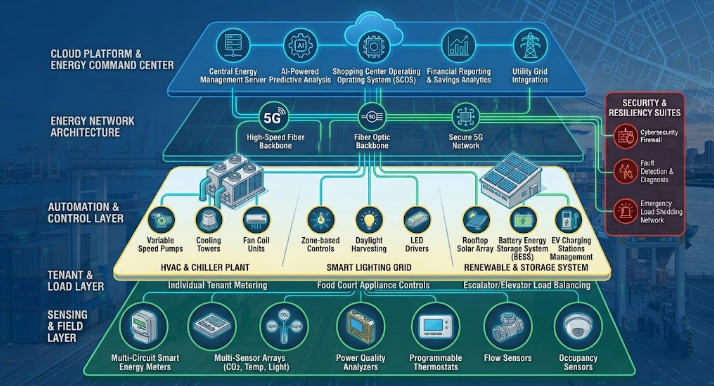
Advanced automation platforms can monitor electricity consumption, optimize machine operation, and reduce unnecessary energy usage. Intelligent control systems allow factories to adjust production processes based on real-time requirements, helping companies reduce operating costs while supporting environmental objectives.
For international buyers, energy-efficient automation solutions provide both financial and sustainability benefits. Manufacturers are increasingly considering lifecycle costs rather than only initial equipment prices when selecting industrial automation products.
A significant portion of automation investment is driven by the need to upgrade aging industrial infrastructure. Many factories worldwide continue operating legacy PLC systems, outdated monitoring platforms, and discontinued industrial components.
Maintaining older systems can create challenges, including limited spare parts availability, cybersecurity risks, and reduced compatibility with modern technologies. As a result, international buyers are actively seeking replacement solutions that allow them to modernize existing facilities without completely rebuilding production lines.
Industrial retrofit projects have become a major market opportunity. Companies are upgrading control systems, communication networks, and monitoring equipment while keeping valuable existing machinery in operation.
This approach helps manufacturers reduce downtime, control investment costs, and extend the service life of industrial assets.
As factories become more connected, cybersecurity has become a critical consideration for automation investments. International buyers are paying greater attention to secure industrial networks, protected communication systems, and reliable control architectures.
Modern automation solutions must provide protection against unauthorized access and operational disruptions. Manufacturers are increasingly choosing products that support secure communication protocols and robust system management features.
Cybersecurity is now considered an essential part of industrial automation planning rather than an optional feature. Companies understand that protecting production systems is necessary to maintain stable operations in a connected manufacturing environment.
When investing in factory automation, international buyers are looking beyond individual products. They are seeking suppliers capable of providing reliable technology support, long-term availability, and customized solutions.
Global manufacturers often require automation components that can operate in demanding industrial environments while maintaining high performance over many years. Product reliability, technical expertise, and supply chain stability have become key purchasing factors.
Companies such as Easy Semiconductor Technology (Hong Kong) Limited support industrial customers by providing automation-related products and solutions designed to meet the requirements of modern manufacturing applications. With industry knowledge and global sourcing capabilities, the company helps customers identify suitable automation technologies for different industrial environments.
The future of factory automation investment remains strong as manufacturers worldwide continue their transition toward intelligent production. Emerging technologies such as AI-driven optimization, autonomous robots, digital twins, and advanced industrial analytics will further influence automation strategies.
International buyers are expected to increase investments in flexible automation systems that can quickly adapt to changing market demands. Production lines will become more intelligent, connected, and capable of self-monitoring.
For manufacturers competing in global markets, automation is becoming a fundamental requirement rather than a competitive advantage. Companies that invest in modern automation infrastructure today will be better positioned to improve efficiency, reduce risks, and respond to future industrial challenges.
Factory automation investment trends among international buyers reflect a broader movement toward smarter, more sustainable, and more resilient manufacturing. From smart sensors and industrial networks to energy management and system upgrades, automation technologies are reshaping how factories operate worldwide.
As global industries continue their digital transformation journey, reliable automation solutions will play a vital role in supporting production efficiency, operational stability, and long-term competitiveness. Easy Semiconductor Technology (Hong Kong) Limited remains committed to supporting industrial customers with advanced automation solutions that help manufacturers build the factories of the future.