
 home
home
 Published: Aug 18, 2026 11:18 AM
 Page View: 152
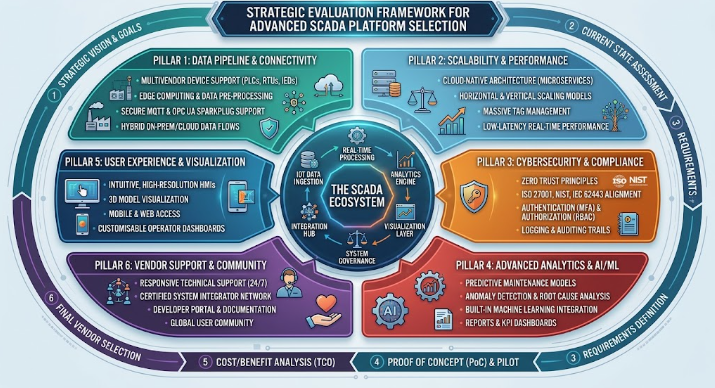
In today’s rapidly evolving industrial environment, Supervisory Control and Data Acquisition (SCADA) systems have become a fundamental technology for monitoring, controlling, and optimizing industrial operations. From manufacturing plants and energy facilities to water treatment systems and transportation networks, SCADA platforms provide operators with real-time visibility and centralized control over critical processes.
Selecting the right SCADA software platform is a strategic decision that directly affects system efficiency, operational reliability, data management capabilities, and future scalability. With numerous SCADA solutions available in the market, companies need to carefully evaluate technical requirements, business objectives, and long-term development plans before making a selection.
Easy Semiconductor Technology (Hong Kong) Limited provides professional electronic component solutions and industrial technology support, helping customers build reliable automation systems with suitable hardware and software components.
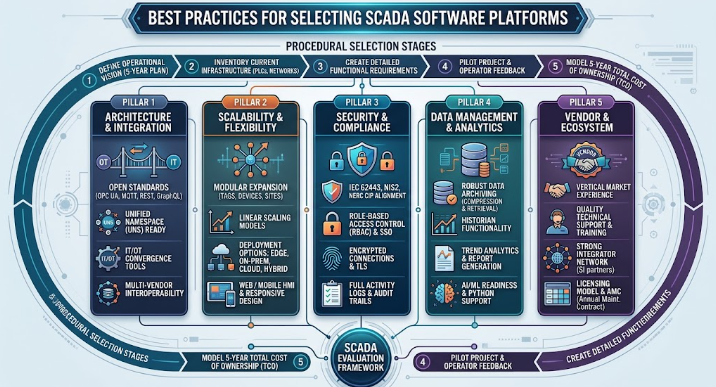
A SCADA system integrates industrial devices, communication networks, databases, and visualization tools to collect and analyze real-time operational data. It enables engineers and operators to monitor equipment status, identify problems quickly, and improve production efficiency.
Modern SCADA platforms typically provide:
Real-time data monitoring and visualization
Alarm management and event tracking
Historical data recording and analysis
Remote equipment control
Industrial communication support
Integration with PLCs, RTUs, and enterprise systems
A properly selected SCADA platform can improve decision-making, reduce downtime, and enhance overall industrial performance.
The first step in choosing a SCADA software platform is understanding the specific needs of the application. Different industries have different operational requirements, and a solution designed for one environment may not be suitable for another.
Important questions to consider include:
How many devices need to be monitored?
How many operators will access the system?
What type of industrial equipment will be connected?
What communication protocols are required?
What level of data storage and analysis is needed?
For small automation projects, a lightweight SCADA solution may be sufficient. Large-scale industrial facilities may require enterprise-level platforms capable of managing thousands of data points and multiple operational sites.
A SCADA platform must communicate effectively with existing industrial equipment. Compatibility with PLCs, sensors, controllers, and communication devices is essential for successful implementation.
Common industrial communication protocols include:
Modbus RTU and Modbus TCP
OPC UA
Ethernet/IP
PROFINET
DNP3
IEC communication standards
A flexible SCADA platform with broad protocol support allows companies to integrate different equipment brands and avoid unnecessary hardware replacement costs.
Industrial systems often grow over time. A SCADA platform should not only meet current requirements but also support future expansion.
Key scalability factors include:
The software should support increasing numbers of monitored variables, controllers, and connected devices as production capacity expands.
For companies operating multiple facilities, centralized monitoring and remote management capabilities can improve operational efficiency.
Modern SCADA solutions increasingly support cloud platforms, industrial IoT devices, and edge computing technologies. These capabilities help organizations collect more data and improve predictive maintenance strategies.
A well-designed human-machine interface (HMI) is essential for effective SCADA operation. Operators rely on visual information to make quick decisions during normal and emergency situations.
A high-quality SCADA platform should provide:
Clear graphical displays
Customizable dashboards
Real-time status indicators
Easy navigation
Mobile and remote access options
An intuitive interface reduces training requirements and helps operators respond faster to equipment issues.
Alarm management is one of the most important functions of a SCADA system. Poorly designed alarms can create confusion and reduce operational efficiency.
A reliable SCADA platform should support:
Alarm prioritization
Alarm history records
Notification management
Alarm acknowledgment tracking
Advanced event analysis
Effective alarm management helps prevent equipment failures and improves workplace safety.
Industrial organizations generate large amounts of operational data every day. A powerful SCADA platform should provide efficient data collection, storage, and analysis functions.
Important features include:
Historical trend analysis
Data logging
Automated reports
Performance monitoring
Integration with databases and analytics platforms
By analyzing historical data, companies can identify production trends, optimize processes, and implement predictive maintenance strategies.
As industrial systems become more connected, cybersecurity has become a critical factor in SCADA selection. Cyber threats can affect production continuity, equipment safety, and sensitive operational data.
A secure SCADA platform should include:
User authentication
Role-based access control
Data encryption
Secure communication protocols
Regular security updates
Organizations should select solutions that follow industrial cybersecurity best practices and support compliance requirements.
The long-term success of a SCADA project depends not only on software features but also on vendor support.
Companies should evaluate:
Technical support availability
Software update policies
Documentation quality
Training resources
Industry experience
A reliable vendor can help with system configuration, troubleshooting, and future upgrades, reducing operational risks.
Modern manufacturing is moving toward digital transformation and smart factory development. SCADA platforms are becoming an important connection point between field-level equipment and advanced information systems.
Advanced SCADA solutions can integrate with:
Industrial IoT platforms
Manufacturing execution systems (MES)
Enterprise resource planning (ERP) systems
Cloud analytics platforms
Artificial intelligence applications
This integration enables companies to improve automation, increase productivity, and make data-driven decisions.
When selecting a SCADA platform, companies should consider the total cost throughout the system lifecycle rather than only the initial software price.
Cost factors may include:
Software licensing
Hardware requirements
Engineering services
Maintenance costs
Training expenses
Future expansion costs
A cost-effective SCADA solution should provide reliable performance while supporting long-term operational goals.
Selecting the right SCADA software platform requires a comprehensive evaluation of functionality, compatibility, scalability, cybersecurity, and long-term support. A well-chosen SCADA system can improve operational visibility, enhance productivity, and provide a strong foundation for industrial digital transformation.
Easy Semiconductor Technology (Hong Kong) Limited is dedicated to supporting industrial customers with reliable electronic components and automation solutions. By combining suitable hardware resources with advanced control technologies, businesses can create efficient, secure, and future-ready industrial systems.
As industries continue to embrace smart manufacturing and connected operations, choosing the right SCADA platform will remain a key factor in achieving higher efficiency, reliability, and competitiveness.