
 home
home
 Published: Jul 30, 2026 09:11 AM
 Page View: 173
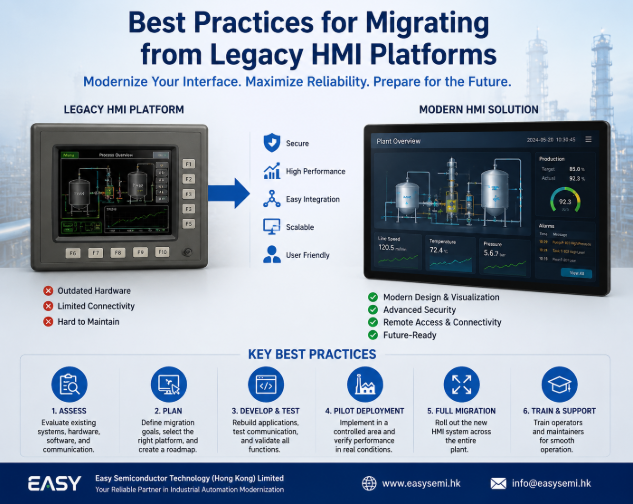
In today’s rapidly evolving industrial environment, Human Machine Interface (HMI) systems play a critical role in connecting operators with automation equipment, production processes, and real-time data. However, many factories and industrial facilities continue to rely on legacy HMI platforms that have reached the end of their lifecycle, creating challenges related to maintenance, cybersecurity, spare parts availability, and system scalability.
Easy Semiconductor Technology (Hong Kong) Limited highlights that migrating from legacy HMI platforms is not simply a software replacement project. A successful migration requires careful planning, system assessment, compatibility verification, and a structured implementation approach to ensure minimal downtime and improved operational performance.
With years of experience supporting industrial automation upgrades, Easy Semiconductor Technology (Hong Kong) Limited provides professional solutions for replacing outdated HMI systems, modernizing operator interfaces, and improving industrial control environments.
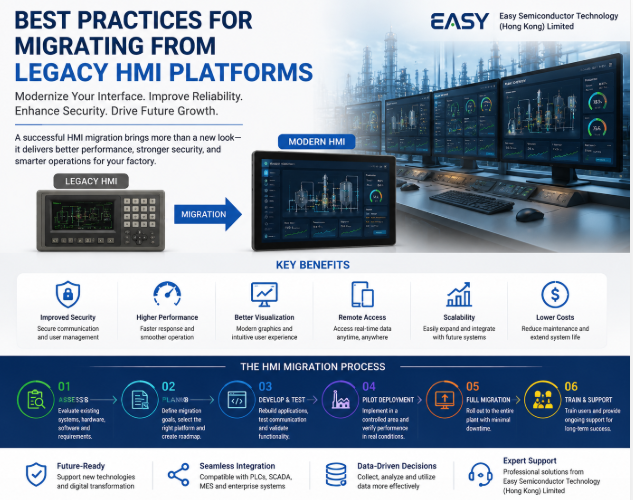
Many industrial facilities installed their original HMI systems decades ago. These platforms were designed for reliability and long-term operation, but aging technology introduces several limitations.
One of the major challenges is hardware obsolescence. Older HMI terminals, industrial computers, and communication modules may no longer be manufactured, making replacement difficult and expensive. In some cases, organizations must search globally for discontinued components to keep production systems running.
Another concern is software compatibility. Legacy HMI applications often depend on outdated operating systems, unsupported databases, and older communication drivers. Without vendor support, troubleshooting and system expansion become increasingly difficult.
Cybersecurity is also a growing concern. Older HMI platforms may lack modern security features such as encrypted communication, user authentication management, and network protection mechanisms. As industrial networks become more connected, upgrading HMI technology becomes essential for protecting critical production assets.
Before beginning an HMI migration project, a detailed assessment of the existing automation environment should be performed.
Engineers should document:
Current HMI hardware models
Operating systems and software versions
PLC and controller communication protocols
Existing HMI screens and graphics
Alarm configurations
Historical data requirements
User access levels
Network architecture
Integration with SCADA, MES, or ERP systems
A complete assessment helps identify potential compatibility issues and allows engineers to develop a realistic migration plan.
Easy Semiconductor Technology (Hong Kong) Limited recommends creating a complete system inventory before selecting a replacement HMI platform. Understanding the existing system structure reduces project risks and prevents unexpected downtime during implementation.
Choosing the correct replacement platform is one of the most important decisions in an HMI migration project.
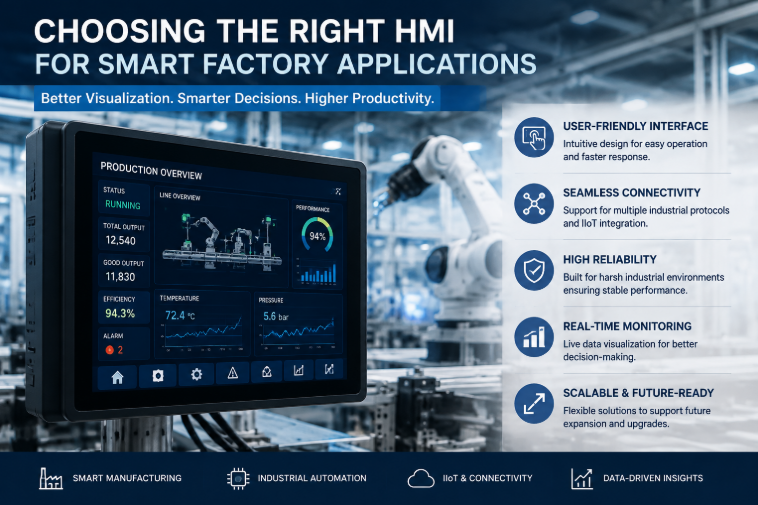
Modern HMI solutions should provide:
Support for current industrial communication protocols
Improved visualization capabilities
Remote monitoring functionality
Secure network connectivity
Flexible data management
Compatibility with existing PLC systems
Expandability for future automation upgrades
A good migration strategy does not always require replacing all automation hardware. In many cases, modern HMI software can communicate with existing PLCs and controllers, allowing companies to upgrade the operator interface while keeping reliable control equipment in service.
This approach reduces investment costs while extending the operational life of existing automation systems.
One of the most valuable assets in a legacy HMI system is the application knowledge built over years of operation.
Existing HMI screens often contain important information about:
Production workflows
Operator procedures
Alarm handling methods
Equipment status monitoring
Process optimization practices
During migration, engineers should carefully review existing applications and determine which functions should be retained, improved, or redesigned.
Simply copying old screens into a new platform may not deliver the best results. A successful migration should improve usability, simplify navigation, and provide operators with clearer information.
Modern HMI design principles can enhance productivity by introducing better graphics, intuitive controls, trend analysis, and improved alarm management.
Communication compatibility is a key technical challenge during HMI migration.
Legacy HMI systems may use older communication methods, including proprietary drivers or outdated serial communication interfaces. Modern platforms typically support advanced protocols such as Ethernet/IP, Modbus TCP, OPC UA, PROFINET, and other industrial communication standards.
Before migration, engineers should verify:
PLC communication drivers
Network configuration
Data address mapping
Tag databases
Communication performance
Redundancy requirements
Proper communication testing should be completed before the new HMI system is connected to live production equipment.
Easy Semiconductor Technology (Hong Kong) Limited provides technical support for industrial communication integration, helping customers achieve smooth transitions between legacy and modern automation environments.
Large industrial systems should rarely be migrated all at once.
A phased migration approach reduces operational risks and allows production teams to gradually adapt to the new system.
A typical migration process includes:
Phase 1: Planning and Documentation
Review the existing system and define migration objectives.
Phase 2: Development and Testing
Create new HMI applications and test communication with controllers.
Phase 3: Pilot Implementation
Install the new HMI system on selected equipment or production lines.
Phase 4: Full Deployment
Complete migration across the entire facility.
Phase 5: Optimization and Training
Improve system performance and train operators.
This structured approach minimizes production interruptions and ensures a controlled transition.
Modern HMI migration provides an excellent opportunity to strengthen industrial cybersecurity.
Recommended improvements include:
Implementing user authentication
Applying role-based access control
Using secure communication protocols
Segmenting industrial networks
Updating operating systems
Applying cybersecurity best practices
As factories move toward smart manufacturing and Industrial Internet of Things (IIoT) technologies, secure HMI systems become increasingly important.
A modern HMI platform should not only improve visualization but also provide a safer foundation for future digital transformation.
Technology upgrades are successful only when users can effectively operate and maintain the new system.
Operator training should include:
New screen navigation
Alarm management
Data monitoring functions
Troubleshooting procedures
Backup and recovery processes
Maintenance personnel should understand system architecture, communication settings, and software management.
Proper training reduces resistance to change and ensures that the new HMI platform delivers maximum value.
Migrating from a legacy HMI platform requires technical expertise, careful planning, and a deep understanding of industrial automation systems.
Easy Semiconductor Technology (Hong Kong) Limited specializes in industrial automation components, system modernization solutions, and replacement strategies for aging control systems. By combining technical knowledge with reliable sourcing capabilities, the company helps manufacturers upgrade outdated HMI platforms while maintaining production continuity.
Whether replacing obsolete operator terminals, upgrading visualization software, improving communication networks, or integrating modern industrial technologies, Easy Semiconductor Technology (Hong Kong) Limited provides comprehensive support for automation modernization projects.
Legacy HMI migration is an essential step for companies seeking improved reliability, cybersecurity, and operational efficiency. A successful migration strategy focuses on detailed assessment, platform selection, application preservation, communication compatibility, phased implementation, and user training.
By following industry best practices, manufacturers can transform outdated HMI systems into modern automation interfaces that support future production requirements.
Easy Semiconductor Technology (Hong Kong) Limited continues to assist global industrial customers in upgrading automation infrastructure and achieving smarter, safer, and more efficient manufacturing operations.