
 home
home
 Published: Aug 21, 2026 08:21 PM
 Page View: 129
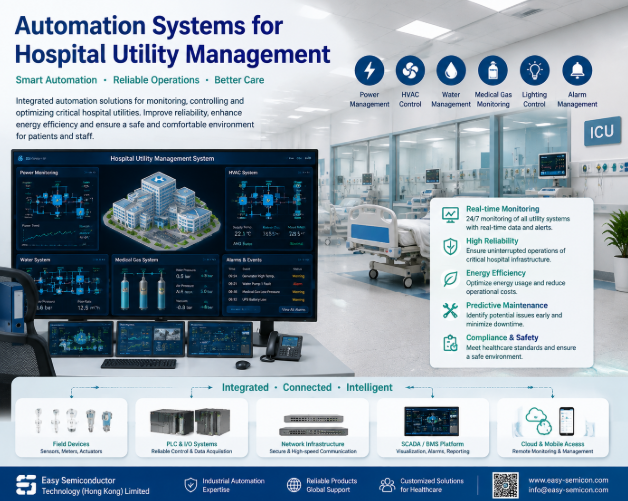
Hospitals are among the most complex infrastructures in modern society, requiring continuous operation of critical utility systems such as electrical power distribution, HVAC, water supply, medical gases, lighting, and environmental monitoring. Any interruption in these essential services can directly impact patient safety, medical procedures, and overall operational efficiency.
To address these challenges, Easy Semiconductor Technology (Hong Kong) Limited introduces advanced Automation Systems for Hospital Utility Management, providing intelligent control, monitoring, and optimization solutions designed to improve reliability, energy efficiency, and operational visibility across healthcare facilities.
Modern hospital automation integrates industrial control technologies, intelligent sensors, communication networks, and supervisory platforms to create a centralized management environment. These systems enable healthcare operators to monitor equipment performance in real time, detect abnormal conditions quickly, and optimize resource consumption while maintaining strict safety standards.
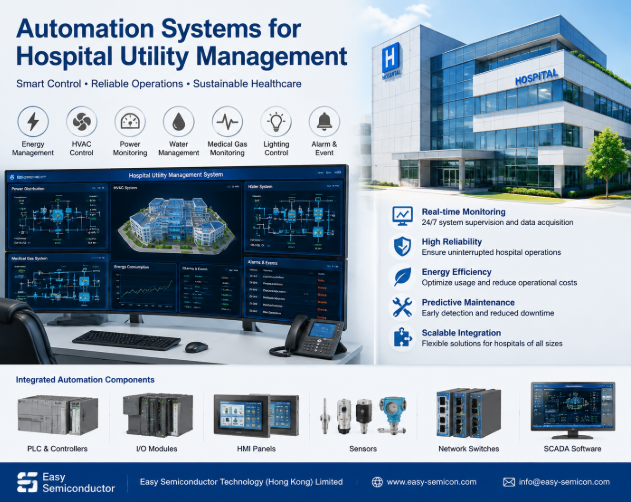
Hospital utility management involves multiple interconnected systems operating around the clock. Traditional manual monitoring methods often require significant manpower and may not provide immediate responses to unexpected failures. Automation technology transforms utility management by enabling centralized supervision and automatic control.
A modern hospital automation system can integrate:
Power distribution monitoring systems
Building management systems (BMS)
HVAC automation and climate control
Water treatment and pumping systems
Medical gas monitoring systems
Emergency power management
Lighting control systems
Equipment condition monitoring platforms
Through programmable logic controllers (PLCs), industrial computers, remote I/O modules, and advanced SCADA platforms, hospital facility teams can manage critical infrastructure from a unified interface. Real-time data collection allows operators to analyze system performance, identify potential issues, and make informed decisions.
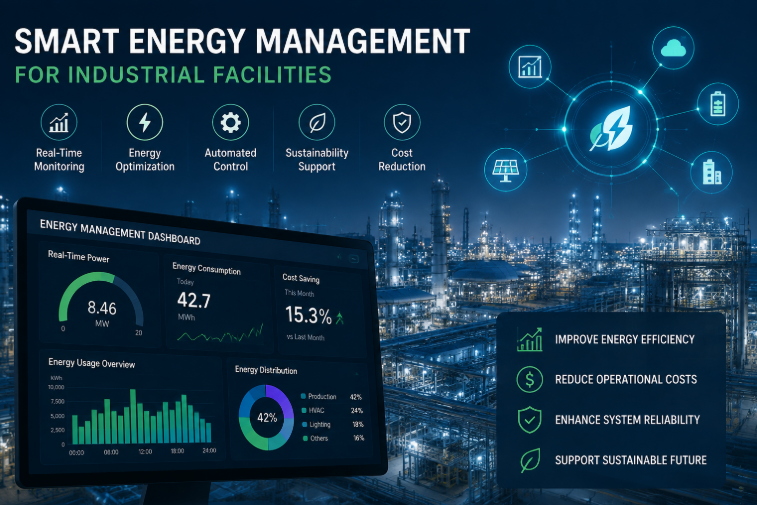
Energy consumption is one of the largest operational costs for healthcare facilities. Hospitals require continuous heating, cooling, ventilation, lighting, and equipment operation, resulting in significant energy demand.
Automation systems help hospitals achieve greater energy efficiency by intelligently controlling utility operations. HVAC systems can automatically adjust temperature, humidity, and airflow based on occupancy levels and environmental conditions. Lighting systems can reduce unnecessary energy usage through automated scheduling and sensor-based control.
Power management solutions also enable hospitals to monitor electricity consumption patterns, optimize equipment operation schedules, and reduce energy waste. These improvements support healthcare organizations in achieving sustainability objectives while lowering long-term operational expenses.
Reliability is a fundamental requirement for hospital infrastructure. Critical areas such as intensive care units, operating rooms, laboratories, and emergency departments depend on stable utility services.
Automation systems provide continuous monitoring of key parameters, including:
Voltage and current levels
Equipment operating status
Temperature and humidity conditions
Water pressure and flow rates
Medical gas pressure levels
Alarm conditions and system faults
When abnormal conditions occur, the system can immediately generate alarms and notify responsible personnel. Early detection helps prevent equipment failures, reduces downtime, and improves the safety of hospital operations.
Integration with emergency power systems ensures that backup generators, uninterruptible power supplies (UPS), and automatic transfer switches operate effectively during power interruptions. This capability is essential for maintaining uninterrupted healthcare services.
Advanced hospital automation solutions increasingly incorporate SCADA and Internet of Things (IoT) technologies to improve connectivity and data visibility.
A centralized SCADA platform allows facility managers to monitor multiple utility systems through graphical interfaces, historical data analysis, and automated reporting. IoT-enabled sensors provide additional intelligence by collecting detailed operational information from distributed equipment throughout the hospital.
With secure network communication, operators can access real-time information from control rooms or authorized remote locations. This improves response speed and enables predictive maintenance strategies based on actual equipment conditions.
The healthcare industry is moving toward smart hospital concepts that combine digital technologies with efficient facility management. Automation systems serve as a foundation for this transformation by connecting physical infrastructure with intelligent software platforms.
Smart hospital automation enables:
Data-driven facility management
Automated fault diagnosis
Predictive maintenance planning
Improved resource allocation
Enhanced patient environment control
Reduced operational risks
By utilizing advanced automation technologies, hospitals can create safer, more efficient, and more sustainable environments for patients, medical professionals, and facility operators.
Every healthcare facility has unique operational requirements. A large medical center may require extensive integration across hundreds of systems, while smaller clinics may focus on specific automation functions such as HVAC control or energy monitoring.
Easy Semiconductor Technology (Hong Kong) Limited provides flexible automation solutions that can be customized according to facility size, application requirements, and future expansion plans.
The company supports healthcare customers with:
Industrial automation components
Control system integration
Intelligent monitoring solutions
Industrial communication technologies
Reliable automation hardware platforms
These solutions help hospitals achieve higher levels of operational control while ensuring compatibility with existing infrastructure.
The future of hospital utility management will continue to evolve with artificial intelligence, cloud platforms, advanced analytics, and digital twin technologies. AI-based monitoring systems will help predict equipment failures before they occur, while cloud-based platforms will enable more efficient management of distributed healthcare facilities.
Cybersecurity will also become increasingly important as hospitals adopt connected automation networks. Secure communication protocols, access management, and network protection strategies will be essential components of future hospital automation systems.
As healthcare organizations continue to prioritize efficiency, safety, and sustainability, intelligent automation will play a critical role in supporting next-generation medical infrastructure.
Automation Systems for Hospital Utility Management represent a major advancement in healthcare facility operations. By combining industrial automation, intelligent monitoring, and digital technologies, hospitals can improve reliability, reduce energy consumption, and enhance operational efficiency.
Easy Semiconductor Technology (Hong Kong) Limited is committed to delivering innovative automation solutions that support the development of smarter healthcare facilities. Through advanced control systems and intelligent infrastructure management, hospitals can achieve safer environments, optimized resource utilization, and improved service quality for the future of healthcare.