
 home
home
 Published: Aug 03, 2026 01:48 PM
 Page View: 191
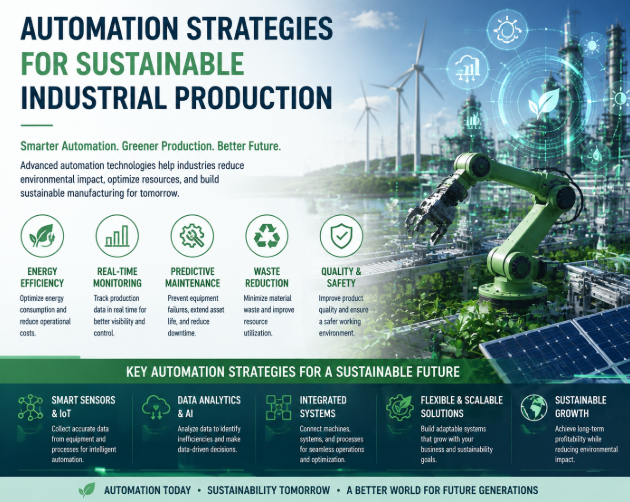
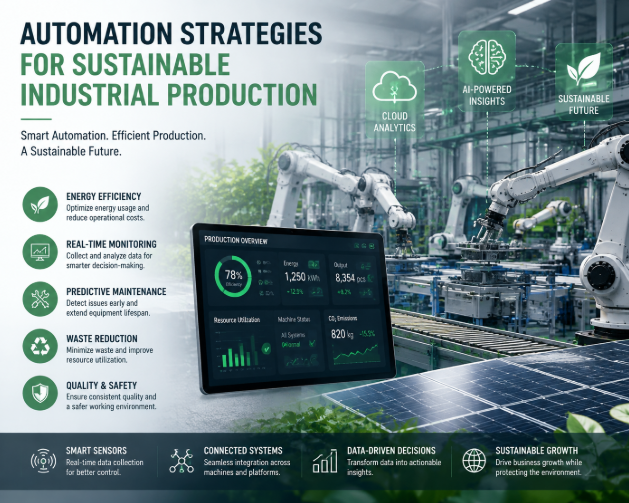
As global industries face increasing pressure to reduce energy consumption, improve resource efficiency, and achieve long-term sustainability goals, automation has become a critical strategy for modern manufacturing. Advanced industrial automation technologies are helping factories optimize production processes, minimize waste, and create more environmentally responsible operations.
Easy Semiconductor Technology (Hong Kong) Limited highlights that sustainable industrial production is no longer only about reducing environmental impact. It is also about improving operational efficiency, increasing equipment reliability, and building intelligent manufacturing systems that can adapt to future challenges.
Traditional manufacturing environments often rely on manual monitoring, fixed production schedules, and energy-intensive equipment operation. These methods can lead to unnecessary resource consumption, production waste, and inefficient use of machinery.
Automation changes this approach by enabling real-time data collection, intelligent control, and continuous optimization. Through advanced sensors, industrial controllers, communication networks, and software platforms, factories can monitor production conditions and automatically adjust operations to achieve higher efficiency.
Modern automation systems allow manufacturers to:
Reduce unnecessary energy usage
Improve production accuracy
Minimize material waste
Extend equipment service life
Enhance workplace safety
Support data-driven decision-making
These improvements contribute directly to more sustainable industrial operations.
Energy consumption is one of the largest challenges for industrial facilities. Manufacturing plants often operate large numbers of machines, motors, heating systems, and production lines that require significant amounts of power.
Automation technologies provide effective solutions for managing industrial energy consumption. Intelligent monitoring systems can collect real-time energy data from equipment and identify areas where improvements can be made.
For example, automated control systems can adjust machine operating speeds based on production demand, reduce idle operation times, and optimize power distribution across different production areas.
Energy management platforms integrated with industrial automation networks can also provide detailed analysis of energy usage trends, helping companies develop more effective sustainability strategies.
Equipment failures can result in production downtime, emergency repairs, and unnecessary replacement of industrial components. These issues not only increase operating costs but may also create additional environmental waste.
Automation-driven predictive maintenance helps manufacturers address these challenges. Smart sensors and monitoring systems continuously analyze equipment conditions, including temperature, vibration, pressure, and performance data.
By identifying early signs of potential failures, maintenance teams can schedule repairs before serious problems occur. This approach reduces unexpected downtime, improves equipment reliability, and extends the operational lifespan of industrial assets.
Longer equipment lifecycles mean fewer replacement parts, lower material consumption, and reduced environmental impact.
Sustainable production requires accurate information and effective decision-making. Industrial automation provides manufacturers with valuable operational data that can be used to improve processes.
Through industrial Ethernet, SCADA systems, edge computing platforms, and cloud-based analytics, factories can create connected production environments where information flows efficiently between machines, control systems, and management platforms.
Data analytics helps manufacturers identify:
Production inefficiencies
Excessive energy consumption
Quality problems
Resource waste
Process improvement opportunities
With better visibility into factory operations, companies can make informed decisions that balance productivity with sustainability.
Smart sensors are becoming essential components of sustainable automation strategies. These devices collect accurate information from production equipment and provide real-time feedback for automated control.
Temperature sensors, pressure sensors, flow monitoring devices, and condition monitoring systems enable factories to maintain stable production conditions while reducing unnecessary resource consumption.
Industrial connectivity also plays an important role. Reliable communication networks allow different automation devices and systems to work together efficiently. This creates a foundation for intelligent factories where production processes can be continuously improved.
Sustainable manufacturing is closely connected with reducing production waste. Automation systems improve process consistency and help manufacturers maintain higher product quality.
Automated inspection systems, precision control technologies, and intelligent production equipment can detect defects earlier and reduce the number of rejected products.
Lower defect rates mean:
Less wasted raw material
Reduced energy consumption during production
Fewer unnecessary processing steps
Improved overall efficiency
By improving quality control through automation, manufacturers can achieve both economic and environmental benefits.
Modern markets require manufacturers to respond quickly to changing customer demands. Sustainable factories must be flexible enough to adjust production while maintaining efficiency.
Automation supports this flexibility through modular equipment design, programmable controllers, and intelligent production management systems. Manufacturers can modify production processes without completely replacing existing infrastructure.
This approach is especially valuable for companies upgrading legacy industrial systems. Instead of large-scale replacements, gradual automation improvements can deliver sustainability benefits while controlling investment costs.
The future of sustainable industrial production will be shaped by the combination of automation, artificial intelligence, advanced analytics, and intelligent energy management.
Artificial intelligence will enable factories to make more accurate predictions, optimize complex processes, and improve resource utilization. Edge computing will allow faster decision-making by processing industrial data closer to production equipment.
As industries continue moving toward smart manufacturing, automation will remain a key driver of environmental responsibility and operational excellence.
Automation strategies are transforming the way industries approach sustainable production. By improving energy efficiency, reducing waste, enabling predictive maintenance, and supporting intelligent decision-making, automation helps manufacturers achieve long-term sustainability goals while maintaining competitiveness.
Easy Semiconductor Technology (Hong Kong) Limited believes that the integration of advanced automation solutions will continue to play an important role in developing greener, smarter, and more efficient industrial environments. As global manufacturing evolves, companies that invest in intelligent automation will be better positioned to achieve sustainable growth and future success.