
 home
home
 Published: Aug 22, 2026 09:34 PM
 Page View: 137
As global trade continues to expand and supply chains become increasingly complex, ports are facing growing demands for higher efficiency, improved safety, and sustainable operations. Traditional port management models are no longer sufficient to handle the increasing volume of cargo, vessel traffic, and operational challenges. Automation technologies have become a key solution for transforming modern ports into intelligent, connected, and highly efficient logistics hubs.
Easy Semiconductor Technology (Hong Kong) Limited is committed to providing advanced automation solutions that support the digital transformation of smart port operations. By integrating industrial control systems, intelligent sensors, communication networks, and real-time monitoring platforms, automated port projects can significantly improve productivity, reduce operational costs, and enhance overall reliability.
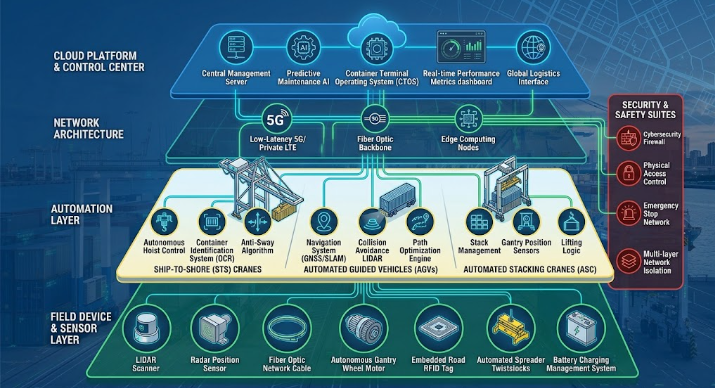
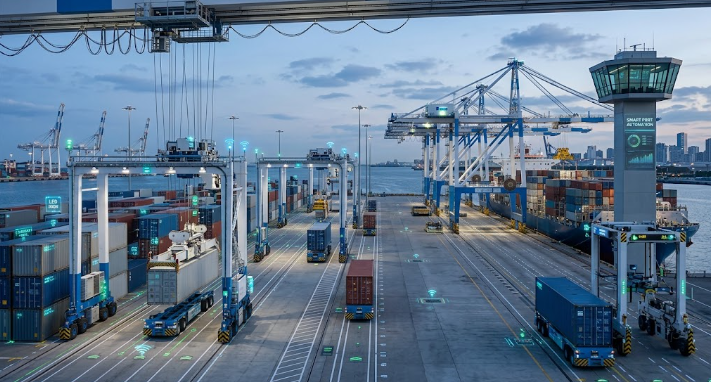
Smart ports represent the next generation of maritime infrastructure, combining automation, data analytics, and industrial intelligence to optimize every stage of port operations. From container handling and terminal management to energy monitoring and equipment maintenance, automation systems enable ports to operate with greater precision and flexibility.
Modern smart port projects typically include automated container terminals, intelligent crane control systems, automated guided vehicles (AGVs), warehouse management systems, and integrated port operation platforms. These technologies allow operators to monitor equipment status, manage cargo flows, and make data-driven decisions in real time.
With advanced automation architecture, port operators can achieve faster vessel turnaround times, reduce human errors, and maximize the utilization of critical infrastructure.
Container handling is one of the most important processes in port operations. Traditional manual handling methods often face challenges such as limited efficiency, higher labor requirements, and increased safety risks. Automation projects introduce intelligent control technologies to optimize container loading, unloading, transportation, and storage.
Automated stacking cranes, remote-controlled quay cranes, and intelligent terminal equipment can perform complex operations with high accuracy. Industrial controllers and communication systems coordinate equipment movements, ensuring smooth and reliable cargo transportation.
Through centralized monitoring platforms, operators can remotely supervise multiple terminal areas, analyze equipment performance, and adjust operational strategies according to real-time requirements.
Reliable industrial control systems are the foundation of smart port automation. These systems connect field devices, sensors, controllers, and management platforms to create an integrated operational environment.
Programmable Logic Controllers (PLCs), Distributed Control Systems (DCS), and Industrial Internet of Things (IIoT) technologies enable precise control of port equipment and infrastructure. They support applications including:
Automated crane control
Conveyor and material handling systems
Gate access management
Cargo tracking systems
Power distribution monitoring
Environmental monitoring
A robust control system ensures continuous operation even in demanding marine environments where equipment must withstand vibration, humidity, temperature changes, and heavy workloads.
Smart monitoring is essential for improving equipment reliability and reducing unexpected downtime. Automation projects use advanced sensors and data acquisition technologies to collect information from cranes, vehicles, generators, and other critical assets.
Real-time monitoring platforms can analyze operational parameters such as temperature, vibration, energy consumption, and equipment performance. Predictive maintenance technologies use this information to identify potential failures before they occur.
By moving from traditional reactive maintenance to proactive maintenance strategies, ports can extend equipment lifespan, reduce repair costs, and improve operational availability.
Ports consume significant amounts of electricity due to large-scale cranes, lighting systems, cargo handling equipment, and terminal facilities. Energy efficiency has become an important objective for modern port development.
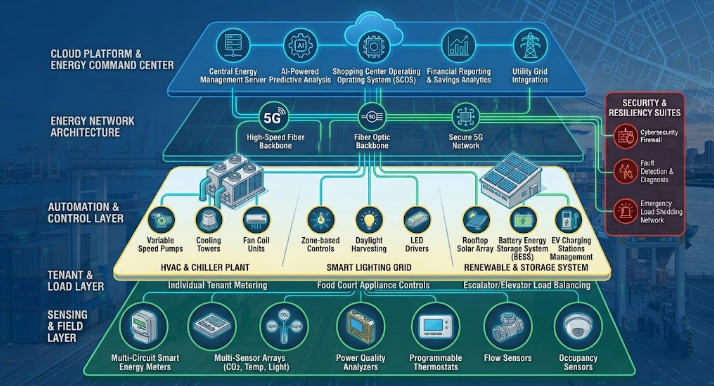
Automation solutions help ports implement intelligent energy management systems that monitor electricity usage and optimize power distribution. Smart meters, energy monitoring devices, and automated control platforms provide detailed insights into consumption patterns.
These solutions support energy-saving strategies such as automated lighting control, optimized equipment operation, and renewable energy integration. As ports pursue greener operations, intelligent energy management will play an increasingly important role in reducing carbon emissions.
A smart port requires a reliable communication network to connect thousands of devices and systems. Industrial Ethernet, wireless communication technologies, and secure data networks provide the foundation for real-time information exchange.
Automation projects integrate communication solutions that enable seamless connectivity between terminal equipment, control centers, logistics platforms, and enterprise management systems.
High-performance network infrastructure ensures fast data transmission, improved system coordination, and enhanced operational visibility across large port areas.
Safety is a critical priority in port operations. Heavy machinery, large cargo volumes, and complex working environments create significant operational risks. Automation technologies help reduce these risks by minimizing manual intervention and improving operational control.
Intelligent safety systems can include automated access control, equipment collision prevention, real-time location tracking, and emergency monitoring solutions. These technologies provide operators with better awareness of potential hazards and support faster response during abnormal situations.
By creating safer working environments, smart port automation benefits both employees and operational efficiency.
Environmental sustainability has become a major focus for ports worldwide. Automation contributes to greener port operations by improving resource efficiency and reducing unnecessary energy consumption.
Smart automation systems help optimize transportation routes, reduce equipment idle time, and support cleaner energy management. Electrified automated vehicles, intelligent charging systems, and advanced monitoring platforms contribute to the development of environmentally responsible ports.
Through the adoption of automation technologies, ports can balance economic growth with environmental protection.
Easy Semiconductor Technology (Hong Kong) Limited provides professional automation solutions designed to meet the evolving needs of modern industrial environments. With expertise in industrial components, control systems, and intelligent infrastructure technologies, the company supports customers in developing reliable and efficient automation projects.
From initial system design and equipment selection to integration and technical support, Easy Semiconductor Technology helps businesses implement smart automation strategies that improve operational performance.
The company’s solutions are suitable for a wide range of applications, including port terminals, logistics centers, industrial facilities, and large-scale infrastructure projects.
The future of port operations will be defined by deeper integration of artificial intelligence, autonomous systems, digital twins, and advanced analytics. Fully connected smart ports will enable automated decision-making, optimized resource allocation, and improved global supply chain performance.
As maritime industries continue to evolve, automation will remain a key driver for achieving higher efficiency, stronger safety standards, and sustainable growth.
Easy Semiconductor Technology (Hong Kong) Limited will continue to support the development of intelligent industrial solutions, helping organizations build the next generation of smart port infrastructure through advanced automation technologies.