
 home
home
 Published: Jun 05, 2026 12:41 PM
 Page View: 143
As global freshwater demand continues to rise, desalination plants have become a critical infrastructure for water-scarce regions. However, many existing facilities rely on aging automation systems that limit efficiency, increase energy consumption, and reduce operational reliability. To address these challenges, automation upgrade projects for desalination plants are increasingly being implemented worldwide to modernize control systems, improve process stability, and optimize energy usage.
This case study explores how an integrated automation upgrade solution enhances performance in desalination plants, focusing on Distributed Control Systems (DCS), Programmable Logic Controllers (PLC), SCADA integration, and advanced process optimization technologies.
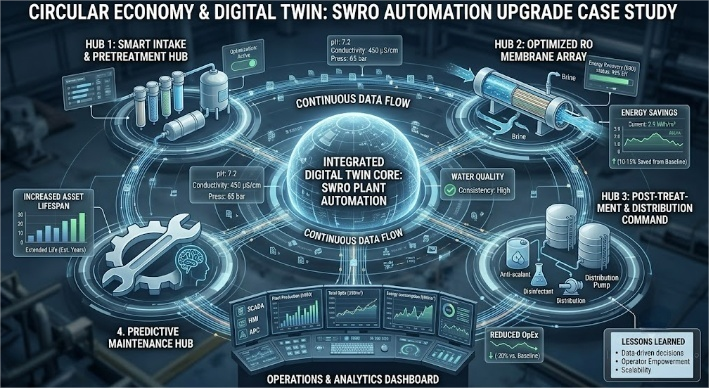
Desalination plants—especially those using Reverse Osmosis (RO) and Multi-Stage Flash (MSF) processes—depend heavily on precise control of pressure, flow, temperature, and chemical dosing. However, many facilities face common challenges:
Aging PLC and DCS control systems
Limited real-time monitoring capability
High energy consumption in high-pressure pumps
Inconsistent water quality output
Lack of predictive maintenance systems
Difficulty integrating new sensors and IoT devices
These limitations reduce overall plant efficiency and increase operational costs, making industrial automation upgrade for water treatment plants a strategic necessity.
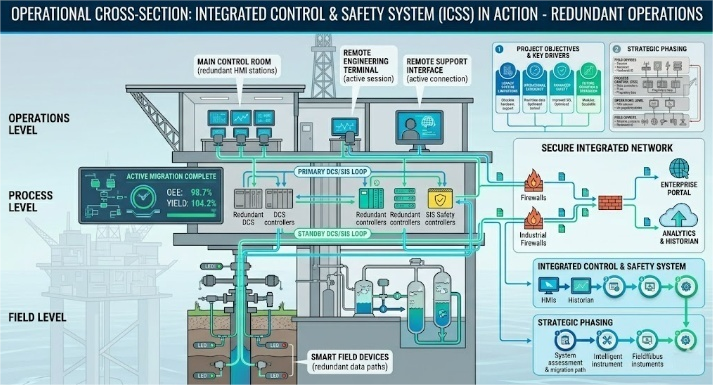
The automation upgrade project implemented by Easy Semiconductor Technology (Hong Kong) Limited focused on a complete modernization of the plant’s control infrastructure, including:
Legacy controllers were replaced with modern high-speed PLCs supporting redundant architecture and enhanced processing capabilities.
A centralized SCADA platform was deployed to enable real-time visualization of plant operations, alarms, and performance indicators.
Process control logic was migrated to a hybrid DCS architecture, improving coordination between RO units, chemical dosing systems, and pumping stations.
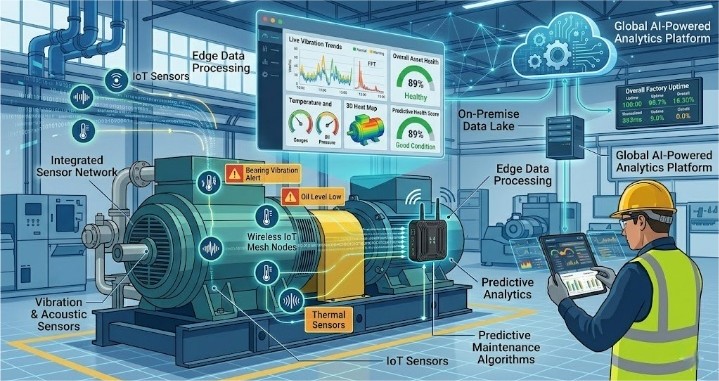
Smart sensors and IoT gateways were introduced for remote monitoring and cloud-based analytics.
Advanced control algorithms were implemented to optimize high-pressure pump operation, significantly reducing energy consumption.
The upgraded automation system delivered several critical improvements:
Enhanced PLC and DCS integration enabled millisecond-level response to changes in pressure, salinity, and flow rates.
Automated chemical dosing systems ensured consistent membrane performance and improved permeate quality.
IoT-enabled condition monitoring allowed early detection of pump wear, membrane fouling, and valve degradation.
The upgraded system incorporated industrial cybersecurity standards such as IEC 62443 to protect against unauthorized access and system disruptions.
Energy consumption is one of the highest operational costs in desalination plants, particularly in reverse osmosis systems. The automation upgrade introduced intelligent energy management strategies:
Variable Frequency Drive (VFD) optimization for high-pressure pumps
Load balancing across multiple RO trains
Adaptive pressure control based on feed water quality
Real-time energy monitoring dashboards
As a result, the plant achieved significant reductions in energy usage per cubic meter of water produced, improving overall sustainability.
The project delivered measurable operational and economic benefits:
Improved system uptime and reliability
Faster fault detection and system recovery
Reduced manual intervention requirements
Stable salinity control
Reduced chemical overuse
Higher membrane lifespan
Lower energy consumption
Reduced maintenance costs
Optimized resource utilization
Integration with cloud-based monitoring platforms
Remote access for engineers and operators
Data-driven decision-making capabilities
The global desalination industry is moving toward fully digitalized and autonomous operations. Future trends include:
AI-driven process optimization
Digital twin simulation for desalination plants
Edge computing for real-time control
Advanced predictive analytics for membrane performance
Fully integrated water-energy management systems
Automation upgrades are no longer optional—they are essential for achieving sustainable water production in the face of increasing global demand.
To enhance search engine visibility, the following high-traffic SEO keywords are included:
desalination plant automation upgrade
industrial water treatment automation
SCADA system for desalination plants
PLC control system water treatment
reverse osmosis automation solutions
industrial IoT water treatment plant
energy optimization desalination system
water plant control system modernization
smart water treatment automation
industrial process automation water industry
Easy Semiconductor Technology (Hong Kong) Limited provides advanced industrial automation solutions for water treatment, desalination plants, oil & gas, marine engineering, and manufacturing industries. The company specializes in PLC systems, DCS modernization, SCADA integration, and IIoT-based industrial optimization solutions designed to improve efficiency, reliability, and sustainability.
The automation upgrade case study for desalination plants demonstrates how modern control technologies can significantly improve operational efficiency, reduce energy consumption, and enhance water production quality. By integrating PLC, DCS, SCADA, and IIoT technologies, desalination facilities can transition into intelligent, data-driven systems capable of meeting future water demand challenges.
Easy Semiconductor Technology (Hong Kong) Limited continues to support global clients in achieving advanced automation transformation across critical infrastructure sectors.