
 home
home
 Published: Jun 05, 2026 12:23 PM
 Page View: 142
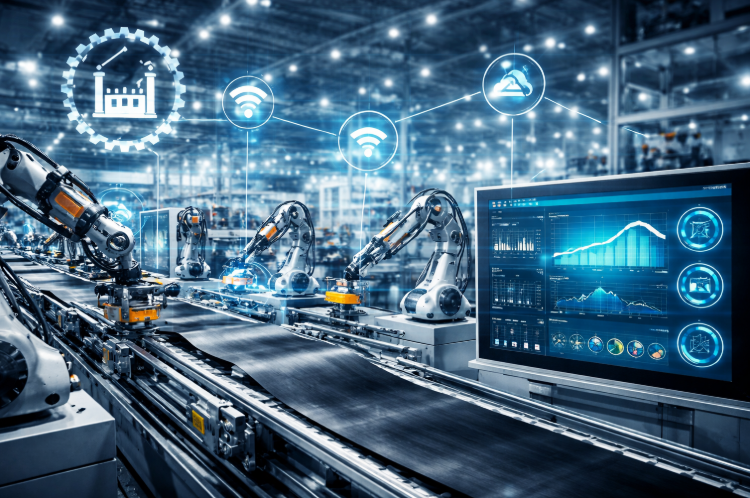
 The global rubber processing industry is undergoing a significant transformation as manufacturers seek higher productivity, improved product consistency, and lower operational costs. Increasing demand from automotive, construction, aerospace, consumer goods, and industrial sectors has intensified the need for efficient production methods. As a result, factory automation solutions have become a critical component of modern rubber manufacturing facilities.
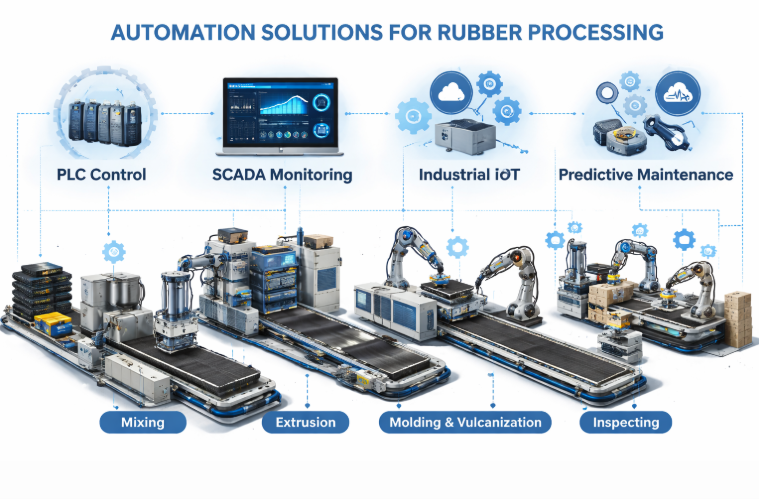
Easy Semiconductor Technology (Hong Kong) Limited is committed to helping industrial manufacturers achieve smarter operations through advanced factory automation technologies. By integrating PLC control systems, SCADA monitoring platforms, Industrial IoT connectivity, and intelligent process automation, rubber processing plants can significantly improve efficiency, quality, and profitability.
Rubber manufacturing involves multiple complex processes, including raw material handling, mixing, extrusion, calendaring, molding, vulcanization, cooling, and packaging. Maintaining consistent product quality throughout these stages can be challenging due to variations in temperature, pressure, material composition, and machine performance.
Traditional production lines often rely heavily on manual operation and isolated control systems. These limitations can lead to:
Production inconsistencies
High material waste
Equipment downtime
Increased labor costs
Limited process visibility
Energy inefficiencies
As market competition grows, manufacturers require more advanced solutions that enable real-time monitoring, automated control, and data-driven decision-making.
Factory automation solutions provide centralized control over critical production processes. Modern automation platforms collect data from sensors, controllers, drives, and machines across the entire production line, allowing operators to monitor and optimize performance in real time.
Advanced automation systems can control:
Rubber mixing operations
Extrusion line parameters
Temperature regulation
Material feeding systems
Conveyor operations
Curing and vulcanization processes
Quality inspection stations
Packaging equipment
Automation improves process stability while reducing the impact of human error. Industry studies show that automated rubber production lines can significantly reduce scrap rates, improve throughput, and enhance operational reliability.
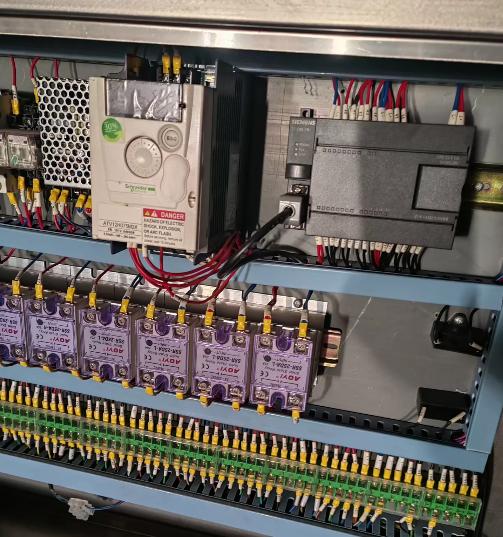
Programmable Logic Controllers (PLCs) serve as the backbone of industrial automation in rubber processing facilities. PLCs provide fast and reliable control of machinery while ensuring accurate execution of production recipes and operating sequences.
Modern PLC control systems offer:
High-speed process control
Flexible recipe management
Equipment synchronization
Automated alarm handling
Data acquisition capabilities
Seamless communication with SCADA systems
By integrating PLC-based automation, manufacturers can achieve precise control over critical production parameters such as temperature, pressure, mixing duration, and conveyor speed. These capabilities help maintain consistent product quality while maximizing equipment utilization.
Supervisory Control and Data Acquisition (SCADA) systems play a vital role in modern rubber processing plants. SCADA platforms provide operators with comprehensive visibility into plant operations through graphical dashboards and real-time data displays.
Benefits of SCADA monitoring include:
Centralized process supervision
Instant alarm notifications
Historical data analysis
Production reporting
Energy consumption tracking
Remote plant monitoring
With SCADA integration, production managers can quickly identify performance bottlenecks, detect abnormalities, and implement corrective actions before issues impact product quality or production schedules.
The adoption of Industrial Internet of Things (IIoT) technologies is accelerating the transition toward smart manufacturing within the rubber industry. Connected sensors continuously collect operational data from machines, drives, motors, and production equipment.
Industrial IoT solutions enable:
Real-time equipment monitoring
Predictive maintenance programs
Remote diagnostics
Asset performance tracking
Production optimization
Cloud-based analytics
By transforming raw machine data into actionable insights, manufacturers can make informed decisions that improve production efficiency and reduce operating costs. The growing adoption of connected automation technologies is reshaping industrial production environments worldwide.
Unexpected equipment failures can result in costly downtime and production losses. Predictive maintenance solutions utilize sensors, analytics software, and machine learning algorithms to identify potential failures before they occur.
In rubber processing facilities, predictive maintenance can monitor:
Motor performance
Bearing condition
Vibration levels
Hydraulic systems
Temperature variations
Drive health indicators
By addressing maintenance requirements proactively, manufacturers can reduce unplanned downtime, extend equipment lifespan, and improve overall production reliability.
Energy consumption represents a significant operational expense in rubber manufacturing. Automation systems help optimize energy usage by controlling motors, heaters, compressors, and processing equipment more efficiently.
Variable Frequency Drives (VFDs), intelligent motor control systems, and automated energy management platforms enable manufacturers to:
Reduce electricity consumption
Minimize process waste
Improve equipment efficiency
Lower carbon emissions
Support sustainability initiatives
Energy-efficient automation solutions not only reduce operating costs but also help companies meet increasingly stringent environmental regulations.
The future of the rubber processing industry will be driven by greater digitalization and intelligent automation. Emerging technologies such as artificial intelligence, edge computing, digital twins, advanced robotics, and cloud-based analytics are creating new opportunities for operational excellence.
Manufacturers investing in smart factory technologies today will be better positioned to respond to changing market demands, improve product quality, and maintain a competitive advantage in the years ahead.
Factory automation solutions are revolutionizing the rubber processing industry by improving manufacturing efficiency, enhancing product quality, reducing downtime, and supporting sustainable operations. Through the integration of PLC control systems, SCADA monitoring, Industrial IoT connectivity, predictive maintenance, and intelligent process automation, manufacturers can achieve higher levels of performance and profitability.
Easy Semiconductor Technology (Hong Kong) Limited continues to support industrial customers with advanced automation technologies designed to meet the evolving demands of modern manufacturing. As the rubber industry embraces smart manufacturing, automation will remain a key driver of innovation, productivity, and long-term business success.