
 home
home
 Published: Jun 02, 2026 12:52 PM
 Page View: 159
In today’s highly competitive construction materials market, cement production plants face increasing pressure to enhance operational efficiency, reduce energy consumption, ensure product quality, and comply with environmental regulations. Smart monitoring systems have emerged as a critical solution, enabling plant operators to gain real-time insights, optimize production processes, and make data-driven decisions. This guide explores the application, benefits, and implementation strategies of smart monitoring systems in modern cement production facilities.
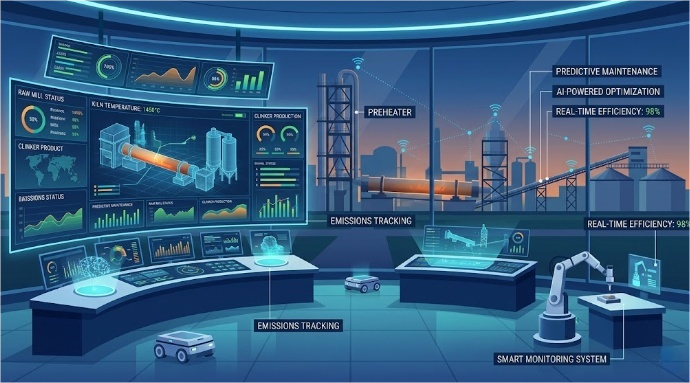
Cement manufacturing involves multiple complex processes, including raw material handling, clinker production, grinding, and packaging. Each stage is resource-intensive and requires careful control to maintain quality, minimize waste, and reduce energy usage. Traditional manual monitoring methods are often insufficient to detect inefficiencies or prevent process deviations in real time.
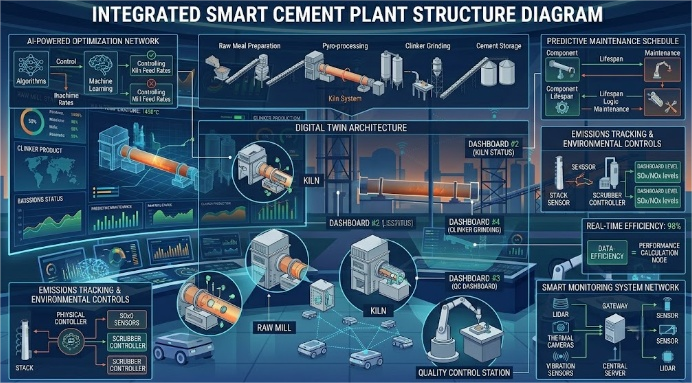
Smart monitoring systems integrate advanced sensors, programmable logic controllers (PLCs), SCADA platforms, and industrial analytics to provide centralized visibility and control. By collecting and analyzing data from various stages of production, plant managers can optimize operations, reduce downtime, and improve overall plant performance.
PLCs are the backbone of automation in cement production plants. They control critical processes such as kiln operation, raw mill feeding, grinding, and material transport. Modern PLCs offer:
High-speed processing and reliability for continuous operations
Modular I/O expansion for flexible plant configurations
Integration with SCADA, MES, and industrial IoT platforms
Redundant architectures to ensure uninterrupted production
Supervisory Control and Data Acquisition (SCADA) systems provide centralized monitoring of plant operations. Human-Machine Interface (HMI) panels allow operators to visualize process parameters, alarms, and production data in real time. Key benefits include:
Enhanced operational visibility across all production stages
Rapid fault detection and troubleshooting
Automated reporting for regulatory compliance
Historical data analysis to identify trends and optimize performance
Cement production relies on accurate measurement of parameters such as temperature, pressure, humidity, flow rate, and material level. Smart sensors provide continuous monitoring and transmit data to PLCs and SCADA systems. Applications include:
Monitoring kiln and cooler temperatures for optimal clinker formation
Tracking raw material feeding and grinding efficiency
Measuring energy consumption for sustainability goals
Detecting equipment vibration or wear for predictive maintenance
Reliable communication networks connect PLCs, sensors, drives, SCADA systems, and enterprise applications. Common industrial communication protocols used in cement plants include:
EtherNet/IP
Modbus TCP
PROFINET
OPC UA
These networks ensure seamless data flow across the plant, enabling real-time control and remote monitoring.
Cement production is energy-intensive, with kilns and mills consuming significant electricity and fuel. Smart monitoring systems collect energy consumption data in real time and provide actionable insights to reduce waste. Plant operators can:
Adjust kiln temperatures and mill speeds
Optimize material feed rates
Reduce peak energy demand
Implement energy-saving strategies without affecting quality
Maintaining consistent cement quality requires precise control of raw material ratios, kiln temperature, and grinding fineness. Smart monitoring systems automatically detect deviations and provide corrective actions. Benefits include:
Consistent clinker and cement quality
Reduced rework and material waste
Improved product uniformity for customer satisfaction
Equipment failures in cement plants can lead to costly downtime. Smart monitoring systems track equipment performance using vibration, temperature, and operational data. Predictive maintenance strategies help plant managers:
Identify early signs of equipment degradation
Schedule maintenance proactively
Extend machinery lifespan
Reduce unplanned downtime and maintenance costs
Cement production is subject to strict environmental regulations, including emissions limits for dust, CO2, and NOx. Smart monitoring systems continuously track environmental parameters and provide automated reporting. Advantages include:
Real-time detection of emissions violations
Data-driven compliance with environmental standards
Reduced risk of fines or shutdowns
By deploying smart monitoring systems, cement production plants can achieve:
Enhanced operational efficiency and process control
Reduced energy consumption and production costs
Improved product quality and consistency
Increased equipment reliability and reduced downtime
Greater environmental compliance and sustainability
Modern cement plants are adopting Industry 4.0 technologies to create intelligent, connected operations. Smart monitoring systems serve as the foundation for digital transformation, enabling:
Industrial Internet of Things (IIoT) connectivity
Cloud-based data analytics
Digital twins for process simulation and optimization
AI-driven predictive insights
These technologies allow plant managers to make data-driven decisions, optimize processes, and respond proactively to operational challenges.
Smart monitoring systems are transforming cement production by providing real-time visibility, process optimization, predictive maintenance, and regulatory compliance. By integrating advanced sensors, PLCs, SCADA systems, and analytics, cement plants can enhance efficiency, reduce costs, and ensure consistent product quality. As Industry 4.0 adoption accelerates, smart monitoring solutions will become an indispensable tool for cement manufacturers seeking sustainable, future-ready operations.
Easy Semiconductor Technology (Hong Kong) Limited specializes in industrial automation solutions, PLC systems, control devices, and advanced monitoring technologies. With years of experience supporting industrial operations, the company provides innovative, reliable, and cost-effective solutions to optimize plant performance, enhance productivity, and ensure sustainable growth.