
 home
home
 Published: May 30, 2026 01:03 PM
 Page View: 175
In today’s rapidly evolving industrial environment, Programmable Logic Controllers (PLCs) are the backbone of automation systems, ensuring the seamless operation of machinery and production lines. However, PLC systems are highly sensitive to voltage fluctuations, which can lead to operational disruptions, equipment damage, and costly downtime. Protecting these critical systems from electrical disturbances is essential for maintaining production stability and prolonging equipment lifespan.
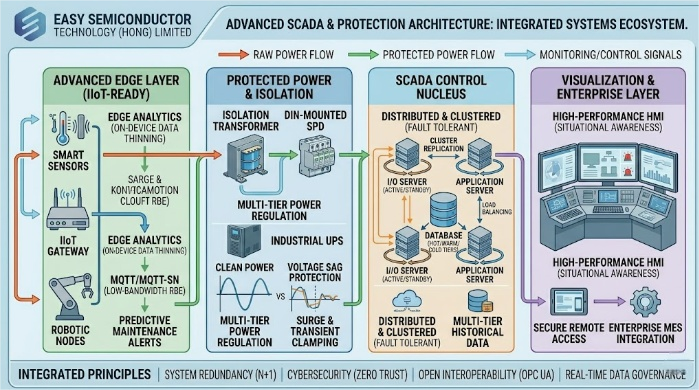
Understanding Voltage Fluctuations and Their Impact
Voltage fluctuations, including surges, sags, and transient spikes, can occur due to various reasons such as power grid instability, switching of heavy machinery, lightning strikes, or electrical faults. Even minor deviations from the standard voltage range can disrupt the logic processing of PLCs, causing unexpected behavior, data corruption, or system shutdowns. In extreme cases, prolonged exposure to unstable voltage can damage sensitive components such as power supplies, input/output modules, and communication interfaces.
Industrial plants that rely on PLCs for continuous operations, particularly in sectors like semiconductor manufacturing, automotive assembly, and chemical processing, face significant risks if voltage instability is not adequately addressed.
Key Strategies for Voltage Protection
Uninterruptible Power Supplies (UPS) and Voltage Regulators
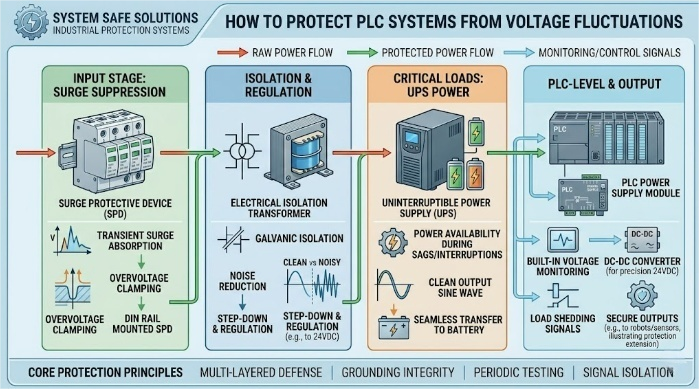
Installing a UPS is a fundamental measure to safeguard PLCs against sudden power loss. A high-quality UPS not only provides backup power but often includes voltage regulation features to maintain a stable output. Additionally, automatic voltage regulators (AVRs) can compensate for minor voltage fluctuations, ensuring that PLCs receive a consistent and reliable power supply.
Surge Protection Devices (SPDs)
Electrical surges caused by lightning strikes or switching operations can damage PLC circuits instantly. Installing surge protection devices at key points in the electrical distribution network helps absorb and dissipate excessive voltage, preventing it from reaching critical components. For optimal protection, SPDs should be deployed both at the main power entry and locally at control panels.
Isolation Transformers
Isolation transformers separate the PLC system from the main electrical grid, providing an additional layer of protection against voltage spikes and electrical noise. They are particularly effective in environments with high electromagnetic interference (EMI), ensuring that PLC signals remain clean and accurate.
Regular Maintenance and Monitoring
Routine inspection of electrical panels, wiring, and grounding systems is essential to prevent voltage-related issues. Monitoring tools, such as power quality analyzers, can detect irregular voltage patterns in real-time, enabling proactive maintenance before equipment failure occurs.
Redundant Power Systems
For mission-critical applications, employing redundant power supplies ensures continuous operation even if one source fails. Combining redundancy with UPS and surge protection creates a robust defense against voltage instability, minimizing the risk of downtime.
Best Practices for Industrial Implementation
Implementing these protective measures requires careful planning and adherence to industrial standards. Key best practices include:
Comprehensive Risk Assessment: Evaluate the plant’s electrical infrastructure and identify vulnerable points where voltage fluctuations are most likely to affect PLCs.
Customized Protection Solutions: Select protection devices based on the PLC system’s voltage tolerance, load requirements, and environmental conditions.
Proper Grounding and Bonding: Ensure that all electrical panels and control systems are properly grounded to prevent potential differences that could lead to voltage spikes.
Training and Awareness: Equip maintenance personnel with knowledge about voltage risks and protective measures, enabling prompt response in case of irregularities.
Conclusion
Protecting PLC systems from voltage fluctuations is not merely a technical requirement; it is a strategic necessity for industrial operations. By deploying UPS systems, voltage regulators, surge protection, isolation transformers, and redundant power solutions, manufacturers can significantly enhance the reliability of their automation systems. Regular monitoring, maintenance, and adherence to best practices ensure that PLCs continue to operate efficiently, safeguarding production lines from costly interruptions and extending the lifespan of critical equipment.
Easy Semiconductor Technology (Hong Kong) Limited remains committed to providing innovative industrial solutions that strengthen automation reliability, helping factories worldwide maintain continuous production even in the face of challenging electrical environments.