
 home
home
 Published: May 27, 2026 09:18 AM
 Page View: 175
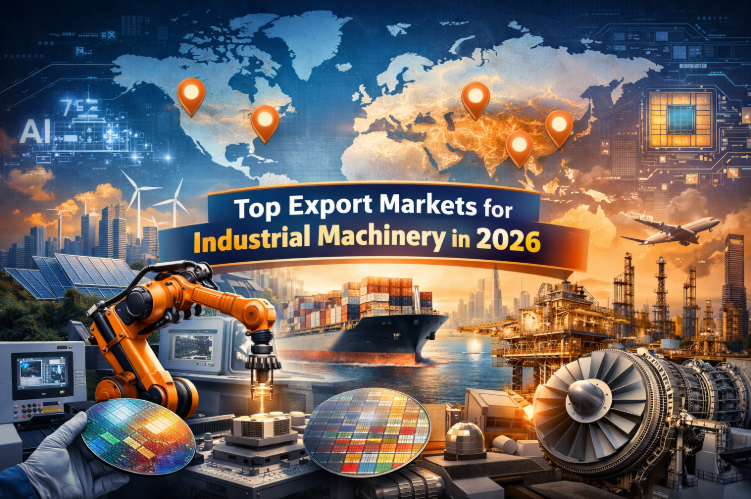
The global industrial machinery sector is entering a new phase of transformation in 2026. Rapid advances in automation, artificial intelligence, smart manufacturing, and energy-efficient production systems are reshaping industrial investment priorities worldwide. At the same time, geopolitical shifts, regional supply chain restructuring, and government-backed infrastructure projects are creating new opportunities for machinery exporters.
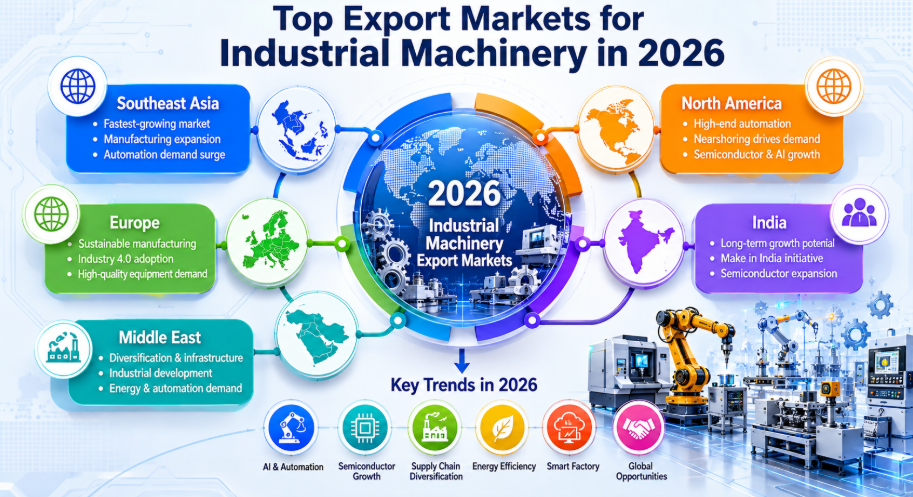
Southeast Asia has become one of the world’s most attractive destinations for industrial machinery exports. Countries including Vietnam, Thailand, Indonesia, and Malaysia are aggressively expanding manufacturing capacity as global companies diversify supply chains away from single-country sourcing models.
Industrial zones across the ASEAN region are investing heavily in automation equipment, CNC machinery, robotics, semiconductor production tools, and smart factory technologies. Rising labor costs and increasing competition are encouraging manufacturers to upgrade production efficiency through intelligent automation systems.
Recent trade data shows ASEAN machinery imports continuing to grow rapidly in 2026, especially for precision manufacturing equipment and industrial automation systems. Chinese CNC machine tool exports to ASEAN markets increased significantly during the first quarter of 2026, highlighting the region’s accelerating industrial expansion.
Vietnam has emerged as a particularly strong growth market. Global electronics suppliers, semiconductor packaging companies, and automotive component manufacturers are building new facilities throughout the country. This has increased demand for PLC systems, servo drives, industrial sensors, machine vision products, and semiconductor production equipment.
Indonesia is also becoming a major industrial machinery importer due to large infrastructure projects, mining expansion, and investments in electric vehicle supply chains. Manufacturers supplying industrial automation equipment, fluid control systems, and power management technologies are seeing strong growth opportunities throughout the region.
North America remains one of the most valuable export destinations for advanced industrial machinery. The United States, Canada, and Mexico continue investing in smart manufacturing technologies, semiconductor facilities, renewable energy projects, and AI-driven industrial infrastructure.
In 2026, U.S. manufacturing investment is increasingly focused on automation upgrades designed to reduce labor shortages and improve production resilience. Factories are adopting robotics, predictive maintenance systems, digital twins, and AI-assisted production management platforms.
Mexico has become especially important because of nearshoring strategies. Many multinational companies are relocating or expanding manufacturing operations closer to the U.S. market. This trend is driving strong demand for industrial control systems, packaging equipment, CNC machining centers, and semiconductor manufacturing support equipment.
The semiconductor industry remains one of the largest growth drivers in North America. AI infrastructure expansion has significantly increased investments in chip manufacturing, data centers, and advanced electronics production. As a result, demand for cleanroom automation, precision motion control systems, industrial sensors, and process control equipment continues to rise.
For exporters, North America offers strong opportunities for high-value, technologically advanced equipment rather than low-cost commodity machinery. Buyers increasingly prioritize reliability, energy efficiency, software integration, and long-term technical support.
Europe continues to be a major market for industrial machinery exports, although growth patterns differ across countries and industries. Germany, Italy, France, and the Netherlands remain key centers for advanced manufacturing and industrial automation.
European manufacturers are investing heavily in energy-efficient machinery, low-emission production systems, and Industry 4.0 technologies. The European Union’s environmental regulations are accelerating demand for sustainable manufacturing solutions, including electric construction equipment, precision automation systems, and smart energy management technologies.
Germany remains one of the world’s largest importers and exporters of advanced industrial machinery. Demand is particularly strong for automated lathes, robotics integration systems, semiconductor production tools, and precision CNC equipment. German manufacturers continue upgrading facilities to maintain competitiveness in aerospace, automotive, and electronics industries.
However, Europe also faces challenges including slower economic growth, rising energy costs, and geopolitical uncertainty. Exporters entering European markets must focus on compliance with CE certification requirements, environmental standards, and digital compatibility regulations. Buyers increasingly expect machinery suppliers to provide integrated software solutions, remote diagnostics, and predictive maintenance capabilities.
India is becoming one of the most promising industrial machinery markets in 2026. Government initiatives supporting local manufacturing, semiconductor production, infrastructure expansion, and renewable energy investment are driving large-scale industrial modernization.
The “Make in India” strategy continues attracting foreign investment into electronics manufacturing, automotive production, pharmaceuticals, and industrial automation. As factories modernize, demand is increasing for CNC machinery, industrial robotics, process automation systems, and intelligent control equipment.
India’s rapidly expanding semiconductor sector is creating additional opportunities for exporters supplying cleanroom systems, precision automation equipment, and testing technologies. The country’s strong economic growth and expanding middle-class consumer market are also supporting growth in packaging machinery and food processing equipment.
Compared with mature markets, India still offers significant long-term expansion potential because many factories are only beginning their digital transformation journey. Exporters that establish early partnerships and local technical support networks may gain long-term competitive advantages.
The Middle East is increasingly diversifying beyond traditional energy industries and investing heavily in industrial development, logistics infrastructure, and advanced manufacturing. Countries such as Saudi Arabia and the United Arab Emirates are expanding industrial capacity through national economic diversification programs.
Large infrastructure projects, renewable energy investments, and industrial city developments are increasing demand for heavy machinery, industrial pumps, automation systems, and energy management equipment. Smart manufacturing and logistics automation are also receiving significant investment.
Additionally, the region’s focus on renewable energy and water infrastructure is creating opportunities for exporters specializing in industrial fluid control systems, electrical automation products, and intelligent monitoring technologies.
Although geopolitical risks remain a concern in some areas, the Middle East continues to offer strong opportunities for industrial machinery suppliers capable of delivering reliable products and long-term technical service support.
Several major trends are influencing global industrial machinery exports in 2026:
AI-driven manufacturing expansion
Semiconductor industry growth
Supply chain diversification
Energy-efficient production systems
Smart factory adoption
Nearshoring and regional manufacturing hubs
Increased demand for predictive maintenance technologies
Asian markets are benefiting strongly from rising investments in semiconductors, power equipment, and industrial automation. Trade reports indicate that East Asia continues leading global manufacturing growth due to strong AI-related infrastructure demand.
Meanwhile, exporters must also navigate challenges including fluctuating trade policies, evolving certification requirements, and geopolitical uncertainties. Companies capable of offering flexible supply chains, strong technical support, and customized industrial solutions will have the greatest success.
The global industrial machinery market in 2026 presents substantial export opportunities for technology-focused suppliers. Southeast Asia, North America, Europe, India, and the Middle East are all experiencing strong industrial transformation driven by automation, digitalization, and infrastructure investment.
As industries worldwide accelerate their transition toward smart manufacturing and AI-enabled production systems, industrial machinery exporters that prioritize innovation, reliability, and global service capabilities will continue gaining competitive advantages in the rapidly evolving global market.