
 home
home
 Published: May 26, 2026 12:51 PM
 Page View: 186
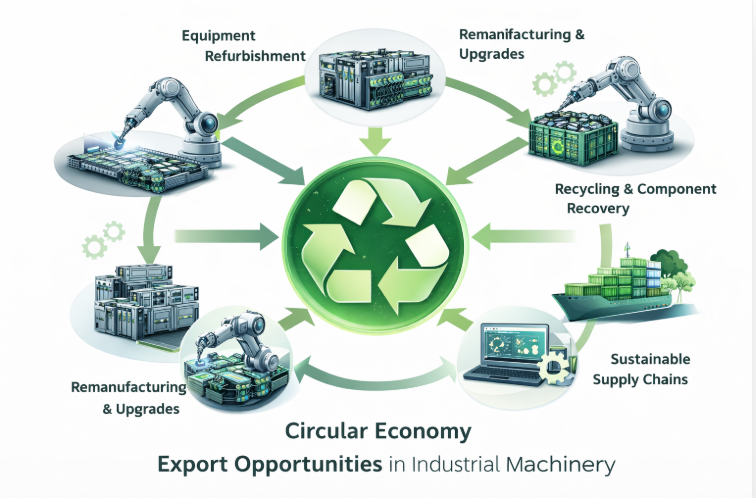
As global industries move toward sustainability and resource efficiency, the circular economy has become a transformative force in industrial manufacturing. For exporters of industrial machinery, automation systems, semiconductor equipment, and electronic components, circular economy strategies are opening new opportunities for growth, innovation, and long-term competitiveness. Companies that embrace equipment refurbishment, remanufacturing, recycling, and lifecycle management are gaining stronger positions in international markets where environmental standards and cost efficiency are increasingly important.
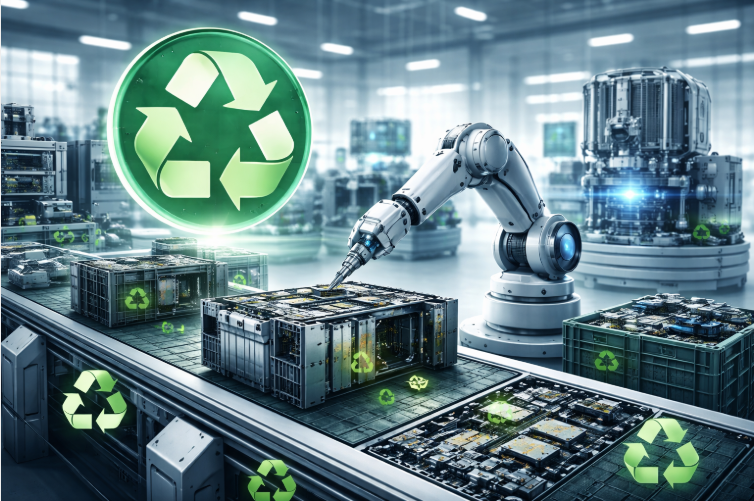
The traditional industrial model has long followed a linear process: manufacture, use, and dispose. However, rising raw material costs, environmental regulations, and customer demand for sustainable solutions are driving industries to adopt circular practices. In the industrial machinery sector, this means extending equipment lifespan, reusing valuable components, reducing electronic waste, and maximizing operational efficiency through smarter maintenance and upgrades.
One of the fastest-growing areas within the circular economy is industrial equipment refurbishment. Many factories worldwide continue operating legacy PLC systems, DCS controllers, servo drives, HMI panels, and semiconductor production equipment that remain critical to daily operations. Instead of replacing entire systems with costly new installations, businesses are increasingly choosing professionally refurbished components that offer reliable performance at lower costs.
For exporters, this trend creates significant opportunities. Industrial buyers in developing economies often seek affordable alternatives to brand-new machinery. Refurbished automation equipment allows manufacturers to modernize production lines while staying within budget constraints. At the same time, companies in mature markets are using remanufactured systems to reduce waste and meet sustainability targets.
The semiconductor industry is also seeing major circular economy developments. Semiconductor fabrication equipment is highly expensive and technically complex, making refurbishment and component recovery economically attractive. Many production facilities now focus on repairing, upgrading, and reusing precision equipment rather than discarding it. Vacuum pumps, robotic handling systems, power modules, and testing instruments can often be restored to near-original performance levels through advanced engineering processes.
Another key driver behind the circular economy is global environmental regulation. Governments across Europe, Asia, and North America are implementing stricter sustainability policies for manufacturers and exporters. Carbon reduction goals, electronic waste regulations, and resource-efficiency standards are encouraging industrial companies to invest in greener production strategies.
Exporters that provide sustainable industrial solutions gain advantages in these regulated markets. Buyers increasingly evaluate suppliers not only on price and product quality but also on environmental responsibility. Companies capable of offering energy-efficient machinery, reusable parts, and certified refurbishment services can strengthen customer trust and improve international competitiveness.
Predictive maintenance technologies are further supporting circular industrial practices. Smart sensors, industrial IoT systems, and AI-driven monitoring platforms help companies detect equipment wear before failures occur. By identifying maintenance needs early, manufacturers can extend machinery lifespan, reduce downtime, and minimize unnecessary replacement of functional components.
Digitalization also enables better lifecycle management. Modern industrial platforms can track equipment history, operational performance, maintenance schedules, and spare part availability throughout the entire lifecycle of a machine. This allows businesses to optimize repair strategies and improve long-term asset utilization.
Industrial automation suppliers are responding to these trends by designing equipment with modular architectures. Modular systems make repairs and upgrades easier because individual components can be replaced without discarding entire machines. This reduces material consumption while lowering operational costs for customers.
The growing demand for sustainable supply chains is another important factor shaping export opportunities. Global manufacturers now seek partners capable of supporting environmentally responsible procurement strategies. Exporters that can supply refurbished PLC modules, recycled industrial electronics, and energy-efficient semiconductor equipment are increasingly attractive to multinational buyers.
Logistics and supply chain resilience also benefit from circular economy models. Reusing and refurbishing existing equipment reduces dependence on raw material extraction and minimizes exposure to supply chain disruptions. During periods of global component shortages, many manufacturers turned to refurbished industrial parts to maintain production continuity. This practical advantage has accelerated acceptance of circular business models across the industrial sector.
In addition to economic and environmental benefits, circular economy practices can improve profitability for exporters. Refurbishment services often provide higher margins than simple product sales. Long-term maintenance contracts, spare part support, and lifecycle management services create recurring revenue streams while strengthening customer relationships.
Emerging markets present especially strong opportunities for exporters specializing in circular industrial solutions. Many manufacturers in Southeast Asia, South America, Africa, and Eastern Europe require reliable industrial equipment but face budget limitations. Refurbished automation systems and remanufactured machinery provide cost-effective pathways for industrial modernization.
At the same time, developed markets continue pushing for carbon neutrality and sustainable manufacturing. Companies operating in these regions increasingly prefer suppliers that align with ESG (Environmental, Social, and Governance) objectives. Sustainable industrial exports therefore support both regulatory compliance and corporate sustainability goals.
Technology innovation will continue accelerating the circular economy transformation. Advanced recycling methods, AI-assisted diagnostics, digital twins, and automated remanufacturing systems are improving the efficiency and reliability of refurbished industrial equipment. These technologies help ensure that reused machinery meets strict quality and performance standards demanded by global customers.
The future of industrial exports will likely depend heavily on sustainability leadership. Companies that integrate circular economy principles into their operations today are positioning themselves for long-term success in international markets. By combining engineering expertise, smart maintenance technologies, and environmentally responsible business practices, exporters can create more resilient and profitable industrial supply chains.
For industrial machinery suppliers, the circular economy is no longer simply an environmental initiative. It has become a strategic business opportunity that supports cost reduction, resource efficiency, customer retention, and global market expansion. As industries worldwide continue prioritizing sustainability, exporters capable of delivering circular industrial solutions will play a critical role in shaping the next generation of manufacturing and automation.